TRENDING

Monday, 12 October 2026
----------------------
1 Jumada Al-Awwal 1448 AH
A recent drone strike in Sudan's Blue Nile state killed 30 displaced people, including women and children, near an informal gold-mining site. This incident underscores the escalating brutality and human cost of the conflict between the Sudanese Armed Forces and the Rapid Support Forces.
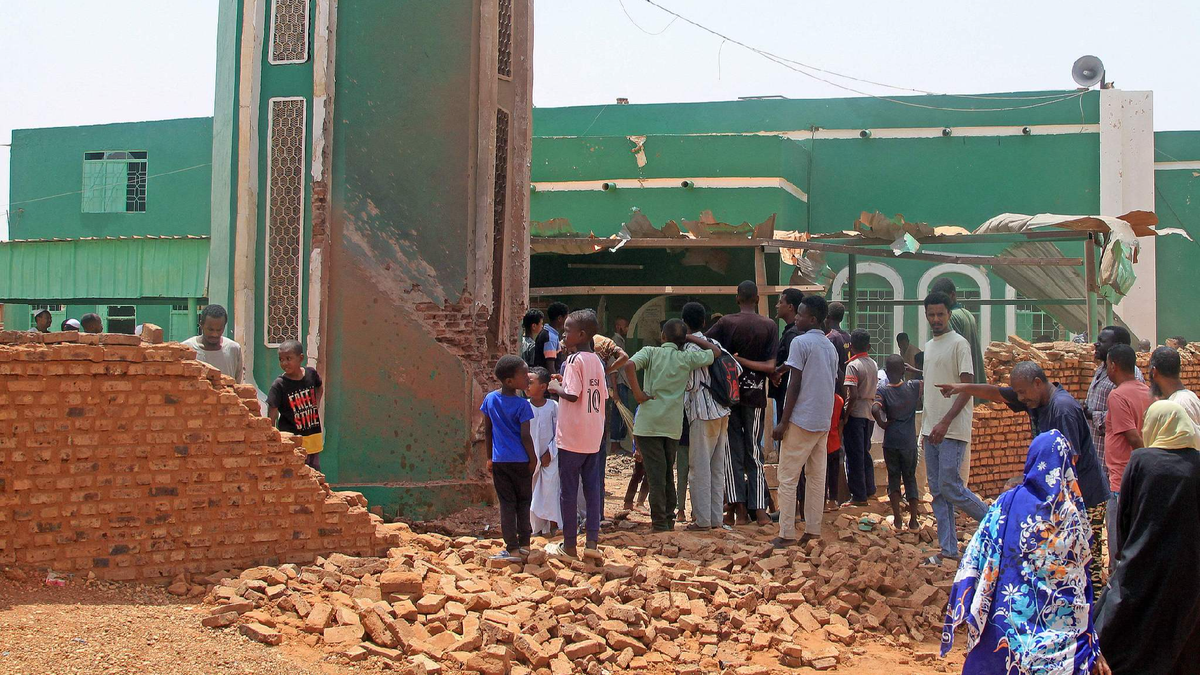
In a devastating escalation of Sudan's protracted conflict, a drone strike in the southeastern Blue Nile state killed at least 30 displaced civilians, including 26 women and four children, and wounded dozens more. The attack, attributed by local authorities to the paramilitary Rapid Support Forces (RSF), struck near a displacement camp and an informal gold-mining site where women were earning a living. This incident, occurring on October 10, 2026, marks a grim milestone in a conflict that has increasingly targeted civilian populations and pushed frontlines into areas previously considered relatively stable.
The drone strike in Blue Nile is not an isolated incident but a brutal symptom of the deep-seated power struggle that has engulfed Sudan since April 2023. At its core, the conflict pits the regular Sudanese Armed Forces (SAF) against the RSF, a paramilitary group that emerged from the notorious Janjaweed militias responsible for atrocities in Darfur. The current war is a direct consequence of a failed transition to civilian rule following the 2019 overthrow of long-time dictator Omar al-Bashir.
The RSF, led by Mohamed Hamdan Dagalo (Hemedti), grew out of militias armed and empowered by Bashir to counter rebellions. Over time, it became a formidable force, integrated into the state apparatus but maintaining its own command structure and economic interests, particularly in gold mining. The SAF, under General Abdel Fattah al-Burhan, represents the traditional military establishment, which views itself as the legitimate protector of the state. The current fighting is a zero-sum game for control over the state's political future, its vast resources, and the very definition of who holds power in Khartoum and beyond.
The Blue Nile state is strategically crucial. It borders Ethiopia and South Sudan, making it a vital corridor for trade, illicit trafficking, and military movements. Crucially, it is also rich in natural resources, particularly gold. Informal gold-mining sites, like the one hit by the drone, are not just places of livelihood; they are economic arteries that can fund armed groups. The RSF's historical ties to gold mining, and its alleged control over significant portions of the industry, provide it with a crucial revenue stream, allowing it to sustain its operations and procure weapons, including drones.
The increasing use of drones by both sides signifies a shift in warfare tactics, making conflicts more asymmetric and less constrained by traditional frontlines. Drones offer precision strike capabilities, surveillance, and a degree of deniability, allowing actors to project power over vast distances with reduced risk to their own personnel. For groups like the RSF, access to such technology, whether through direct purchase or external sponsorship, profoundly alters the battlefield dynamics and raises the stakes for civilian populations.
The RSF's offensive towards Damazin, the capital of Blue Nile state, signals a deliberate strategy to expand its territorial control and exert pressure on the SAF from multiple directions. With fighting also intensifying in Kordofan, the SAF finds itself stretched thin, forced to defend numerous fronts. This dispersal of forces could weaken its ability to hold key urban centers or protect vital infrastructure, potentially leading to further territorial gains for the RSF. For both factions, the conflict is not merely about military victory but about securing political legitimacy and economic dominance, with the future of Sudan as a unified state hanging in the balance.
The drone strike in Blue Nile serves as a stark reminder of who truly bears the brunt of Sudan's conflict: its ordinary citizens. The 30 lives lost, predominantly women and children, represent not just statistics but entire families shattered, futures extinguished, and a community plunged deeper into fear. These were individuals seeking refuge in a displacement camp, a place meant to offer safety, yet it became a target.
The victims at the informal gold-mining site were not combatants; they were women trying to eke out a living in desperate circumstances. Gold extraction, often dangerous and poorly regulated, provides a vital, albeit meager, income for many families in resource-rich but conflict-affected regions. The destruction of such sites, whether intentional or collateral, directly attacks the economic survival of vulnerable populations, pushing them further into destitution. The act of targeting or indiscriminately striking an area known for civilian activity, particularly one involving women's labor, highlights a profound disregard for human life and international humanitarian law.
Since April 2023, the conflict has killed tens of thousands and displaced millions, triggering one of the world's worst humanitarian crises. Nearly 100,000 people have been displaced in Blue Nile state alone this year, adding to the staggering numbers across the country. These displaced populations face acute shortages of food, water, shelter, and medical care. Aid organizations struggle to access affected areas due to insecurity and bureaucratic hurdles, leaving millions without essential assistance. The psychological trauma inflicted on survivors, particularly children witnessing such violence, will have long-lasting effects, perpetuating cycles of instability and despair for generations.
The human cost extends beyond Sudan's borders. Millions have fled to neighboring countries like Chad, South Sudan, Egypt, and Ethiopia, straining already fragile resources and creating regional instability. These host countries, often grappling with their own internal challenges, are ill-equipped to handle such massive influxes of refugees, leading to increased competition for resources and potential social tensions. The conflict in Sudan is not just a national tragedy; it is a regional catastrophe with far-reaching implications for human security and stability across the Horn of Africa.
While official statements from both the SAF and RSF often frame their actions as necessary for national security or humanitarian protection, much of the true story remains obscured. What is consistently downplayed or omitted is the intricate web of external support, the economic drivers fueling the conflict, and the profound international indifference that allows the crisis to fester.
Neither the SAF nor the RSF operates in a vacuum. Both factions are believed to receive varying degrees of support from regional and international powers, eager to secure influence in a strategically vital part of Africa. This support can range from arms shipments and drone technology to financial aid and political backing. Governments and powerful entities supplying these resources rarely acknowledge their involvement publicly, maintaining a veneer of non-interference. This opaqueness allows the conflict to be prolonged, as both sides are continuously re-supplied, preventing a decisive victory or a collapse that might force a peace settlement. The specific origins of the drones used in the Blue Nile strike, for instance, are rarely disclosed, shielding suppliers from accountability and enabling continued violence.
The role of Sudan's vast natural resources, especially gold, is often understated in official narratives. While the conflict is framed as a struggle for political control, the underlying economic incentives are immense. The RSF's historical control over gold mines provides it with a self-sustaining revenue stream, making it less dependent on traditional state budgets or external patrons. This economic independence allows the RSF to operate as a powerful, autonomous entity, complicating any peace efforts that might seek to disarm or integrate it. The informal gold-mining sites, like the one tragically struck, are not just targets; they are symbols of the economic engine that fuels the conflict, with powerful actors benefiting from the chaos and exploitation of resources, often at the expense of local communities.
Perhaps the most significant untold story is the world's collective failure to adequately address the crisis in Sudan. Despite the scale of human suffering – millions displaced, tens of thousands killed, and a looming famine – the conflict has largely remained out of the global spotlight. Major international powers, preoccupied with other conflicts and geopolitical rivalries, have offered limited diplomatic pressure or humanitarian aid relative to the crisis's magnitude. This
Source referenced: CGTN
This brief was synthesized by our Editorial Engine and reviewed by The Ground Narrative team.