TRENDING

Sunday, 11 October 2026
----------------------
30 Rabi' Al-Thani 1448 AH
A US fighter jet attacked a commercial cargo vessel in the Gulf of Oman, with the US military stating the ship was attempting to breach a blockade of Iranian ports. This incident escalates maritime tensions in a critical global shipping lane.
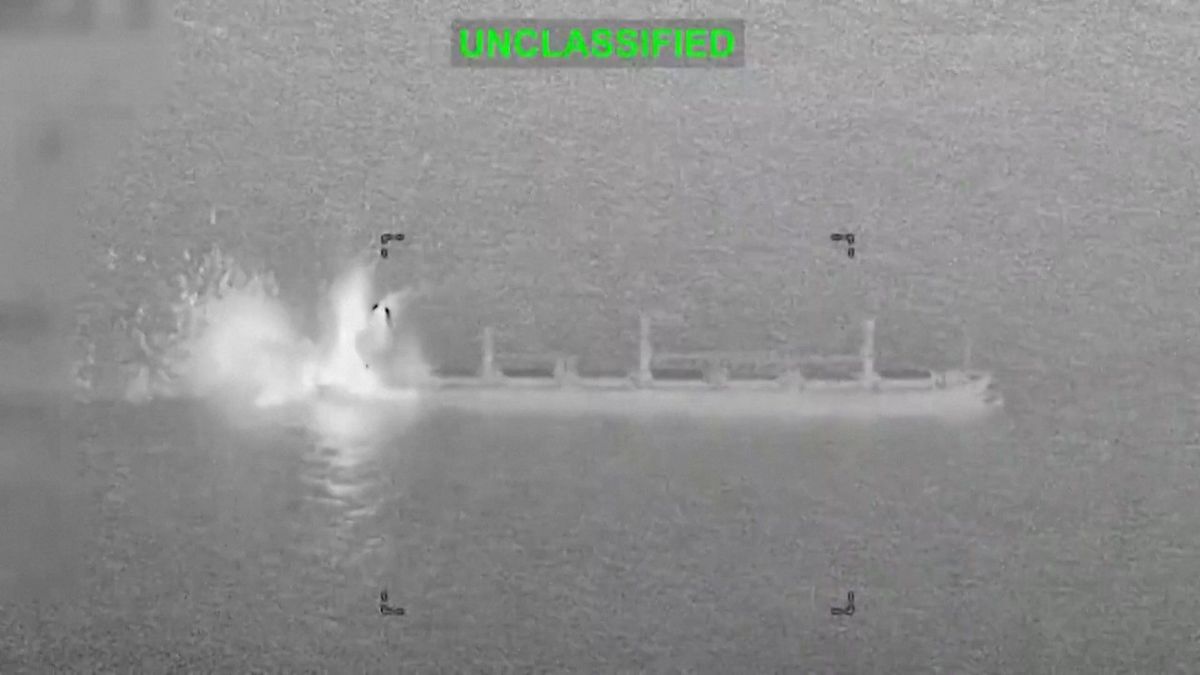
On October 11, 2026, a US fighter jet launched an attack on a commercial cargo ship in the Gulf of Oman. According to statements from US Central Command (CENTCOM), the vessel's crew had reportedly ignored multiple warnings and was attempting to circumvent a US-enforced blockade of Iranian ports. The incident marks a significant escalation in the ongoing tensions surrounding maritime trade and sanctions enforcement in one of the world's most vital waterways, raising immediate questions about the rules of engagement for commercial shipping and the broader implications for regional stability.
The bombing of a commercial vessel by a major global power like the United States in international waters is a stark demonstration of force, designed to project authority and enforce policy. At its core, this event is about the mechanics of power in several dimensions: economic leverage, military deterrence, and the assertion of sovereign will against international norms.
The primary driver behind the US blockade of Iranian ports is the long-standing policy of economic sanctions against Iran. These sanctions are intended to cripple Iran's economy, limit its access to international markets, and pressure its government to alter its nuclear program, regional activities, or human rights record. By interdicting commercial shipping, the US aims to plug any loopholes in this economic pressure campaign. The bombing sends an unambiguous message to shipping companies, insurers, and nations considering trade with Iran: the cost of non-compliance can be severe, extending beyond financial penalties to physical destruction.
The Gulf of Oman and the adjacent Strait of Hormuz represent a critical global chokepoint, through which a significant portion of the world's oil supply and international trade passes. The US military's presence and actions in this region are designed to maintain its strategic influence and control over these vital sea lanes. The use of a fighter jet to enforce a blockade demonstrates the US's willingness to employ high-end military assets to achieve its objectives, reinforcing its role as the dominant naval power in the region. This act serves as a deterrent not only to Iran but also to any other actor that might challenge US maritime authority or attempt to circumvent its sanctions regimes globally.
For Iran, navigating this blockade is a complex calculation. Its economy relies heavily on oil exports and access to international trade. Breaching the blockade, even with commercial vessels, can be seen as an act of defiance, testing the resolve of the blocking power. However, such attempts carry immense risks, as demonstrated by this incident. For the US, the decision to use lethal force against a commercial ship is also a calculated risk, weighing the message it sends against potential international condemnation, escalation, and the unpredictable nature of Iranian retaliation. The power dynamic here is asymmetric, with the US possessing overwhelming military superiority, but Iran capable of asymmetric responses that could destabilize the region further.
While the headlines focus on geopolitical maneuvering and military actions, the true cost of such events is often borne by ordinary people caught in the crossfire of power struggles. The bombing of a commercial cargo ship in the Gulf of Oman has immediate and far-reaching human consequences.
The most direct human cost falls upon the crew of the bombed cargo vessel. These are individuals, often from various nations, who work in a dangerous but essential global industry. Their lives were immediately put at risk, and the psychological trauma of being targeted by military force is immense. Depending on the extent of the damage, there could be injuries or fatalities. Beyond the immediate physical danger, their livelihoods are now uncertain, and their families, often thousands of miles away, face agonizing worry and potential economic hardship. For many, seafaring is a primary source of income, and an incident like this can shatter their ability to provide for their loved ones, leaving them vulnerable and without recourse.
The broader human cost extends to the Iranian population, who are the ultimate targets of the blockade. Sanctions, enforced through actions like this bombing, aim to restrict the flow of goods into and out of Iran. This can lead to shortages of essential commodities, including food, medicine, and industrial components necessary for daily life and economic activity. Even if the bombed ship was carrying non-essential goods, the incident reinforces the effectiveness of the blockade, making it harder and more expensive for legitimate trade to reach Iranian ports. This translates into higher prices for consumers, reduced access to vital supplies, and a general decline in living standards. The pressure exerted by such measures often disproportionately affects the most vulnerable segments of society, exacerbating poverty and social unrest.
Beyond the immediate region, the incident introduces significant uncertainty and increased costs into global maritime trade. Shipping companies will face higher insurance premiums for vessels transiting the Gulf of Oman, and some may choose to reroute, leading to longer transit times and increased fuel costs. These additional expenses are ultimately passed on to consumers worldwide through higher prices for goods. The incident also creates a precedent, making commercial shipping a potential target in areas of geopolitical tension, thereby undermining the principle of safe passage in international waters. This erosion of maritime security impacts everyone who relies on global supply chains, from manufacturers to the end consumer.
Official statements from powerful actors often present a simplified narrative, omitting crucial details or framing events in a way that serves their strategic interests. The bombing of a commercial vessel in the Gulf of Oman is no exception, and several critical aspects remain unaddressed or downplayed.
One of the most significant untold stories revolves around the international legality of the US blockade itself. Is this a UN-sanctioned blockade, authorized by the UN Security Council as an act of collective security? Or is it a unilateral enforcement of national sanctions by the United States? If the latter, it raises serious questions under international law regarding freedom of navigation and the right of passage through international waters. A unilateral blockade, particularly one enforced with military action against a commercial vessel, can be interpreted as an act of aggression or economic warfare, potentially violating international maritime conventions. The US narrative focuses on
Source referenced: ALJAZEERA
This brief was synthesized by our Editorial Engine and reviewed by The Ground Narrative team.