TRENDING

Sunday, 11 October 2026
----------------------
30 Rabi' Al-Thani 1448 AH
A senior French diplomat is heading to Beijing for critical discussions, signaling Europe's ongoing effort to carve out an independent foreign policy while navigating complex global power dynamics. This visit highlights the delicate balance Paris seeks between economic engagement with China and alignment with its Western allies.
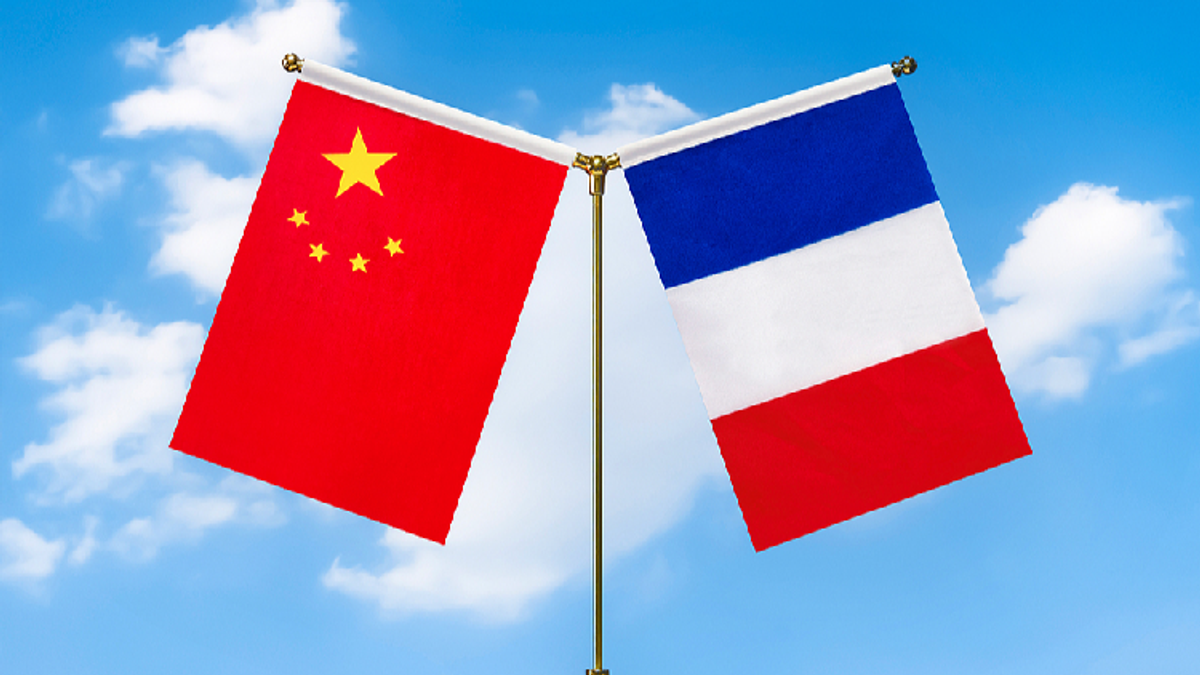
Emmanuel Bonne, the diplomatic advisor to French President Emmanuel Macron, is scheduled to visit China from October 9 to 13, 2026. During his trip, Bonne will engage in a new round of the China-France Strategic Dialogue with Wang Yi, a prominent member of the Political Bureau of the Communist Party of China Central Committee and director of the Office of the Central Commission for Foreign Affairs. This high-level engagement underscores the enduring importance both Paris and Beijing place on direct communication amidst a shifting global landscape.
This visit is a clear manifestation of France's persistent pursuit of European strategic autonomy, a cornerstone of President Macron's foreign policy vision. Paris aims to position Europe as a distinct global actor, capable of charting its own course in an increasingly multipolar world, rather than simply aligning with Washington's stance on China. For France, maintaining open channels with Beijing is essential to discuss global challenges, from climate change to regional conflicts, and to protect significant French economic interests in the vast Chinese market.
China, for its part, actively seeks to cultivate bilateral relationships with individual European nations. This strategy serves multiple purposes: it can subtly undermine attempts by the United States to forge a united Western front against Beijing, highlight China's role as a responsible global power, and provide opportunities to address European concerns on its own terms. By engaging with France, Beijing aims to demonstrate that cooperation, rather than confrontation, remains a viable path, potentially influencing other EU member states to adopt a similar approach. The dialogue offers China a platform to push back against criticisms regarding trade imbalances, human rights, and its stance on the Taiwan Strait, while emphasizing shared economic benefits.
The economic dimension is particularly potent. France has substantial investments and trade ties with China, especially in sectors like luxury goods, aerospace, and agriculture. Protecting these market access points is a powerful incentive for continued engagement. However, this economic interdependence also creates vulnerabilities, as China has demonstrated a willingness to use economic leverage for political ends. The dialogue becomes a delicate balancing act, where France attempts to secure economic advantages while asserting its independent diplomatic voice, all while being acutely aware of the potential for economic coercion.
The outcomes of these high-level France China diplomatic talks, while seemingly abstract, ripple down to affect ordinary people in profound ways.
In France and across Europe, workers in various industries face direct impacts. Decisions made regarding trade policies, market access, and investment can determine the viability of domestic industries. If France prioritizes access for its luxury brands in China without securing reciprocal benefits or addressing China's industrial overcapacity, it could inadvertently expose other European sectors to unfair competition, potentially leading to job losses or reduced wages. Conversely, a failure to engage diplomatically could lead to punitive trade measures from Beijing, hurting French exporters and their employees.
The shadow of human rights concerns in China, particularly regarding the Uyghur population in Xinjiang and the erosion of freedoms in Hong Kong, looms over these dialogues. When economic and strategic interests dominate the agenda, the plight of these populations can be downplayed or relegated to private discussions. For those directly affected, such diplomatic engagements can feel like an abandonment, signaling that their suffering is secondary to state-level interests. Similarly, for activists and human rights advocates, the perceived silence or softened tone from European leaders can be deeply demoralizing, diminishing the international pressure on Beijing.
The stability of the Taiwan Strait is a critical global concern, and any perceived shift in European policy or resolve could have significant human costs. Should France or the EU appear to waver in their commitment to a peaceful resolution or their alignment with US deterrence efforts, it could embolden Beijing and increase the risk of conflict. For the Taiwanese people, the stakes are existential, and the nuance of European diplomacy is scrutinized for any sign of weakening support for their democratic way of life. The broader implications for international law and regional security in the Indo-Pacific also affect countless individuals and communities dependent on stable trade routes and peaceful relations.
Official statements surrounding these France China diplomatic talks will invariably emphasize mutual respect, cooperation, and shared interests. However, beneath the diplomatic veneer, several critical narratives are often downplayed or omitted.
While President Macron champions European strategic autonomy, the reality is that France and the broader European Union remain deeply integrated into the transatlantic security architecture and global economic system. The visit to Beijing is less about a radical departure from Western alliances and more about carving out a distinct space for Europe to maneuver. Paris seeks to avoid being forced into a binary choice between Washington and Beijing, but the practical limits of this autonomy are rarely articulated. France wants to be a player, not a pawn, but its capacity to act entirely independently of its primary security partner, the United States, is constrained by military interoperability, intelligence sharing, and economic ties.
Beijing's engagement with individual European nations is often presented as a pursuit of bilateral cooperation. However, a significant, unspoken objective is to prevent a unified EU or Western front from emerging. By engaging France separately, China can highlight differences within the EU and between Europe and the US, thereby weakening collective pressure on issues like trade imbalances, human rights, or its assertive foreign policy. The goal is to demonstrate that Europe is not a monolithic entity and that individual states can secure better deals by negotiating directly, rather than as part of a larger, more critical bloc.
France seeks to assert European strategic autonomy, aiming to position the EU as an independent global actor rather than solely aligning with US foreign policy. This allows Paris to pursue its own economic interests and engage Beijing on global challenges directly.
The talks can impact European workers through trade decisions, potentially downplay human rights concerns for vulnerable populations in China like the Uyghurs, and influence global stability, particularly regarding the Taiwan Strait, affecting the security of millions.
European strategic autonomy refers to the EU's ambition to act independently in foreign policy and security matters, reducing reliance on external powers like the US. In the context of China, it means charting a European course that balances economic engagement with security concerns and values, without being forced into a binary choice.
Editor's Note: The analysis is based on established geopolitical context regarding France's foreign policy and China's diplomatic strategy, given the brevity of the raw intelligence. The 2026 date is incorporated throughout.
Source referenced: CGTN
This brief was synthesized by our Editorial Engine and reviewed by The Ground Narrative team.