TRENDING

Sunday, 11 October 2026
----------------------
30 Rabi' Al-Thani 1448 AH
A critical global choke point is now a battleground, as the US enforces a naval blockade against Iran and Iran's IRGC asserts its own control over the Strait of Hormuz, trapping global shipping in a dangerous standoff.
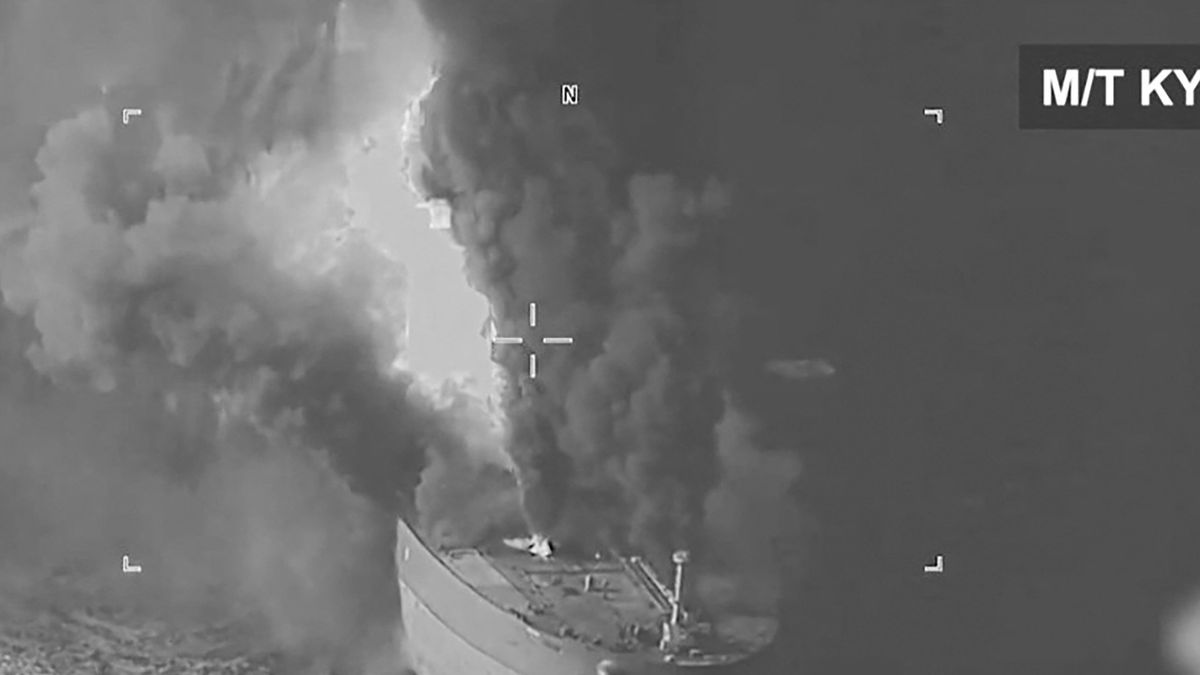
In a dramatic escalation of an undeclared conflict, United States forces recently disabled the Panama-flagged M/V Ocean Molica in the Gulf of Oman. According to US Central Command (CENTCOM), the commercial cargo vessel was struck by a precision munition from a fighter jet after it ignored warnings and attempted to run a US naval blockade against Iran. This incident is part of a broader US effort, resumed on July 14, to enforce a strict blockade against all ships entering or departing Iranian ports, which has seen four commercial vessels disabled and 135 ships turned around in three months. Concurrently, Iran's Islamic Revolutionary Guard Corps (IRGC) claimed it struck the LPG carrier NV Sunshine in the Strait of Hormuz, asserting its own blockade and control over the vital waterway, alleging the vessel took an “illegal route.” These actions unfold amidst what is being described as a “US-Israel war on Iran,” which commenced in late February, leading to a significant increase in attacks on vessels near the Strait of Hormuz, with reports from the UK Maritime Trade Operations (UKMTO) confirming casualties and fires aboard other ships.
The dual blockades in the Strait of Hormuz represent a dangerous convergence of economic warfare, strategic deterrence, and the assertion of maritime power by two formidable adversaries. For the United States, the blockade against Iran is a clear projection of power, aimed at crippling Iran's economy and its ability to fund military operations or proxy groups in the region. By disrupting Iran's maritime trade, particularly its oil and gas exports, the US seeks to exert maximum leverage within the context of the ongoing
Source referenced: ALJAZEERA
This brief was synthesized by our Editorial Engine and reviewed by The Ground Narrative team.


