TRENDING

Saturday, 10 October 2026
----------------------
29 Rabi' Al-Thani 1448 AH
A recent investigation has peeled back the layers of an alleged criminal empire in Cambodia, revealing a dark underbelly beneath a façade of legitimate development. This exposé highlights how powerful actors can exploit weak governance, leaving ordinary citizens and victims of scams to bear the true cost.
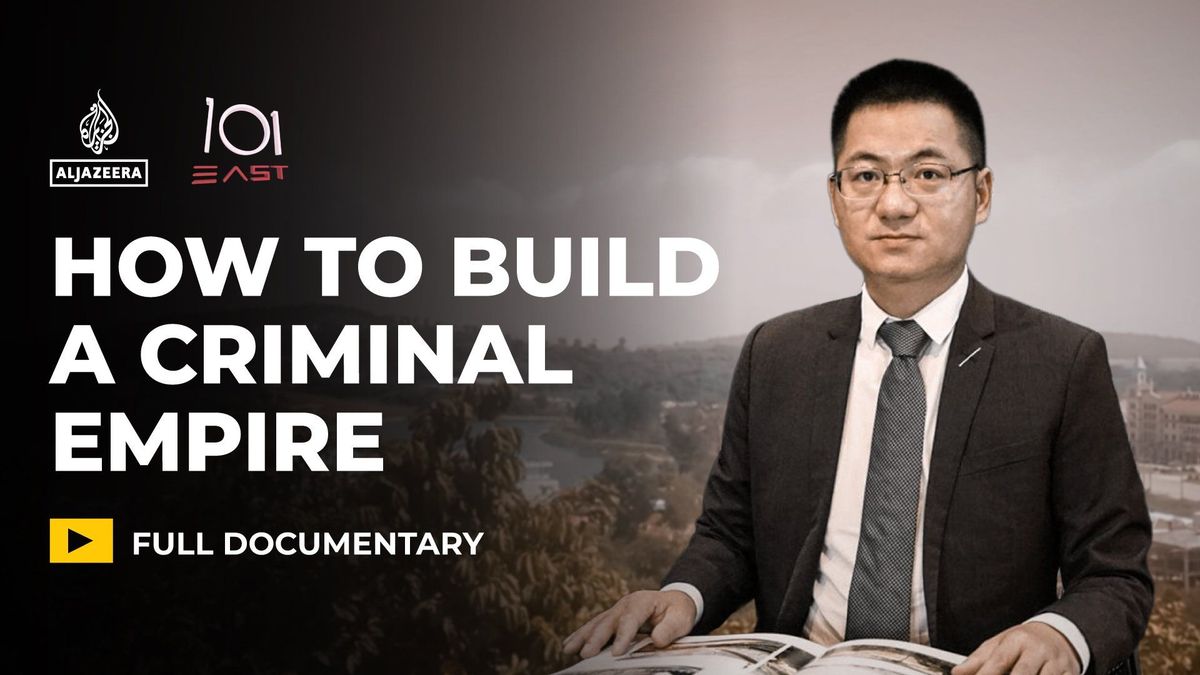
An exclusive investigation by Al Jazeera's 101 East has brought to light the alleged criminal empire of Deng Pibing, a China-born billionaire operating in Cambodia. While publicly presenting himself as a successful businessman and philanthropist, his most ambitious project, Long Bay, a supposed "world-class coastal destination," is now alleged to be a front for illicit activities. The investigation claims that Deng Pibing's sprawling network includes "scam factories" and "drug-fuelled karaoke parties," painting a stark picture of corruption and exploitation hidden beneath a veneer of legitimate investment and development.
This alleged criminal enterprise in Cambodia is not an isolated incident but a symptom of deeper structural forces at play, particularly in Southeast Asia. The ability of an individual like Deng Pibing to allegedly cultivate such an empire speaks volumes about the mechanics of power, economic incentives, and governance vulnerabilities.
At its core, the alleged operation thrives on the exploitation of Cambodia's desire for rapid economic development. For decades, Cambodia, emerging from a brutal civil war and genocide, has actively courted foreign investment to rebuild its economy. This pursuit of capital, often without stringent oversight or regulatory frameworks, creates fertile ground for illicit actors. Governments, eager for infrastructure projects, jobs, and the perceived prestige of large-scale developments, can become susceptible to overlooking the origins or true nature of capital, especially when it flows in quickly.
The Cambodian government's historically weak institutions and pervasive corruption are critical enablers. When regulatory bodies are underfunded, law enforcement is compromised, and the judiciary lacks independence, the rule of law becomes a suggestion rather than a mandate. This environment allows powerful individuals, particularly those with significant financial resources, to allegedly operate with impunity, buying influence and protection. The line between legitimate business and organized crime blurs when state actors are either complicit or unwilling to enforce existing laws.
Furthermore, this situation must be viewed within the broader context of China's economic footprint in Southeast Asia. While Beijing's Belt and Road Initiative (BRI) has brought significant infrastructure and investment to the region, it has also, inadvertently or otherwise, created pathways for less scrupulous Chinese capital and actors. The sheer volume of Chinese investment and migration into countries like Cambodia can overwhelm local administrative capacities, making it difficult to distinguish between genuine development and operations that serve as fronts for illicit activities. The alleged activities of Deng Pibing highlight how the promise of economic partnership can be co-opted by transnational criminal networks, leveraging the scale and speed of capital flows to their advantage.
Finally, the nature of modern organized crime itself plays a role. These are not merely local gangs but sophisticated transnational networks that leverage technology (like online scamming), exploit global supply chains, and adapt quickly to regulatory gaps. They often operate in a grey zone, blending legitimate businesses with illicit ventures, making them difficult to detect and dismantle. The alleged "scam factories" are a prime example of this hybrid model, where a physical presence (a resort development) provides cover for digital crimes that target victims worldwide.
The alleged empire of Deng Pibing and similar operations extract a devastating human cost, often borne by the most vulnerable populations, far from the gleaming facades of development projects.
At the forefront are the countless individuals worldwide who fall prey to the sophisticated online scams allegedly run from these "scam factories." These victims, often lured through social media or dating apps, are manipulated into investing in fake cryptocurrency schemes, romance scams, or fraudulent investment opportunities. They lose their life savings, inheritances, and sometimes even their homes, leading to severe financial ruin, psychological trauma, and shattered trust. The global reach of these scams means the human cost is distributed across continents, affecting ordinary people from all walks of life.
Perhaps the most direct and horrifying human cost is borne by the individuals trafficked or coerced into working in these alleged scam compounds. Reports from similar operations across Southeast Asia indicate that workers, often from other ASEAN countries or even China, are lured with false promises of high-paying jobs. Upon arrival, their passports are confiscated, and they are forced to work long hours under duress, often subjected to psychological manipulation, physical abuse, and debt bondage. They become virtual prisoners, forced to perpetuate scams against others, creating a cycle of exploitation. Their freedom is stripped away, their dignity eroded, and their lives put at risk in an environment controlled by alleged criminal syndicates.
For the local Cambodian communities, the presence of such alleged operations brings a different kind of burden. Unregulated development, often a hallmark of illicit ventures, can lead to environmental degradation, including destruction of natural habitats, pollution of coastal waters, and strain on local resources. Furthermore, the alleged "drug-fuelled karaoke parties" and other illicit activities can introduce social ills, including increased drug use, prostitution, and a general erosion of public safety and moral fabric within the community. The influx of foreign workers and the shadow economy can also disrupt local social structures and economic balances.
The alleged activities also inflict a significant, albeit less tangible, cost on Cambodia's national reputation. When a country becomes associated with transnational organized crime, human trafficking, and corruption, it deters legitimate foreign investment, impacts tourism, and undermines international trust. More fundamentally, it erodes the rule of law within the country, creating a perception among its own citizens that justice is for sale and that powerful figures are above the law. This undermines public trust in government institutions and can stifle the long-term development of a just and equitable society.
While the investigation exposes the alleged actions of a powerful individual, the deeper, often untold story lies in what governments and powerful actors are downplaying or omitting in their public narratives. This isn't just about one alleged kingpin; it's about systemic vulnerabilities and strategic silences.
The most significant untold story is the extent of official complicity or willful blindness within the Cambodian government. How could an alleged empire of this scale, involving land development, significant capital, and a large workforce, operate without the knowledge or tacit approval of local and national authorities? Official statements often frame such incidents as isolated cases of individual wrongdoing, rather than acknowledging the systemic corruption that enables them. The narrative of "attracting foreign investment" often overshadows the critical need for due diligence, robust regulatory oversight, and aggressive law enforcement. The question isn't just *what* happened, but *why* it was allowed to happen, and for how long.
Another downplayed aspect is the complex and often contradictory stance of the Chinese government regarding its citizens involved in transnational crime abroad. While Beijing has, at times, cooperated with regional governments to repatriate scam victims and crack down on certain criminal elements, the sheer scale of Chinese capital outflow and the vast diaspora make comprehensive control challenging. There's a delicate balance between protecting its citizens abroad, maintaining economic ties, and tackling criminal networks. The official narrative often emphasizes legitimate BRI projects and economic cooperation, while the darker aspects of unregulated capital and criminal enterprises operating under the guise of investment are often sidelined or addressed only when international pressure becomes overwhelming. The "grey area" of Chinese investment, where capital flows are less transparent, remains a significant challenge for both China and host nations.
The alleged activities in Cambodia are not unique. Similar "scam factory" operations and illicit economic zones have been uncovered in other Southeast Asian nations, including Myanmar, Laos, and the Philippines. This points to a regional systemic problem, where weak governance, porous borders, and the allure of quick profits create a haven for transnational organized crime. Governments in the region often downplay the interconnectedness of these criminal networks and the scale of human trafficking involved, preferring to focus on national economic growth figures. The lack of robust regional cooperation and intelligence sharing against these sophisticated networks allows them to simply shift operations when one location becomes too hot.
Finally, the narrative of "development" itself often obscures the true costs. Governments and developers promote grand visions of resorts and economic zones, promising prosperity. However, for many developing nations, the pressure to attract foreign capital can lead to a "development trap" where the immediate benefits of investment are outweighed by long-term social, environmental, and governance costs. The untold story is how the pursuit of rapid economic growth, without strong institutions and a commitment to the rule of law, can inadvertently empower criminal elements and ultimately undermine genuine, sustainable development for the very people it claims to serve.
Moving forward, the focus will be on the reactions and actions of key players, which will dictate the trajectory of this alleged criminal enterprise and its broader implications.
First, observe the Cambodian government's response. Will there be a genuine, transparent investigation into Deng Pibing's alleged empire, leading to meaningful arrests and prosecutions of both the alleged kingpin and any implicated officials? Or will the response be a superficial crackdown, designed to appease international scrutiny without addressing the underlying systemic corruption? Any significant action will be a test of Cambodia's commitment to the rule of law and its willingness to confront powerful vested interests.
Second, pay close attention to the actions of the Chinese government. While Beijing has shown a willingness to address some aspects of transnational crime involving its citizens, particularly those impacting China directly, the extent of its cooperation in dismantling a network of this alleged scale in a sovereign nation like Cambodia remains to be seen. Will China exert pressure on its citizens involved in these activities, or will it prioritize broader economic and strategic ties with Cambodia?
Third, monitor the regional cooperation among ASEAN nations. Given that similar "scam factory" operations plague several countries in Southeast Asia, a coordinated regional strategy is crucial. Look for signs of enhanced intelligence sharing, joint law enforcement operations, and collective efforts to protect and repatriate victims of human trafficking. The effectiveness of these efforts will determine whether these criminal networks can simply relocate or if their regional safe havens begin to shrink.
Finally, observe the impact on Cambodia's international standing and its ability to attract legitimate foreign investment. If the perception of widespread corruption and unchecked criminal activity persists, it could deter ethical investors and tourists, further isolating the country and hindering its long-term development. The ongoing scrutiny from international media and human rights organizations will be critical in keeping pressure on all actors involved.
Source referenced: ALJAZEERA
This brief was synthesized by our Editorial Engine and reviewed by The Ground Narrative team.


