TRENDING

Saturday, 10 October 2026
----------------------
29 Rabi' Al-Thani 1448 AH
New vaccine trials for the Bundibugyo Ebola virus have begun in Uganda, offering a glimmer of hope amidst a devastating outbreak in the Democratic Republic of the Congo. This development highlights the complex interplay of global health, pharmaceutical power, and the persistent challenge of equitable access to life-saving medicine.
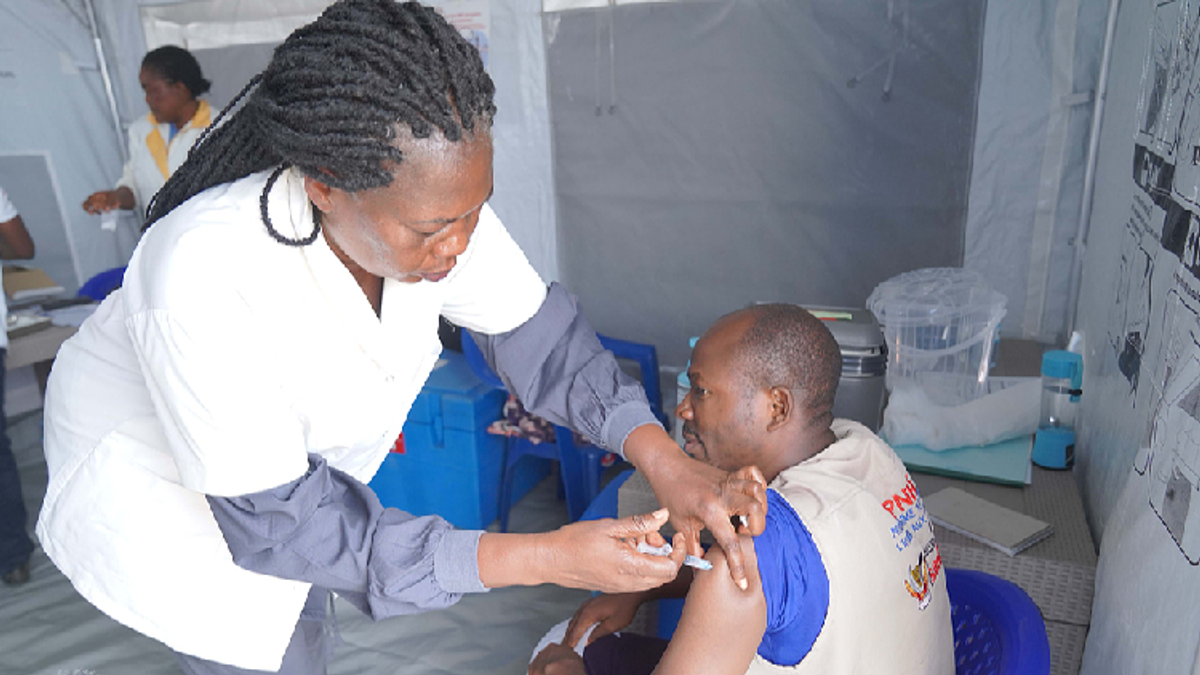
New clinical trials for candidate vaccines targeting the Bundibugyo Ebola virus have commenced in Uganda. These Phase Ib trials, involving a vaccine developed by the University of Oxford (ChAdOx1 BDBV) and another from Moderna, follow earlier Phase Ia trials conducted in Britain and Canada. This scientific acceleration comes as the Democratic Republic of the Congo (DR Congo) grapples with a severe and ongoing outbreak of the Bundibugyo strain, which has already claimed 4,205 lives from 8,728 confirmed cases, marking a grim 48.2% fatality rate as of early October 2026. Crucially, the existing Ervebo vaccine, while effective against the Zaire Ebola virus, has not been proven against the Bundibugyo strain, leaving thousands vulnerable and highlighting a critical gap in global health preparedness.
The commencement of these vaccine trials illuminates the intricate web of power that dictates global health responses, particularly in the face of deadly outbreaks in vulnerable regions. At its core, this situation reveals a stark imbalance between the scientific and financial might of the Global North and the enduring public health crises in the Global South.
Global Health Governance and Prioritization: The Africa Centers for Disease Control and Prevention (Africa CDC) plays a vital role in coordinating health initiatives across the continent, yet the primary research and development for these advanced vaccines often originate from institutions in wealthier nations. Oxford University and Moderna represent significant pharmaceutical and academic powerhouses, whose research agendas, funding sources, and intellectual property rights heavily influence which diseases are prioritized for vaccine development and at what pace. The fact that a specific vaccine for Bundibugyo Ebola is only now reaching advanced trials, despite the strain's known lethality and recurring outbreaks, speaks to a historical prioritization that often lags behind immediate needs in Africa.
The R&D Pipeline and Market Incentives: Developing a new vaccine is a costly, protracted endeavor. Pharmaceutical companies, while often driven by humanitarian aims, also operate within market logic. The perceived market size for a vaccine against a specific, albeit deadly, Ebola strain in a region with limited purchasing power can influence the speed and scale of investment. This creates a tension between public health urgency and commercial viability, where diseases predominantly affecting low-income countries may receive less attention until an outbreak reaches critical mass or threatens global stability.
Vaccine Nationalism and Access: The initial Phase Ia trials for both candidate vaccines were conducted in Britain and Canada, before moving to Uganda for Phase Ib. While this phased approach is standard for safety and efficacy, it underscores a pattern where populations in the Global North often serve as initial testing grounds, or receive early access, before the benefits reach the most affected populations. The DR Congo has received 70,000 doses of the Ervebo vaccine (for the Zaire strain), with frontline workers receiving it under a
The Bundibugyo Ebola virus is one of several species of the Ebola virus that can cause severe, often fatal, hemorrhagic fever in humans. It was first identified in Uganda in 2007 and is distinct from the more commonly known Zaire Ebola virus, requiring specific vaccines for effective prevention.
While the Ervebo vaccine is approved and effective against the Zaire Ebola virus, it has not been proven to be effective against the Bundibugyo strain, which is currently causing a deadly outbreak in the DR Congo. Therefore, new, strain-specific vaccines are crucial to combat this particular variant of the disease.
The distribution of new Ebola vaccines will depend on regulatory approvals, manufacturing capacity, and established supply chains. Global health organizations, pharmaceutical companies, and national governments will need to collaborate to ensure equitable access, especially in remote and conflict-affected regions, addressing challenges like cost, logistics, and community acceptance.
Editor's Note: Analysis is based on interpreting raw intelligence through The Ground Narrative's editorial doctrine, focusing on power dynamics, human cost, and untold stories.
Source referenced: CGTN
This brief was synthesized by our Editorial Engine and reviewed by The Ground Narrative team.


