TRENDING

Sunday, 11 October 2026
----------------------
30 Rabi' Al-Thani 1448 AH
Hurricane Simon, a Category 4 storm, is bearing down on Mexico's western coast, bringing with it the familiar threat of devastation to vulnerable communities and a stark reminder of escalating climate challenges.
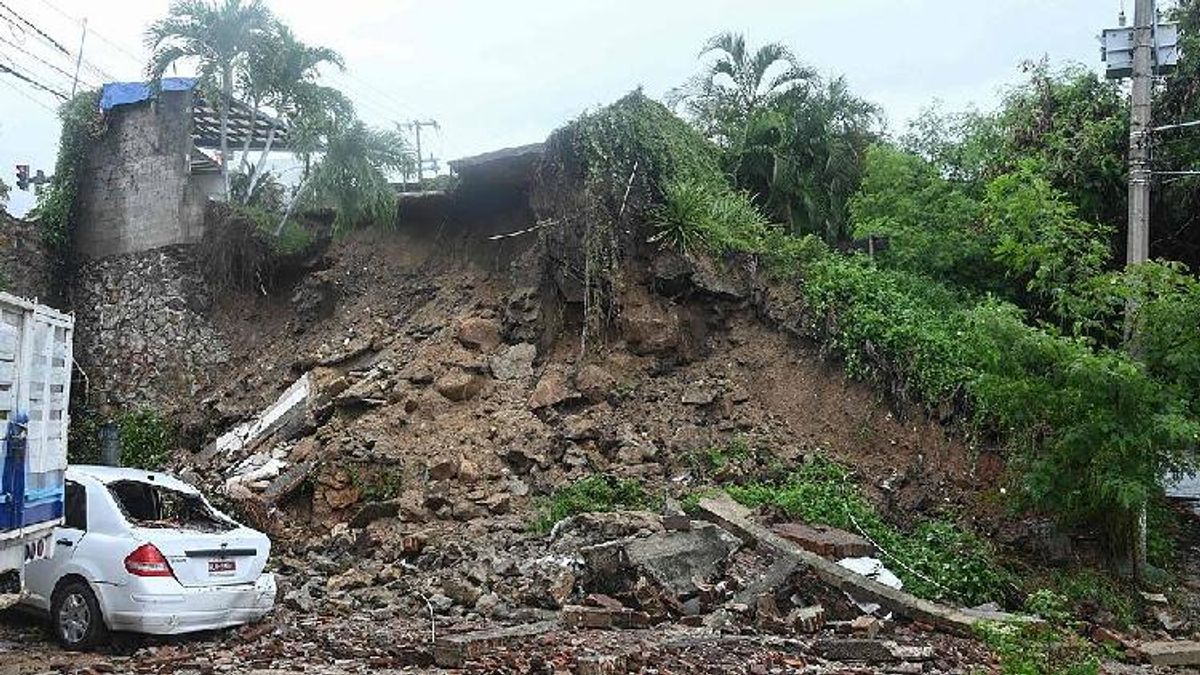
Hurricane Simon rapidly intensified to a powerful Category 4 storm, with sustained winds reaching 240 kilometers per hour, as it tracked directly towards Mexico's west-central coast. The storm is anticipated to make landfall late Saturday or early Sunday, threatening major tourist destinations and countless coastal communities. Already, the torrential rains associated with the hurricane have triggered significant landslides in Acapulco, a major port city and tourist hub further south, causing immediate disruption and damage. Meanwhile, in Puerto Vallarta, another key resort city, residents and tourists displayed a mix of cautious preparation and a surprising degree of calm, even as authorities prepared to issue mandatory shelter orders.
This event unfolds within what has been described as an exceptionally busy hurricane season in the Pacific. Scientists point to the El Niño ocean-warming phenomenon as a significant contributing factor, weakening wind shear and thereby allowing tropical storms to gain and maintain formidable strength. The threat to Mexico comes as Florida is still assessing the damage from Isaias, an early Atlantic season hurricane, underscoring a broader pattern of increasingly frequent and intense weather events challenging coastal nations across the globe.
The arrival of Hurricane Simon lays bare the intricate power mechanics at play when natural forces collide with human systems, particularly in a nation like Mexico. At the most fundamental level, the power of nature, amplified by a changing climate, is undeniable. However, the *impact* of that power is mediated by human decisions, economic structures, and governance capabilities.
One of the most significant power dynamics is the global disparity in climate responsibility versus vulnerability. Nations like Mexico, while contributing to global emissions, bear a disproportionate share of the human and economic cost of climate change. The industrial giants of the global North, historically responsible for the bulk of greenhouse gas emissions, possess far greater resources for adaptation, mitigation, and disaster recovery. Mexico, despite its significant economy, faces the recurring challenge of diverting crucial development funds towards emergency response and rebuilding, a cycle that perpetuates vulnerability. The very existence of a Category 4 hurricane strengthened by phenomena like El Niño is a manifestation of global climate shifts, yet the immediate burden falls heavily on local communities with limited capacity to influence these macro trends.
The tourism industry, a vital economic engine for Mexico's Pacific coast, exerts considerable power. There is an inherent tension between maintaining an image of normalcy to attract visitors and implementing stringent, potentially disruptive, safety protocols. The relaxed attitude observed in Puerto Vallarta, where businesses were sandbagging but some tourists remained
Hurricane Simon has strengthened to a Category 4 storm with winds up to 240 km/h, expected to make landfall on Mexico's west-central coast. It has already caused landslides in Acapulco and poses a significant threat to coastal communities, including Puerto Vallarta.
The El Niño ocean-warming phenomenon plays a crucial role by weakening wind shear in the Pacific. This reduced wind shear allows tropical storms to develop more easily, intensify rapidly, and maintain their strength for longer periods, leading to more powerful hurricanes.
The greatest human cost falls on vulnerable populations, including those in the informal sector, fishing communities, and residents in poorly constructed housing. They face displacement, loss of livelihoods, economic devastation, and long-term psychological trauma, often with limited resources for recovery.
Source referenced: CGTN
This brief was synthesized by our Editorial Engine and reviewed by The Ground Narrative team.


