TRENDING

Monday, 12 October 2026
----------------------
1 Jumada Al-Awwal 1448 AH
The 2026 IMF‑World Bank gatherings in Bangkok unfold under a war‑driven energy shock and record public debt. Ordinary citizens in the Global South face the steepest price tag.
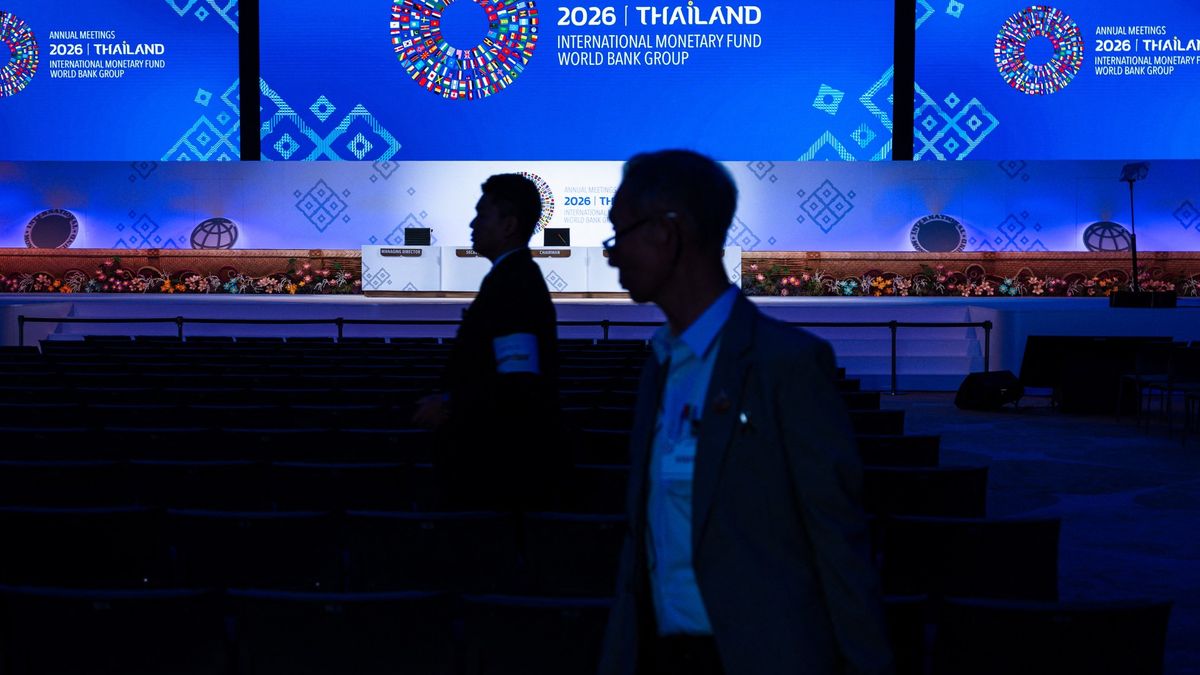
The International Monetary Fund and World Bank convened in Bangkok this week, marking the first off‑site meeting in three years. Delegates arrived to a backdrop of the eighth‑month US‑Israel war on Iran, a historic surge in oil prices, and a tightening of global interest rates that together threaten to stall the already‑sluggish world economy. While the agenda officially lists growth forecasts and financing needs, the dominant narrative is the twin shock of conflict‑driven energy scarcity and a public‑debt burden that now exceeds the levels seen since World War II.
Attendance was uneven: United States Treasury Secretary Scott Bessent stayed home for “domestic engagements,” sending senior aides instead, while Federal Reserve Chair Kevin Warsh participated in a public dialogue with IMF Managing Director Kristalina Georgieva. The absence of key finance ministers, tied to election cycles and budget battles, underscored how domestic politics are crowding out collective crisis‑management at the highest multilateral level.
The war in the Middle East has unleashed the largest post‑World‑War II energy supply shock, prompting the Group of Seven to tap emergency oil reserves and strike a temporary diesel‑supply deal with Russia. President Donald Trump’s push for lower fuel prices ahead of the November midterm elections illustrates how electoral calculus can dictate global commodity flows. At the same time, soaring oil and food prices have pushed inflation expectations higher, forcing central banks to raise rates and squeezing sovereign borrowing costs for both advanced and emerging economies.
Washington’s decision to send senior officials rather than the Treasury chief signals a strategic de‑prioritisation of multilateral coordination in favour of domestic political survival. By contrast, Tehran’s missile strikes on Gulf exporters have turned regional energy markets into a bargaining chip, forcing Gulf states to seek IMF assistance despite their traditionally low‑debt profiles. The International Criminal Court sanctions debate further illustrates how the US leverages legal instruments to pressure rivals while masking the broader fiscal fallout of its own war‑time spending.
Countries already wrestling with debt‑to‑GDP ratios above 100 %—such as Ghana, Kenya, and Bangladesh—face $400 billion in external debt service obligations this year. With interest payments now eclipsing 10 % of government revenue, these states must either accept painful austerity prescriptions tied to new IMF loan programmes or risk default. The proposed shift toward “fewer but deeper” reforms threatens cuts to health, education, and social safety nets, disproportionately harming the poorest households that spend a larger share of income on food and energy.
In Ukraine, a fifth year of conflict has eroded agricultural output, driving food‑price spikes that ripple through African and South‑Asian markets. Meanwhile, Iranian strikes on oil facilities have crippled Gulf port cities, leaving dockworkers and small‑scale fishermen without income. In the United States, rising fuel costs have squeezed working‑class commuters, while the Federal Reserve’s rate hikes raise mortgage payments for renters and homeowners alike. The convergence of war, debt, and inflation creates a multi‑layered burden that falls most heavily on those without political clout.
Official statements from the IMF stress a modest 3 % global growth forecast for 2026, but the underlying narrative downplays the severity of structural adjustment measures looming for vulnerable economies. By framing deep reforms as “necessary for resilience,” the institution sidesteps the political fallout of recommending cuts to public sector wages, pension reforms, and subsidy removals—policies that can trigger social unrest and erode government legitimacy.
The US administration’s public justification for imposing sanctions on the International Criminal Court centres on alleged bias, yet the timing aligns with a broader effort to shield domestic industries from the fallout of higher energy prices. By portraying sanctions as a moral crusade, Washington diverts attention from the domestic economic strain its own war‑time spending imposes, while simultaneously limiting the diplomatic tools available to rival powers.
Readers should monitor three developing threads: first, the outcome of IMF loan‑programme negotiations, especially any shift toward harsher conditionalities for low‑income borrowers; second, the durability of the emergency oil‑release pact with Russia, which could be renegotiated as geopolitical alignments shift after the US midterms; and third, the political response in major debtor nations as public protests over austerity measures gain momentum. The interplay of these factors will shape whether the global debt burden deepens into a chronic crisis or is mitigated through coordinated policy action.
The war drives up oil and food prices, forcing central banks to raise rates. Higher rates increase borrowing costs for all countries, pushing public debt ratios toward historic highs.
The IMF is proposing fewer but deeper reforms, meaning borrowers must implement larger cuts to subsidies, public wages, and social programs in exchange for financing, raising the risk of social unrest.
Source referenced: ALJAZEERA
This brief was synthesized by our Editorial Engine and reviewed by The Ground Narrative team.