TRENDING

Saturday, 19 September 2026
----------------------
8 Rabi' Al-Thani 1448 AH
General Carsten Breuer, Germany’s chief of defence, has been elected to chair NATO’s military committee amid rising US pressure on Europe to fund its own security. The move spotlights shifting power balances and the human costs of a continent scrambling to meet new defence targets.
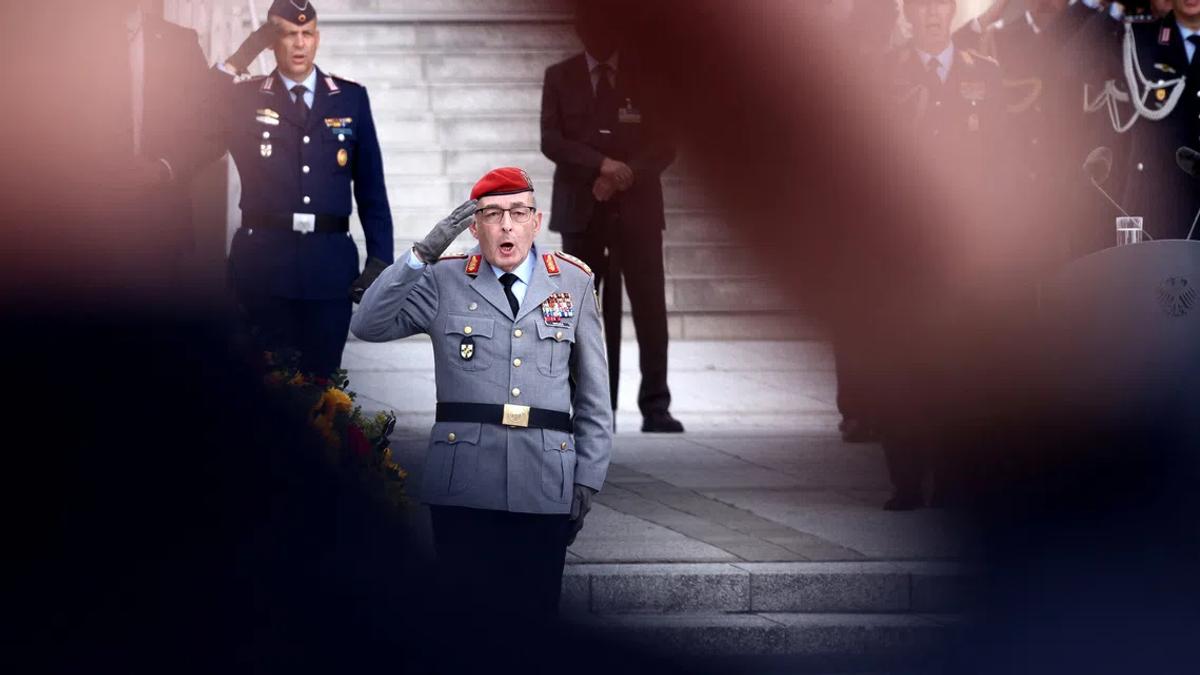
On 19 September 2026, NATO’s 32‑nation military chiefs elected German General Carsten Breuer as the next chair of the alliance’s Military Committee, the top advisory body to NATO’s political leadership. Breuer, currently Germany’s Inspector General of the Bundeswehr, will assume the role in summer 2027, succeeding Italian Admiral Giuseppe Cavo Dragone.
Breuer’s elevation is not merely a personnel change; it reflects a confluence of strategic incentives. U.S. President Donald Trump has repeatedly warned that European allies must shoulder a larger share of continental defence, threatening to withhold or reinterpret Article 5 commitments. That rhetoric has spurred a wave of defence‑budget hikes across Europe, with Germany pledging to double spending to over €200 billion by 2030. By placing a German general—long viewed as a reliable partner of both Berlin and Washington—at NATO’s military apex, the alliance signals continuity while appeasing U.S. demands for European ownership.
Germany’s own political calculus matters. Chancellor Olaf Scholz’s government has leveraged the defence‑spending surge to revive the domestic defence industry and to counter criticism that Germany remains “the reluctant soldier” of Europe. Breuer, nicknamed “the chancellor’s general” for his crisis‑management role during the COVID‑19 pandemic, embodies a technocratic, NATO‑savvy profile that can navigate the alliance’s internal friction while delivering Berlin’s agenda of a stronger, more autonomous European security posture.
The appointment also reshapes alliance dynamics. Smaller NATO members, historically wary of German dominance, watch the chairmanship with caution, fearing that German strategic priorities—particularly in Eastern Europe—might eclipse their own security concerns. Meanwhile, the U.S. gains a diplomatic buffer: a German chair can articulate European burden‑sharing without directly confronting Washington, preserving the façade of a united front against Russian aggression.
The budgetary surge that enabled Breuer’s rise carries a tangible human toll. German soldiers face intensified training cycles, longer deployments, and a rapid acquisition push that strains recruitment pipelines already suffering from demographic decline. Communities near Bundeswehr bases report rising noise, land‑use conflicts, and a growing sense that local needs are subordinated to national defence imperatives.
Across Europe, taxpayers confront higher fiscal pressure as governments divert funds from health, education, and climate initiatives to meet NATO‑mandated spending targets. In nations like Italy and Spain, austerity measures have already trimmed social programmes, sparking protests that pit security rhetoric against everyday welfare concerns.
Beyond the continent, Ukrainian civilians remain dependent on NATO’s logistical and training support. A German‑led Military Committee may prioritize conventional deterrence in the Baltic and Central European theatres, potentially reshaping the flow of aid to Ukraine and altering the frontline dynamics that affect millions of displaced people.
Official statements celebrate Breuer’s “deep familiarity” with NATO and frame his election as a stabilising choice. What remains under‑emphasised is the strategic concession Europe is making to U.S. pressure. By allowing a German general to chair the committee, NATO tacitly acknowledges that the alliance’s burden‑sharing calculus is being renegotiated on Washington’s terms, a shift that could erode the post‑Cold‑War principle of collective defence as a shared, not hierarchical, enterprise.
Equally muted is the intra‑alliance rivalry over procurement and force posture. Germany’s ambition to become a primary arms exporter to fellow NATO members may clash with the interests of the United States and France, potentially sparking competition over contracts for fighter jets, missiles, and cyber‑defence systems.
Finally, the political risk for Trump is downplayed. While he publicly demands European self‑reliance, his own domestic political fortunes hinge on delivering a narrative of American strength. A German chair who can credibly argue for European capacity may undercut Trump’s leverage, forcing the U.S. administration to recalibrate its bargaining chip.
Watch the NATO summit in Washington later this year for any formal revisions to the alliance’s defence‑spending guidelines. A concrete target beyond the current 2 % GDP benchmark would signal a deeper shift toward European self‑sufficiency.
Monitor Germany’s defence‑budget legislation as it moves through the Bundestag. Amendments that earmark funds for specific procurement programmes could reveal Berlin’s strategic priorities and its willingness to lead a European defence industry coalition.
Finally, keep an eye on U.S. electoral politics. A change in administration could either reinforce Trump’s hard‑line stance or restore a more collaborative transatlantic approach, directly influencing how much latitude Breuer will have to shape NATO’s military agenda.
In the coming months, the interplay between a German chair, an assertive U.S. presidency, and a Europe scrambling to fund its own security will determine whether NATO remains a cohesive deterrent force or fragments into competing regional blocs.
Source referenced: STRAITSTIMES
This brief was synthesized by our Editorial Engine and reviewed by The Ground Narrative team.


