TRENDING

Monday, 5 October 2026
----------------------
24 Rabi' Al-Thani 1448 AH
Student protests across France highlight deep-seated issues within the public education system, challenging the government's narrative and revealing broader societal frustrations.
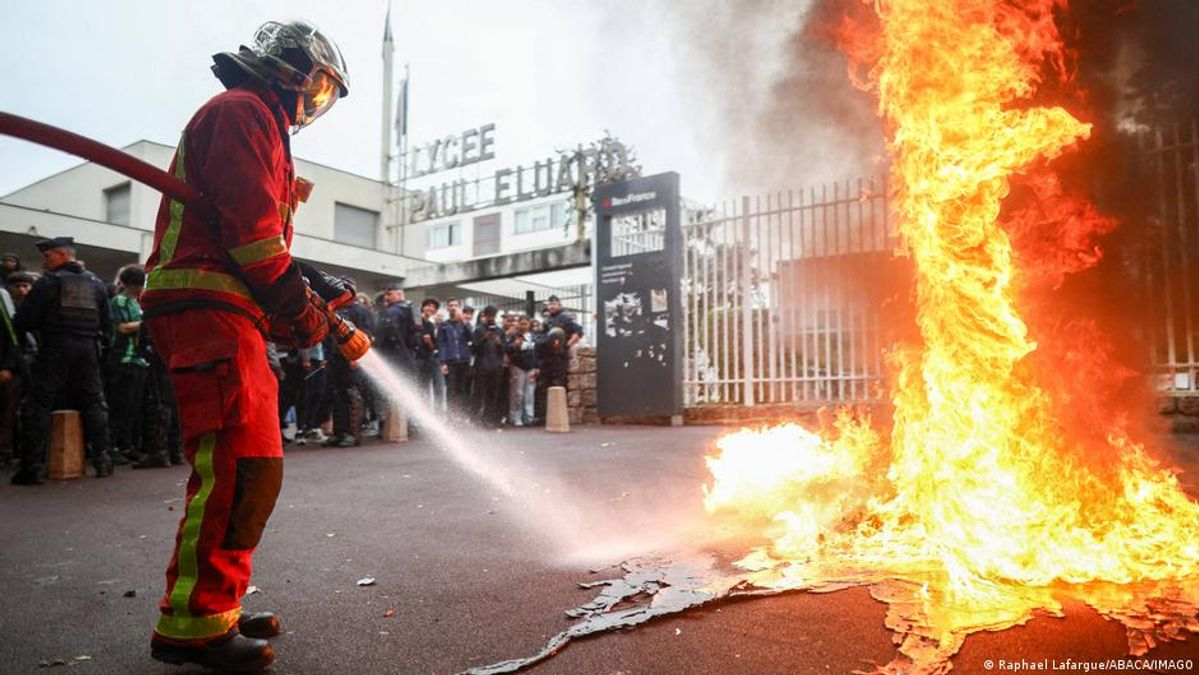
Hundreds of students across France, primarily in high schools, have engaged in widespread protests, blockading schools and clashing with security forces. The demonstrations, which began in the Ile-de-France region and spread to major cities like Bordeaux, Lyon, and Lille, are a response to deteriorating school conditions, including overcrowded classes, heavy workloads, teacher shortages, and poor infrastructure. Authorities reported over 600 arrests and dozens of injuries among both security personnel and students, with Interior Minister Laurent Nunez condemning the “escalation of violence.”
The French government, led by President Emmanuel Macron, operates under a strong centralized model that prioritizes stability and order, often at the expense of localized grievances. The current protests, while ostensibly about education, tap into a deeper well of public discontent that has previously fueled movements like the Yellow Vests and resistance to pension reforms. For Macron’s administration, these student demonstrations represent a challenge to its authority and a potential destabilizing force, especially as it seeks to project an image of national competence and control. The immediate response — deploying security forces and condemning violence — is a classic state tactic to reassert control and delegitimize the protest by focusing on its most disruptive elements. Simultaneously, the government's swift accusation of
Source referenced: DW
This brief was synthesized by our Editorial Engine and reviewed by The Ground Narrative team.


