TRENDING

Monday, 5 October 2026
----------------------
24 Rabi' Al-Thani 1448 AH
Ethiopia's federal government accuses former allies Eritrea and Amhara militias of now backing the TPLF, reigniting a dangerous cycle of conflict in the north. This analysis unpacks the power plays and human costs behind the sudden realignment.
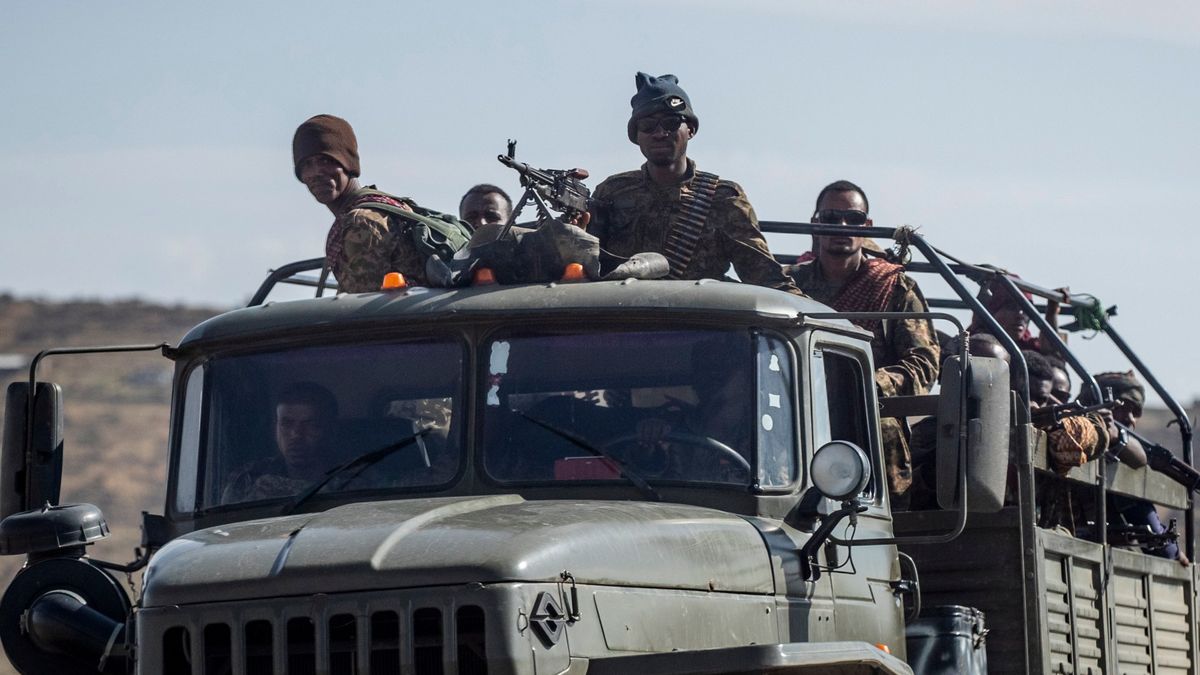
In a dramatic turn, Ethiopia's federal government is now accusing its former wartime allies—Eritrea and the Amhara nationalist Fano militias—of supporting the Tigray People's Liberation Front (TPLF). This accusation follows the TPLF's recent seizure of key towns in Tigray, including parts of Mekele and areas along the Eritrean border. The federal government, in a letter to the United Nations, claims a coordinated effort to destabilize Ethiopia, while the TPLF and Eritrea vehemently deny the allegations, framing them as a diversion from the federal government's own failures and broken peace promises.
The current accusations highlight the fragile and transactional nature of power in the Horn of Africa. For the Ethiopian federal government under Prime Minister Abiy Ahmed, this realignment exposes the limits of its control and the precariousness of its past alliances. Having previously relied on Eritrea and Fano to defeat the TPLF in the 2020-2022 war, Abiy's administration now finds itself battling a resurgent TPLF potentially aided by those same former partners. This suggests a struggle to consolidate power nationally and manage the competing demands of regional actors. The federal government's claims of TPLF-Eritrea-Fano coordination could be a strategic move to justify renewed military action or to deflect from its own challenges in implementing the peace agreement and disarming regional militias.
Eritrea's alleged shift from adversary to supporter of the TPLF, if true, underscores its enduring strategic interest in preventing a dominant Ethiopian state. Eritrea's historical animosity with the TPLF-led government of Ethiopia (before Abiy) has always been complex, often driven by a desire to maintain regional balance and secure its own sovereignty. Its exclusion from the peace agreement between the federal government and the TPLF likely fueled resentment, and the accusation by Ethiopia that Eritrea seeks access to the port of Assab reveals a deep-seated geopolitical rivalry. Eritrea's alignment with Sudan's army and Egypt, both at odds with Addis Ababa over the Grand Ethiopian Renaissance Dam (GERD) and the Sudanese civil war, further illustrates a regional proxy game where internal Ethiopian conflicts are leveraged for broader strategic aims.
The Fano militias, an irregular Amhara nationalist network, represent a significant internal challenge to Abiy's government. Their trajectory from federal allies to open antagonists, rejecting disarmament and now allegedly collaborating with the TPLF, highlights the federal government's inability to integrate or neutralize powerful regional armed groups. Fano's expanding agenda, reportedly seeking Abiy's removal, points to a deep internal fracture within Ethiopia, where nationalist sentiments and regional grievances are increasingly clashing with federal authority. The TPLF, for its part, appears to be seizing on these internal and external divisions to reassert its influence and push back against what it perceives as federal overreach and unfulfilled peace promises.
As alliances shift and accusations fly, the primary burden falls upon the civilians in Tigray, Amhara, and the border regions. The previous conflict (2020-2022) resulted in widespread displacement, mass killings, destruction of homes, and the looting of factories—atrocities that the federal government now, for the first time, acknowledges Eritrean forces were responsible for. A renewed conflict, or even heightened tensions, means more humanitarian suffering: further displacement, food insecurity in already vulnerable areas, disruption of essential services, and the constant threat of violence. The erosion of trust in peace agreements makes future reconciliation an even more distant prospect, trapping communities in a perpetual cycle of insecurity and underdevelopment. The economic costs are immense, diverting scarce resources from development to conflict, and hindering any meaningful recovery for the millions affected.
What is conspicuously absent from official statements is a candid acknowledgment of the fragility of Ethiopia's post-conflict peace and the deep-seated grievances that continue to fuel instability. The federal government's narrative often downplays its own challenges in implementing the Pretoria peace agreement with the TPLF, particularly regarding the withdrawal of all foreign forces and the disarmament of regional militias. The accusations against Eritrea and Fano, while potentially true, also serve to deflect attention from Addis Ababa's internal governance struggles and the growing discontent within the Amhara region. Similarly, Eritrea's denials obscure its long-term strategic calculations and its consistent efforts to influence regional dynamics to its advantage. Neither side fully addresses the profound impact of ethnic federalism and competing nationalist aspirations on Ethiopia's unity, often framing the conflict in terms of external aggression or internal betrayal rather than a complex interplay of historical grievances and power struggles. The full extent of civilian casualties and human rights abuses from the previous war, and the slow pace of justice and accountability, also remain largely unaddressed by all parties.
Readers should closely monitor several key developments. Firstly, watch for any escalation of fighting in western Tigray and the Amhara region, which would signal a full-blown return to conflict. Secondly, observe the international community's response, particularly from the African Union and the United Nations, to the federal government's accusations and the calls for Eritrean withdrawal. Their capacity for effective mediation will be severely tested. Thirdly, the stability of Prime Minister Abiy Ahmed's government will be critical; growing internal dissent from groups like Fano, coupled with renewed external pressures, could significantly weaken his hold on power. Finally, pay attention to the humanitarian situation—any restrictions on aid access or reports of mass displacement will be a clear indicator of the conflict's intensity and human cost. The interplay of regional rivalries, particularly involving Sudan and Egypt, will continue to shape the external dimensions of this internal Ethiopian struggle.
Source referenced: ALJAZEERA
This brief was synthesized by our Editorial Engine and reviewed by The Ground Narrative team.