TRENDING

Saturday, 3 October 2026
----------------------
22 Rabi' Al-Thani 1448 AH
The 2026 earthquake season exposed a stark global truth: the human cost of natural disasters is disproportionately borne by nations with weaker infrastructure and governance. While some countries weathered powerful quakes with minimal loss, others faced devastating death tolls and economic ruin, revealing deep-seated inequalities.
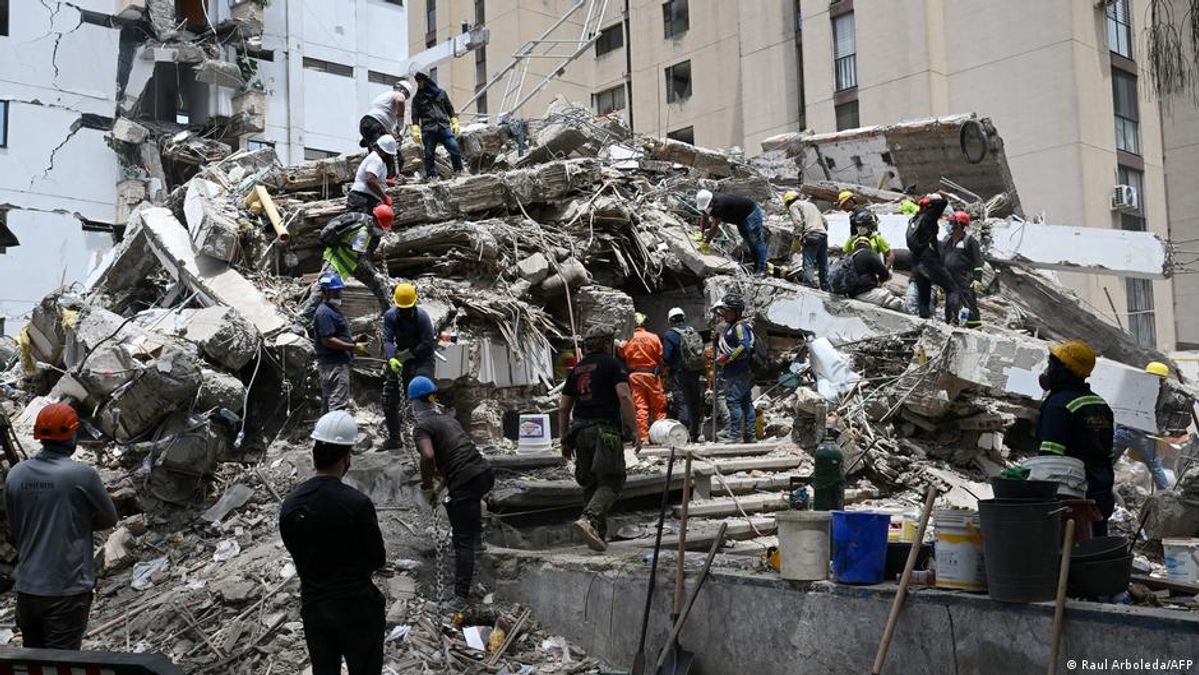
A series of powerful earthquakes struck various regions across the globe in 2026, ranging from a magnitude 7.8 quake off the Philippines to a deadly 5.8 tremor in Afghanistan. While the sheer number of major quakes was not statistically unusual, the devastation varied wildly, with Venezuela suffering over 6,300 deaths from a double quake, while a similar magnitude event in Tonga caused no reported fatalities. This stark disparity underscored how the impact of seismic events is profoundly shaped by factors beyond geological force alone.
The differential impact of the 2026 earthquakes lays bare the structural power imbalances embedded in the global system. Nations with robust economies and strong governance, like Japan, possess the resources to invest in stringent building codes, advanced early warning systems, and rapid, well-equipped disaster response mechanisms. Their power allows them to mitigate risk, absorbing the shock of natural events with comparatively fewer human casualties and faster recovery. Conversely, countries like Venezuela, Afghanistan, and Colombia, often grappling with economic fragility, political instability, and systemic corruption, lack the capacity to enforce adequate infrastructure standards or mount effective, widespread relief efforts. Their power is diminished by their economic constraints and governance deficits, leaving their populations acutely vulnerable. The ability to rebuild quickly, attract international aid, and prevent long-term displacement is directly correlated with a nation's economic and political standing, turning a natural phenomenon into a stark indicator of global inequality.
The human cost of these earthquakes is borne overwhelmingly by ordinary citizens in nations least equipped to protect them. In Venezuela, thousands lost their lives and tens of thousands their homes, not just to the earth's movement, but to buildings constructed without proper oversight in an impoverished state. In Afghanistan, a relatively weak quake proved deadly because homes were built to survive neither tremors nor time, leaving families buried under rubble. These are the farmers, the urban poor, the informal workers whose livelihoods are instantly erased, whose communities are shattered, and who often lack the safety nets of insurance, robust public services, or state-led reconstruction programs. Their voices are absent from the geopolitical discussions of aid packages or long-term development strategies, yet they are the ones who must navigate the immediate aftermath of loss and the prolonged struggle for recovery, often sinking deeper into poverty and displacement.
What official statements and international aid appeals often downplay is the systemic failure of governance that amplifies natural disasters into humanitarian catastrophes. While the focus is on immediate relief, there's less scrutiny on why buildings in certain regions are so vulnerable, or why disaster preparedness remains chronically underfunded. Governments in affected developing nations may omit details about corruption in construction contracts or the diversion of funds meant for infrastructure upgrades. International actors, while providing aid, often avoid directly addressing the political and economic structures that perpetuate vulnerability, fearing accusations of interference or jeopardizing diplomatic relations. The long-term debt burden incurred for reconstruction, often from international loans, also goes largely unmentioned in immediate crisis narratives, yet it can shackle these nations for decades, hindering future development and perpetuating a cycle of dependency.
Watch for how reconstruction efforts are managed in the most affected nations, particularly Venezuela and Colombia. Will international aid be transparently allocated and reach those most in need, or will it be siphoned off by corrupt networks? Observe whether these devastating events spur genuine reforms in building codes and urban planning, or if they merely lead to temporary fixes that leave populations vulnerable to the next seismic event. The long-term displacement of communities and the potential for increased internal migration will also be critical indicators of the lasting human impact. Finally, monitor how global powers respond – whether the aid is conditional on governance improvements, or if it reinforces existing power dynamics without addressing the root causes of vulnerability.
Source referenced: DW
This brief was synthesized by our Editorial Engine and reviewed by The Ground Narrative team.