TRENDING

Tuesday, 6 October 2026
----------------------
25 Rabi' Al-Thani 1448 AH
After years of foreign military presence, the last US-led coalition forces have withdrawn from Iraq, marking a declared achievement of national sovereignty. However, the Iraqi government now faces its most significant internal test: disarming powerful non-state armed groups that openly defy its authority.
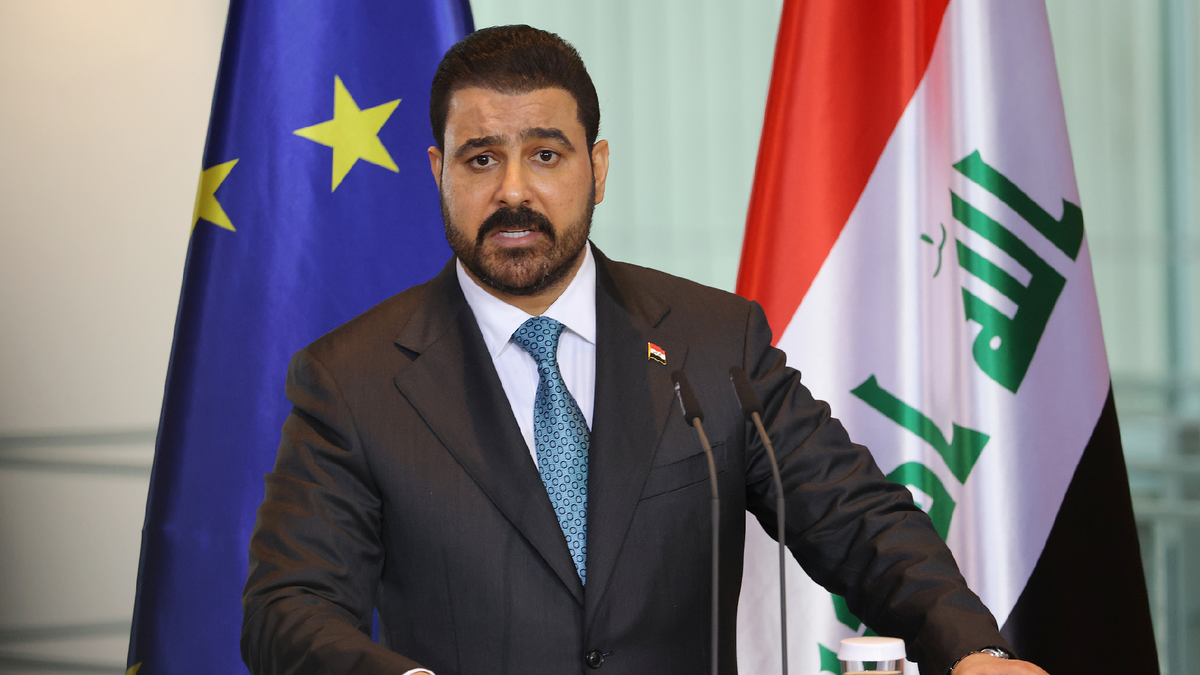
On October 1, 2026, Iraqi Prime Minister Ali al-Zaidi officially confirmed the complete and final withdrawal of US-led coalition forces from Iraq. This declaration, made in a statement to the nation, was framed as the full achievement of Iraq's national sovereignty, marking a new chapter for the country. The prime minister further announced a roadmap to address the issue of weapons outside state control, aiming for the complete disarmament of all non-Iraqi armed groups on Iraqi territory by June 30, 2027. This move follows the official conclusion of the coalition's mission to combat the Islamic State (IS), also known as ISIS, which had seized large swathes of Iraqi and Syrian territory in 2014. However, the announcement was immediately challenged by the Islamic Resistance in Iraq, an umbrella group of Iraqi armed factions, which rejected any timeline or agreement regarding the surrender of their weapons.
This withdrawal is not merely a military repositioning; it is a profound shift in the balance of power, both within Iraq and across the broader Middle East. For the United States, the withdrawal represents a strategic pivot, reducing direct military entanglement in a region where its long-term objectives have become increasingly muddled. Domestically, successive US administrations have faced pressure to end costly, protracted conflicts, especially after the perceived territorial defeat of ISIS in 2017. While the coalition continued operations against remaining militants, the political cost of maintaining a significant presence without a clear end-goal became unsustainable. The US seeks to project a narrative of mission accomplished, allowing it to reallocate resources and focus on what it deems more pressing global challenges, particularly competition with China and Russia.
For the Iraqi government under Prime Minister al-Zaidi, the withdrawal is a critical political victory. Asserting national sovereignty and ending foreign military presence has been a consistent demand across the Iraqi political spectrum for years, serving as a unifying call for diverse factions. By securing the withdrawal, al-Zaidi strengthens his legitimacy and positions himself as a leader who delivered on a key national aspiration. However, this newfound sovereignty immediately presents its greatest test: the state's monopoly on violence. The prime minister's roadmap to disarm non-state armed groups is an audacious attempt to consolidate central authority. These groups, many of which fall under the umbrella of the Popular Mobilization Forces (PMF) and have strong ideological and material ties to Iran, represent an alternative power structure. They derive their influence from their military capabilities, their perceived role in resisting foreign occupation and ISIS, and their deep roots within certain communities and political blocs. Their outright rejection of the disarmament plan underscores the severe limitations on the Iraqi state's actual power, revealing a fragmented landscape where loyalty is often to factional leaders rather than the central government.
Iran's role in this dynamic is undeniable. A reduced US military footprint in Iraq inherently diminishes Washington's ability to project power directly on Iran's western flank. This creates a more permissive environment for Tehran to strengthen its influence through its proxies and allies within Iraq, including many of the armed groups now defying al-Zaidi's disarmament efforts. These groups serve as a strategic buffer for Iran, a means to project power regionally, and a deterrent against potential aggression. The continued existence of these armed factions, operating outside direct state control but often within state-sanctioned structures, complicates Iraq's ability to act as a truly independent nation-state, caught between the competing interests of its powerful neighbors and its own internal divisions.
While the official narrative celebrates the achievement of national sovereignty, the reality on the ground for ordinary Iraqis remains fraught with uncertainty and potential peril. The withdrawal of foreign forces, while desired by many, does not automatically translate into peace or stability. Instead, it shifts the burden of security and governance squarely onto a state that is still struggling to assert its authority over powerful internal actors.
The most immediate human cost is the risk of renewed internal conflict. If the Iraqi government's efforts to disarm non-state armed groups fail or are met with violent resistance, ordinary citizens will bear the brunt. Communities caught between government forces and armed factions face displacement, destruction of infrastructure, and the constant threat of violence. The memory of past conflicts, including the civil strife that followed the 2003 invasion and the brutal reign of ISIS, is still fresh, and the prospect of a return to such instability is terrifying for millions.
Persistent insecurity directly impedes economic recovery and development. Foreign investors, already wary of Iraq's volatile political landscape and pervasive corruption, will remain hesitant to commit capital if the state cannot guarantee stability and the rule of law. This translates into a lack of job opportunities for a young and growing population, fueling resentment and making recruitment into armed groups or illicit activities more appealing. Basic services, already strained by decades of conflict and underinvestment, will continue to suffer, impacting access to healthcare, education, and reliable electricity for millions.
When armed groups operate with impunity, the rule of law erodes. This undermines trust in state institutions, including the police and judiciary, and can lead to a culture of fear and impunity. Citizens are left vulnerable to arbitrary arrests, extortion, and violence from groups that operate outside legal frameworks. The promise of a democratic, sovereign Iraq cannot be fully realized if the state cannot protect its own citizens and enforce its laws uniformly across its territory.
The official pronouncements surrounding the US-led coalition's withdrawal and Iraq's declared sovereignty often gloss over or deliberately omit several critical realities that continue to shape the country's future.
Source referenced: CGTN
This brief was synthesized by our Editorial Engine and reviewed by The Ground Narrative team.