TRENDING

Monday, 5 October 2026
----------------------
24 Rabi' Al-Thani 1448 AH
The Democratic Republic of Congo's Ebola outbreak has surpassed 400 deaths, with the virus spreading to major cities, raising concerns about regional stability and the effectiveness of health responses.
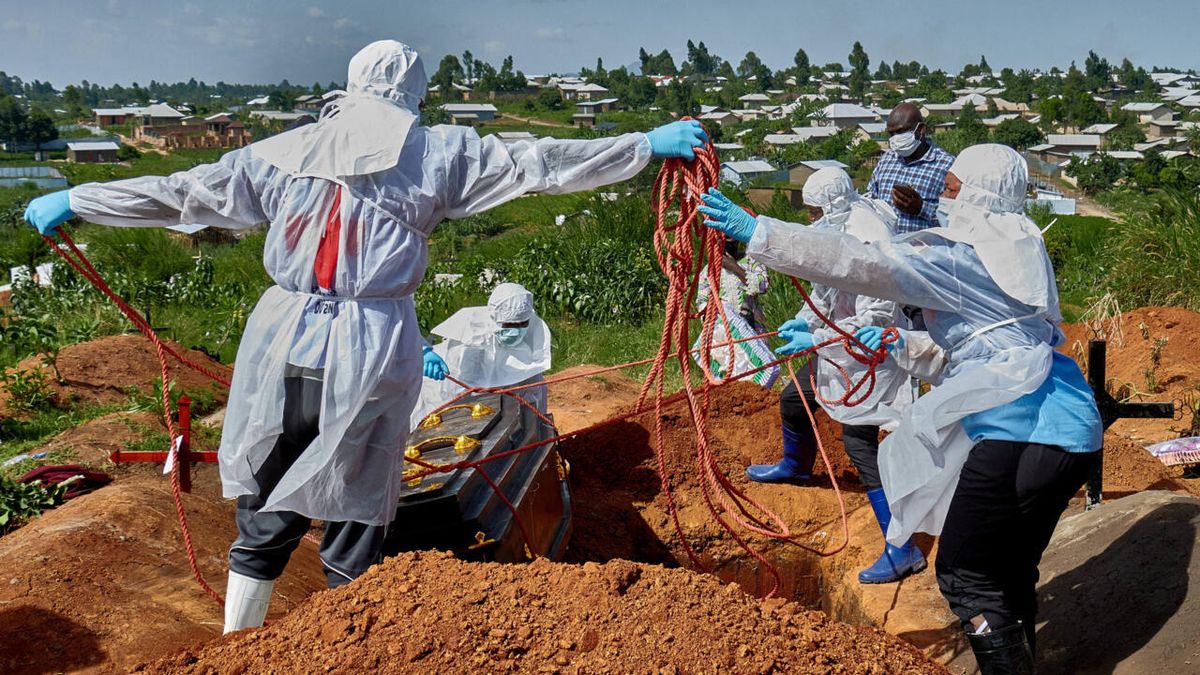
The Democratic Republic of Congo (DRC) is facing its 17th Ebola outbreak, with the virus claiming over 400 lives and infecting over 1,400 people. The highly infectious disease has spread to major cities, including Kisangani, a northeastern city of 1.5 million residents. The outbreak's epicentre remains in the northeastern Ituri province, where over 83% of the deaths have occurred.
The Ebola outbreak in the DRC poses a significant threat to regional stability and global health security. The virus has spread to neighboring countries, including South Sudan and Uganda, which have reported 20 cases, including two deaths. The DRC's porous borders and lack of effective health infrastructure make it challenging to contain the outbreak.
The DRC has a history of Ebola outbreaks, with the most deadly outbreak occurring between 2018 and 2020, killing nearly 2,300 people. The current outbreak is caused by the Bundibugyo strain of the Ebola virus, for which no vaccine or specific treatment exists. A trial of potential Ebola treatments has begun, but it may take months to produce definitive answers.
The Ebola outbreak in the DRC has significant regional implications. The virus has spread to neighboring countries, and the risk of further transmission is high. The DRC's neighbors, including South Sudan and Uganda, have reported cases, and the World Health Organization (WHO) has warned of a potential regional epidemic.
The future consequences of the Ebola outbreak in the DRC are uncertain. If left unchecked, the outbreak could spread to other parts of the country and beyond, posing a significant threat to regional stability and global health security. The DRC's health infrastructure is already stretched thin, and the outbreak has highlighted the need for improved healthcare systems and emergency preparedness.
The health response to the Ebola outbreak in the DRC is facing several challenges. Health facilities in Ituri province lack equipment and basic supplies, including protective kits and chlorine. The local population has deep mistrust of health workers, which has led to attacks on health facilities and personnel. The police have intervened in some cases, but the situation remains volatile.
The international community has responded to the Ebola outbreak in the DRC, with the WHO and other organizations providing support and assistance. However, the response has been slow, and more needs to be done to contain the outbreak and prevent further transmission.
The Ebola outbreak in the DRC is a growing threat to regional stability and global health security. The virus has spread to major cities, and the risk of further transmission is high. The DRC's health infrastructure is stretched thin, and the outbreak has highlighted the need for improved healthcare systems and emergency preparedness. The international community must respond quickly and effectively to contain the outbreak and prevent further transmission.
Editor's Note: The analysis is based on available data and reports from credible sources, but the situation on the ground may be more complex and nuanced.
Source referenced: FRANCE24
This brief was synthesized by our Editorial Engine and reviewed by The Ground Narrative team.