TRENDING

Monday, 5 October 2026
----------------------
24 Rabi' Al-Thani 1448 AH
Zambia's incumbent President Hakainde Hichilema takes an early lead in the country's general election, but the vote is marred by opposition claims of armed raids and international monitors calling the campaign unfair. As the country teeters on the edge of uncertainty, who will bear the human cost of this chaotic election?
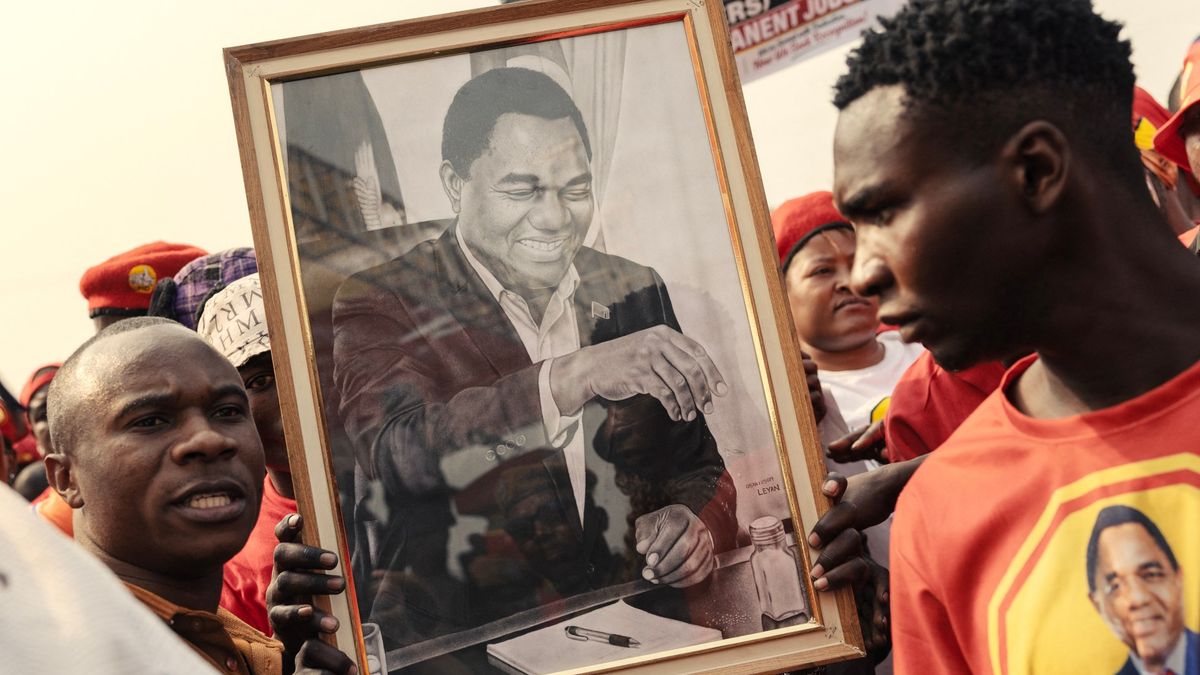
Zambia's general election has been marked by controversy, with incumbent President Hakainde Hichilema taking an early lead amidst opposition claims of armed raids and international monitors deeming the campaign unfair. With over half of the country's constituencies counted, Hichilema has secured nearly 59% of the vote, putting him on course for a possible outright first-round victory.
The election has been characterized by a blurring of government business with campaigning, with the EU's monitoring mission pointing to heavy bias in state media coverage. This has skewed the election in favor of the incumbent, allowing Hichilema to leverage his position to gain an advantage over his opponents. The use of armed personnel to allegedly raid the home of opposition leader Brian Mundubile has further raised concerns about the government's willingness to use force to maintain power.
The people of Zambia are the ones who will ultimately bear the human cost of this chaotic election. With over 70% of the population living on less than $3 a day, despite the country's substantial mineral reserves, the economic stakes are high. The return to economic growth under Hichilema's first term has not trickled down to the majority of the population, leaving many Zambians struggling to make ends meet. The alleged use of armed personnel to intimidate opposition supporters has also raised concerns about the safety and security of citizens.
What is being downplayed by the government is the extent to which the election has been compromised by violence and intimidation. The EU's monitoring mission has already called the campaign unfair, and the alleged armed raid on Mundubile's home has raised serious concerns about the government's willingness to use force to maintain power. The government's failure to respond to these allegations has only added to the sense of uncertainty and mistrust surrounding the election.
As the final results are expected within days, readers should watch for any further signs of violence or intimidation, as well as the government's response to the opposition's allegations. The international community, particularly regional organizations, should also be monitoring the situation closely, as Zambia's peaceful transfer of power through elections since 1991 is at risk of being undermined. The outcome of this election will have significant implications for the country's economic and political stability, and the world will be watching to see how the situation unfolds.
Editor's Note: The situation on the ground is fluid, and the analysis is based on available information at the time of writing.
Source referenced: ALJAZEERA
This brief was synthesized by our Editorial Engine and reviewed by The Ground Narrative team.


