TRENDING

Sunday, 4 October 2026
----------------------
23 Rabi' Al-Thani 1448 AH
A deadly earthquake in Colombia has presented the country's new president with his first major challenge, while also revealing deeper power dynamics and geopolitical tensions in the region. As the country struggles to respond to the disaster, questions are being raised about the government's priorities and allegiances.
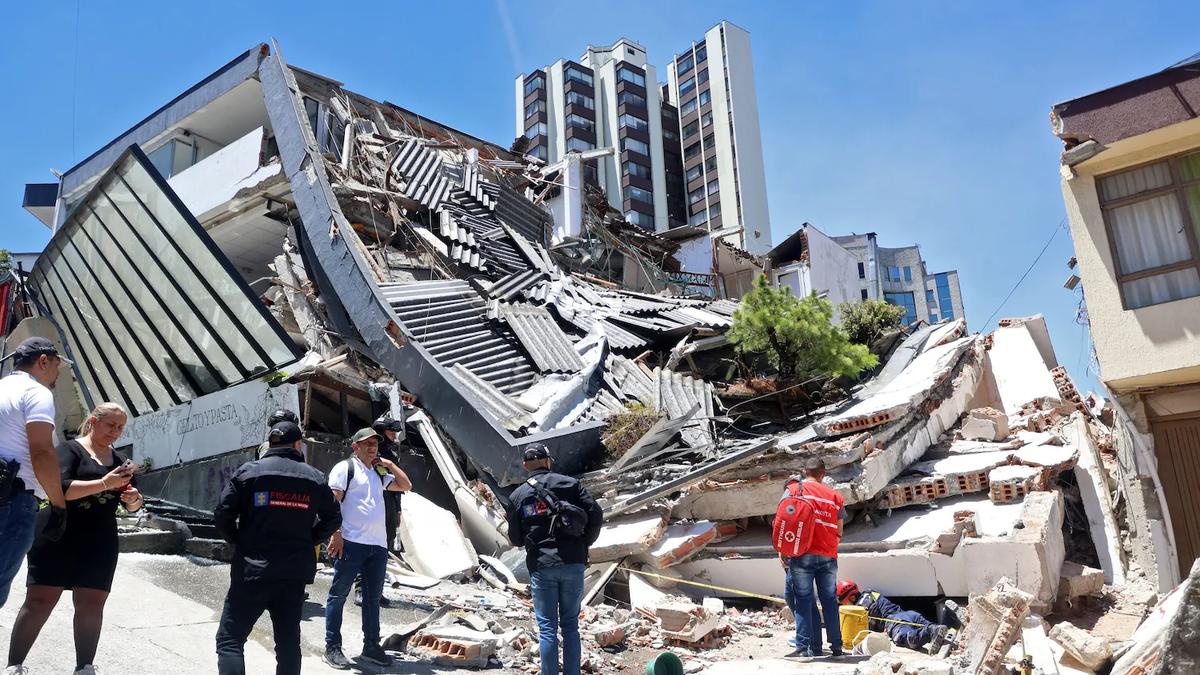
A 7.4-magnitude earthquake struck Colombia on Monday, leaving at least 273 people dead and over 4,000 missing. The disaster has dominated the first days of President Abelardo de la Espriella's term in office, with the government's response being closely watched both domestically and internationally.
The earthquake response has highlighted the new president's sharp turn towards the Trump administration and its allies. De la Espriella's government initially rejected offers of search and rescue help from countries that were not internationally certified, sparking criticism and speculation about the decision-making process. The fact that Colombia has recently restored diplomatic ties with Israel and recognized Moroccan sovereignty over Western Sahara has led some to wonder if ideological considerations played a role in the choice of rescue teams.
The people of Colombia, particularly those in the affected regions, are bearing the brunt of the disaster. With many still trapped under rubble, the delay in accepting international aid has been widely criticized. The mayor of San José del Palmar has expressed feelings of abandonment, and the lack of heavy equipment in remote areas has hindered rescue efforts. The human cost of the disaster is likely to be high, and the government's response will be closely scrutinized in the coming days.
What is being downplayed or omitted in the official statements is the potential political motivation behind the government's decision to accept aid from certain countries. The fact that Colombia has recently aligned itself with the US and Israel on several key issues, including the recognition of Israeli sovereignty over the Golan Heights, has raised questions about the government's priorities and allegiances. The impact of this alignment on the country's relationships with other nations in the region, particularly those with differing views on these issues, is also being overlooked.
In the coming days, readers should watch for further developments in the earthquake response, including the arrival of international aid and the government's efforts to rebuild and recover. The impact of the disaster on the country's political landscape, particularly in relation to de la Espriella's campaign promises and the potential for authoritarianism, will also be important to monitor. Additionally, the reaction of other countries in the region to Colombia's new alignments and the potential for shifting geopolitical dynamics will be worth following.
Editor's Note: The analysis is based on publicly available information and may not reflect the full complexity of the situation on the ground.
Source referenced: FOREIGNPOLICY
This brief was synthesized by our Editorial Engine and reviewed by The Ground Narrative team.