TRENDING

Monday, 5 October 2026
----------------------
24 Rabi' Al-Thani 1448 AH
Chinese Foreign Minister Wang Yi met with a leading UN Secretary-General candidate, emphasizing Beijing's commitment to multilateralism and the aspirations of the Global South. This engagement highlights China's strategic efforts to shape global governance and strengthen its influence among developing nations.
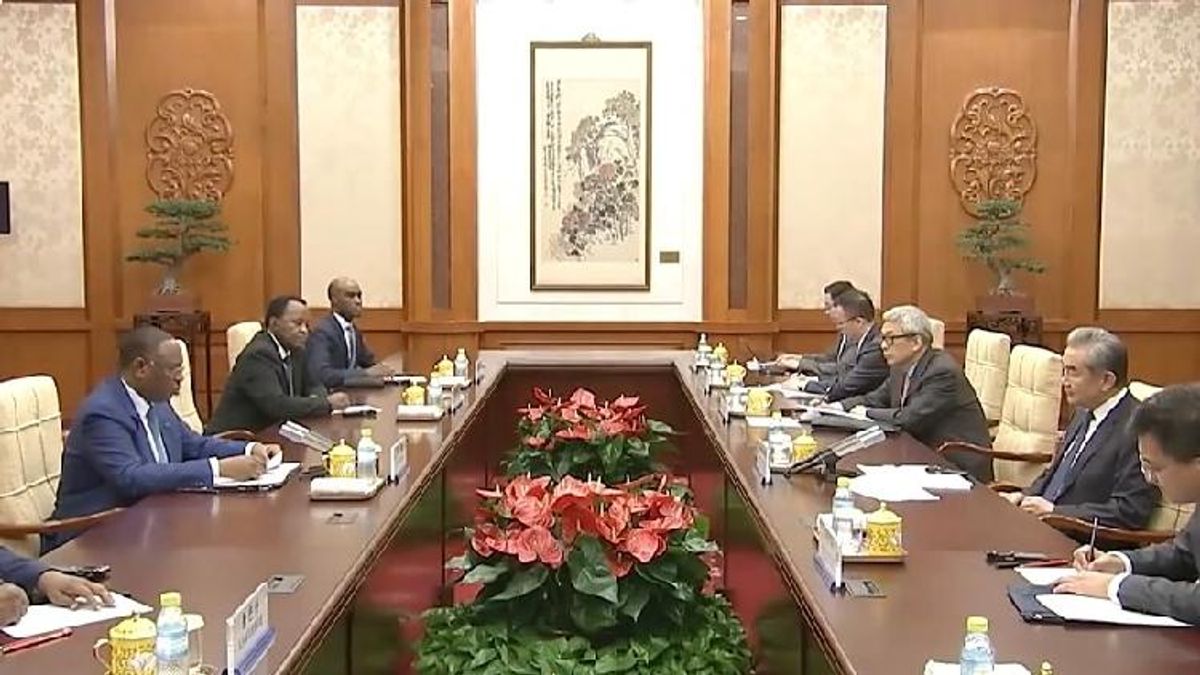
On June 29, 2026, Chinese Foreign Minister Wang Yi held a significant meeting in Beijing with Macky Sall, the former President of Senegal and a prominent candidate for the next United Nations (UN) Secretary-General. The discussions underscored China's consistent advocacy for the UN's central and leading role in global affairs, a stance that reflects Beijing's broader geopolitical strategy to promote multilateralism and a more multipolar world order. This high-level engagement, also attended by former President Umaro Sissoco Embalo of Guinea-Bissau, signals China's active participation in shaping the future leadership and direction of the international body.
Minister Wang Yi articulated China's view that defending, revitalizing, and strengthening the UN is a shared aspiration among its member states. This position is a cornerstone of China's foreign policy, often presented as a counter-narrative to perceived unilateral tendencies by some Western powers. By championing the UN, China seeks to enhance its own legitimacy and influence within the existing international framework, while simultaneously advocating for reforms that align with its interests as a permanent member of the Security Council.
A critical aspect of Wang Yi's remarks was the emphasis on the next Secretary-General positively responding to the calls of member states and attaching importance to the legitimate aspirations of the Global South. This focus is strategically vital for China, which consistently positions itself as a leader and advocate for developing nations. By aligning with the Global South, particularly African countries, China aims to build solidarity, secure diplomatic support in international forums, and advance its own global initiatives, such as the Belt and Road Initiative and the Global Development Initiative. The presence of two former African heads of state at the meeting further highlights the strategic importance Beijing places on its relationships with the continent.
Macky Sall, in his capacity as a UN Secretary-General candidate, articulated a vision for UN reform that is both gradual and pragmatic. Crucially, he stressed the importance of upholding the authority and efficiency of the UN Security Council while focusing on the international development agenda. This perspective on reform likely resonates with China, a permanent member of the Security Council, as it suggests a desire for adjustments that do not undermine the existing power structures or the veto rights of the P5 nations. Sall's appreciation for China's long-standing commitment to multilateralism and support for the UN's central role further solidifies the alignment of their stated objectives.
Furthermore, Sall's firm adherence to the one-China principle is a standard diplomatic prerequisite for high-level engagement with Beijing. This reiteration underscores China's unwavering stance on its territorial integrity, particularly concerning Taiwan, and its expectation that international partners acknowledge this principle. His expressed willingness to work with China and the international community to strengthen unity within the UN and deepen South-South cooperation aligns perfectly with Beijing's broader foreign policy objectives.
China's engagement in the UN Secretary-General selection process, coupled with its consistent advocacy for the Global South, carries significant geopolitical implications. As a permanent member of the UN Security Council, China's stance and potential endorsement of a candidate hold substantial weight. By actively participating in this process and emphasizing the needs of developing nations, Beijing aims to cultivate a more favorable international environment for its strategic interests and to project an image of responsible global leadership.
This approach also serves to counter narratives that portray China as a revisionist power seeking to dismantle the international order. Instead, China presents itself as a force for strengthening and reforming the existing system from within, albeit in a manner that better reflects the interests and growing influence of non-Western states. The ongoing dialogue with potential UN leaders and the emphasis on South-South cooperation are integral to China's long-term strategy of fostering a multipolar world where its voice and values play an increasingly prominent role in global governance. The outcome of the Secretary-General selection and the direction of UN reform will be closely watched as indicators of evolving global power dynamics and the future of international cooperation.
Source referenced: CGTN
This brief was synthesized by our Editorial Engine and reviewed by The Ground Narrative team.


