TRENDING

Thursday, 22 October 2026
----------------------
11 Jumada Al-Awwal 1448 AH
China and Thailand have issued a joint statement affirming a 'community with a shared prosperous future,' signaling a significant deepening of bilateral ties. This move underscores Beijing's expanding influence in Southeast Asia and Thailand's strategic balancing act amidst evolving geopolitical dynamics.
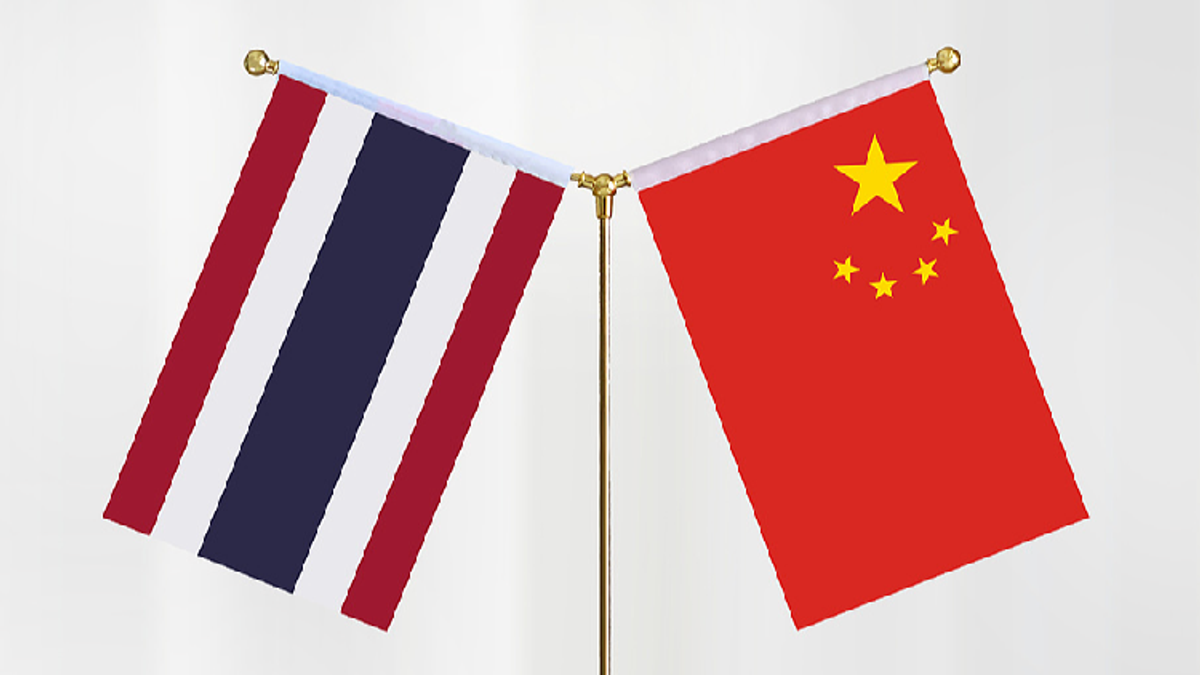
On July 21, 2026, the governments of the People's Republic of China and the Kingdom of Thailand issued a joint statement, formally committing to building a "China-Thailand community with a shared prosperous future." This diplomatic development, while concise in its initial announcement, carries substantial geopolitical weight, reflecting Beijing's ongoing efforts to strengthen its regional partnerships and Bangkok's strategic alignment in a complex international landscape.
The phrase "community with a shared future" is a cornerstone of Chinese foreign policy, championed by President Xi Jinping. It signifies a vision of deeper integration across political, economic, security, and cultural spheres, moving beyond traditional state-to-state relations towards a more intertwined destiny. For China, such communities are instrumental in fostering regional stability, promoting economic interdependence, and building a network of partners that align with its global governance vision. The adoption of this terminology by Thailand suggests a significant embrace of China's diplomatic framework, potentially setting a precedent for other nations in Southeast Asia.
For Beijing, this joint statement with Thailand serves multiple strategic objectives. Economically, it reinforces the Belt and Road Initiative (BRI), particularly in Southeast Asia, a critical region for China's trade routes and supply chains. Thailand's geographical position as a gateway to mainland Southeast Asia makes it a vital partner for infrastructure projects, including high-speed rail networks that could connect China's Yunnan province to the Gulf of Thailand. Politically, deepening ties with Thailand strengthens China's influence within the Association of Southeast Asian Nations (ASEAN), a bloc that Beijing views as crucial for regional stability and its broader Indo-Pacific strategy. Furthermore, by fostering closer relationships, China aims to counter the influence of rival powers, particularly the United States, which has sought to bolster its alliances and partnerships in the region.
Thailand's decision to formalize a "community with a shared prosperous future" with China reflects its long-standing foreign policy of balancing relations between major global powers. Historically, Thailand has maintained strong ties with the United States, but in recent decades, it has increasingly diversified its partnerships, with China emerging as a primary economic and diplomatic partner. For Bangkok, the benefits are largely economic, including access to Chinese investment, technology, and its vast consumer market. Infrastructure development, particularly in transportation and digital connectivity, is a key driver. From a security perspective, while Thailand continues to engage in military exercises with the U.S., closer ties with China could offer an alternative or supplementary security framework, particularly concerning regional stability and non-traditional threats. This move allows Thailand to leverage its strategic position to secure economic advantages and maintain a degree of autonomy in its foreign policy, avoiding exclusive alignment with any single power.
The joint statement is expected to catalyze further cooperation across various sectors. Economically, this could translate into increased bilateral trade, more Chinese investment in Thai industries, and accelerated progress on joint infrastructure projects. Tourism, a vital sector for Thailand, is also likely to see a boost. Diplomatically, the elevated status of the relationship signifies a more coordinated approach to regional and international issues. This could include enhanced cooperation in multilateral forums, joint efforts on environmental protection, and closer cultural exchanges, all contributing to a more robust and multifaceted partnership.
This development has significant implications for the broader Indo-Pacific region. It underscores the growing trend of Southeast Asian nations deepening their engagement with China, often driven by economic imperatives. For ASEAN, the strengthening of the China-Thailand relationship could influence the bloc's collective stance on regional issues, potentially leading to a more accommodating approach towards Beijing's interests. For the United States and its allies, this move highlights the ongoing challenge of maintaining influence in a region where China's economic gravity is increasingly undeniable. The formalization of a "shared future" community with a key ASEAN member like Thailand reinforces China's narrative of peaceful development and win-win cooperation, even as geopolitical competition intensifies globally. The long-term consequences will depend on how this framework translates into concrete policies and projects, and how other regional and global actors respond to this deepening alignment.
In conclusion, the joint statement between China and Thailand marks a pivotal moment in their bilateral relations and carries substantial weight for the geopolitical landscape of Southeast Asia. It signifies a strategic deepening of ties, driven by mutual economic interests and a shared vision of regional prosperity, while simultaneously navigating the complex currents of global power dynamics.
Editor's Note: Analysis is based on the title and general implications of a 'community with a shared future' statement, as the full text of the joint statement was not provided in the raw article.
Source referenced: CGTN
This brief was synthesized by our Editorial Engine and reviewed by The Ground Narrative team.