TRENDING

Monday, 5 October 2026
----------------------
24 Rabi' Al-Thani 1448 AH
China has issued a strong diplomatic protest against maritime delimitation negotiations between Japan and the Philippines in waters east of Taiwan Island, asserting these talks infringe upon its sovereign rights and violate international law. This development underscores the intensifying geopolitical competition and complex maritime disputes in the Indo-Pacific region.
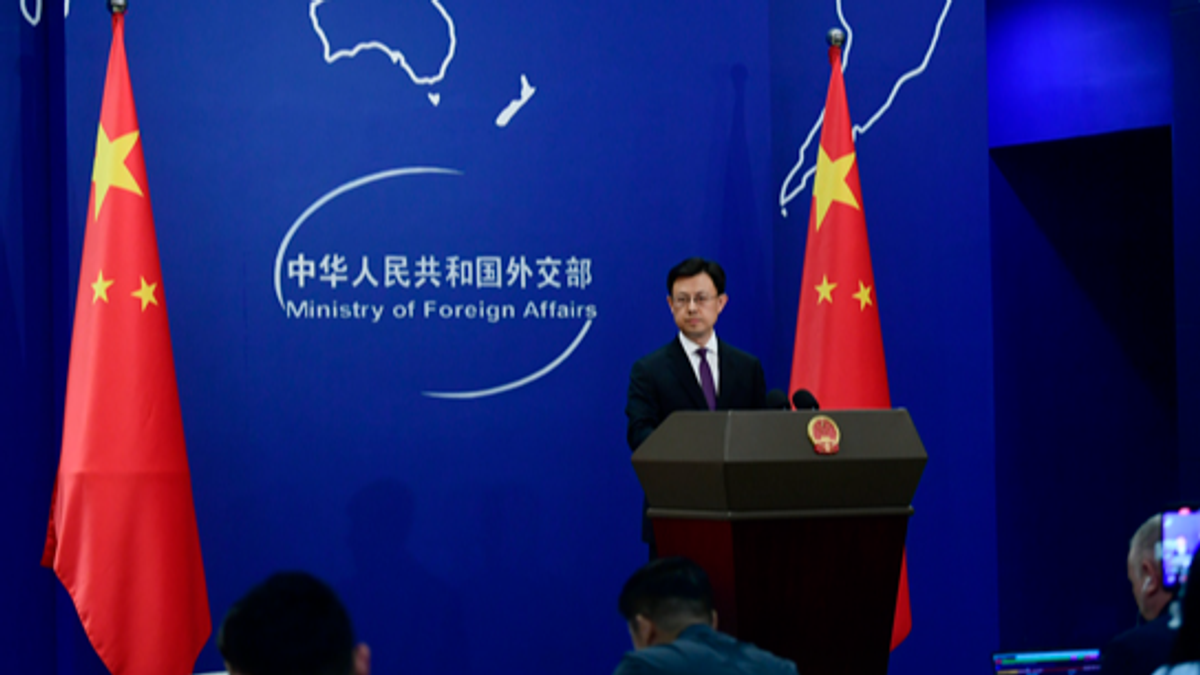
On Monday, June 29, 2026, China's Foreign Ministry spokesperson, Guo Jiakun, publicly denounced ongoing maritime delimitation negotiations between Japan and the Philippines. Beijing asserts that these discussions, taking place in waters situated east of Taiwan Island, constitute a serious infringement upon China's maritime rights and interests. According to Guo, China possesses an exclusive economic zone (EEZ) and a continental shelf in these waters, and any bilateral negotiations that bypass China are deemed a violation of international law, specifically the United Nations Convention on the Law of the Sea (UNCLOS), and fundamental norms governing international relations. China has declared that such actions will not be tolerated, emphasizing the legitimacy and unimpeachability of its own activities in the area.
This diplomatic confrontation highlights the intricate web of territorial and maritime claims that define the geopolitical landscape of the Indo-Pacific. The waters east of Taiwan Island are strategically vital, serving as a critical gateway between the East China Sea and the broader Pacific Ocean. For China, asserting its maritime jurisdiction in this area is intrinsically linked to its broader claims over Taiwan and its strategic interests in controlling access to the Western Pacific. Beijing views any attempts by other nations to unilaterally define maritime boundaries in these contested zones as a direct challenge to its sovereignty and regional influence.
Japan and the Philippines, both key U.S. allies, have their own motivations for engaging in such negotiations. For the Philippines, defining its maritime boundaries is crucial for resource management, security, and asserting its rights in the face of China's expansive claims in the South China Sea. While the immediate focus of this particular dispute is east of Taiwan, it resonates with the broader maritime tensions in the South China Sea, where the Philippines has been a primary claimant against China. For Japan, cooperation with the Philippines on maritime issues serves to strengthen regional alliances and counter what it perceives as China's growing assertiveness. Such bilateral talks can be seen as part of a wider strategy to uphold a rules-based international order and ensure freedom of navigation in critical sea lanes.
The dispute underscores the differing interpretations and applications of UNCLOS, the foundational treaty governing maritime activities. While China invokes UNCLOS to defend its claims, it simultaneously accuses Japan and the Philippines of violating it. This divergence in legal interpretation is a common feature of maritime disputes globally, often leading to diplomatic stalemates and heightened tensions. The absence of a universally accepted and enforced framework for resolving overlapping claims, coupled with a lack of willingness from all parties to submit to international arbitration, perpetuates instability.
Furthermore, the location of these negotiations—east of Taiwan—adds another layer of complexity. This area is not only crucial for maritime trade and potential resource extraction but also holds immense strategic significance in the context of the Taiwan Strait and potential future contingencies involving Taiwan. China's strong reaction serves as a clear signal that it views any actions in this vicinity through the lens of its core national interests, including its sovereignty claims over Taiwan.
China's protest is likely to reinforce existing alliances and potentially spur further security cooperation among nations wary of Beijing's maritime expansion. The collaboration between Japan and the Philippines, both treaty allies of the United States, can be interpreted as a move to strengthen a united front in the Indo-Pacific. This trilateral dynamic, involving the U.S. and its allies, is a significant factor in regional security calculations. Increased diplomatic friction over maritime boundaries could lead to more frequent naval and coast guard patrols, further militarization of disputed areas, and a heightened risk of miscalculation.
Looking ahead, this incident suggests a continuation of the diplomatic and strategic competition in the Indo-Pacific. While the immediate impact is a diplomatic protest, the underlying issues of sovereignty, resource control, and adherence to international law remain unresolved. The ability of regional and global powers to manage these disputes peacefully, through dialogue and adherence to established legal frameworks, will be critical for maintaining stability in one of the world's most strategically important regions.
Source referenced: CGTN
This brief was synthesized by our Editorial Engine and reviewed by The Ground Narrative team.


