TRENDING

Tuesday, 6 October 2026
----------------------
25 Rabi' Al-Thani 1448 AH
Israeli airstrikes killed 11 civilians, including children, in southern Lebanon, shattering a fragile US-brokered peace framework. The incident reveals the brutal calculus of power where civilian lives become collateral in the struggle for regional control.
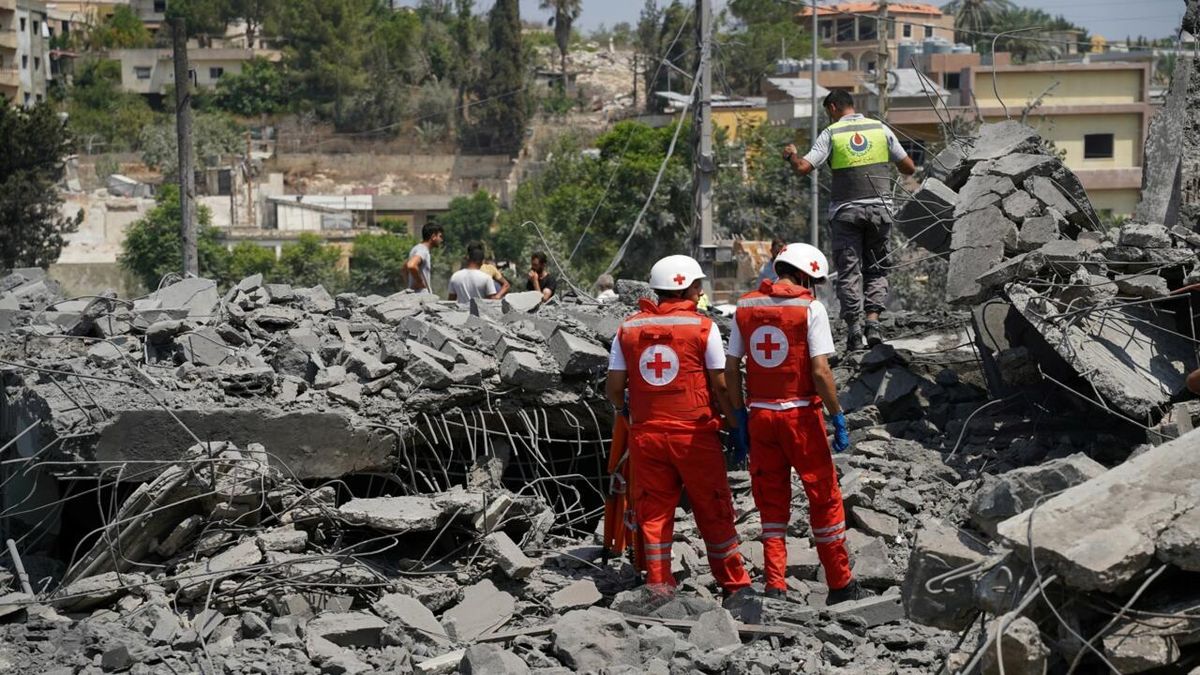
In a stark escalation, Israeli airstrikes targeted southern Lebanon, resulting in the deaths of at least 11 people, among them three children and two women. The strikes, which also wounded 19, were reportedly in retaliation for a Hezbollah attack on Israeli troops. This deadly exchange comes weeks after a US-mediated peace framework was established, intended to ease hostilities between Israel and Hezbollah, underscoring the deep fragility of any agreement that fails to address core power imbalances.
At the heart of this renewed violence lies a complex interplay of power dynamics. Israel's primary objective is to secure its northern border and dismantle Hezbollah's military capabilities, particularly its presence near the border. The current 'peace framework' allows Israeli troops to remain in a 'security zone' within southern Lebanon until Hezbollah disarms and the Lebanese army assumes control – terms Hezbollah vehemently rejects as surrender. For Israel, these strikes serve a dual purpose: immediate retaliation to assert deterrence and a coercive tactic to 'tighten' negotiations, as stated by the Israeli Prime Minister's office. This strategy aims to demonstrate Israel's willingness to use force to achieve its security objectives, irrespective of diplomatic frameworks.
Hezbollah, backed by Iran, derives its power from its armed status and its narrative as a 'resistance' movement against Israeli occupation. Disarming would mean ceding its core identity and political leverage within Lebanon. Its retaliatory threats are essential to maintaining its credibility among its supporters and its deterrent posture against Israel. The group operates within civilian areas, a strategic choice that complicates any military response and inherently places civilians at risk.
The United States, as the mediator of the peace framework, finds its diplomatic efforts undermined. While a State Department official noted that a permanent Israeli military presence is 'not consistent with commitments,' the US has limited leverage to enforce the framework's spirit when both primary actors prioritize their security and political survival over the agreement's stability. The framework itself, by allowing Israeli troops to remain, inherently contains the seeds of future conflict.
The Lebanese government remains largely a spectator, a weak state unable to assert sovereignty over its own territory or control non-state actors like Hezbollah. Its calls for international responsibility highlight its impotence, caught between a powerful neighbor and an entrenched domestic armed group.
The most immediate and devastating cost is borne by the ordinary citizens of southern Lebanon. The 11 killed in villages like Ansar and Deir El Zahrani, including women and children, are not abstract figures; they are families whose lives were abruptly ended in a conflict not of their making. The Lebanese health ministry reports over 4,300 people killed in Lebanon since March 2 in the latest round of hostilities, painting a grim picture of sustained suffering. These communities live under constant threat, their homes and livelihoods vulnerable to strikes, their sense of safety eroded. The 'security zone' for Israel translates into an insecurity zone for Lebanese civilians, where the presence of armed groups and retaliatory strikes are a daily reality. This cycle of violence forces displacement, disrupts daily life, and perpetuates a deep sense of injustice and fear among those who simply wish to live in peace.
Powerful actors often frame events to justify their actions and deflect responsibility. Israel's statement, accusing Hezbollah of 'deliberately put[ting] civilians in that military compound' and emphasizing that the family was 'not the target,' attempts to shift the moral burden. While Hezbollah's operational choices do endanger civilians, this framing conveniently downplays the inherent risk of striking densely populated areas and the predictability of civilian casualties when military targets are embedded within residential zones. It also omits the broader context of Israel's prolonged military presence in southern Lebanon, which Hezbollah views as an occupation, fueling the very 'resistance' it seeks to counter.
Hezbollah, in turn, focuses on its right to retaliate, often downplaying the impact of its actions on the Lebanese civilian population it claims to protect. The US, while acknowledging inconsistencies in the framework, avoids a deeper critique of how its mediated deal might implicitly legitimize a temporary occupation that is inherently unstable and provokes further conflict. All sides emphasize their security needs or rights, while the human cost, especially the long-term trauma and displacement of Lebanese civilians, becomes a secondary, often regrettable, footnote.
The immediate future hinges on Hezbollah's promised retaliation. The nature and scale of its response will dictate the next round of Israeli action, potentially spiraling into a wider conflict. Readers should watch for any further deep strikes into Lebanese territory, particularly north of the Litani River, which would signal a significant escalation. The US will likely intensify diplomatic efforts to de-escalate, but its ability to enforce compliance remains questionable without a fundamental shift in the underlying power dynamics. The long-term viability of the 'peace framework' itself is now severely tested. Ultimately, the question remains whether any agreement can hold when the core issues of sovereignty, disarmament, and occupation are left unresolved, continuing to place the lives of ordinary Lebanese citizens in the crosshairs.
Source referenced: FRANCE24
This brief was synthesized by our Editorial Engine and reviewed by The Ground Narrative team.