TRENDING

Tuesday, 6 October 2026
----------------------
25 Rabi' Al-Thani 1448 AH
US calls for Syrian intervention against Hezbollah in Lebanon highlight a dangerous calculus for Damascus, which faces severe internal and external risks. The move could destabilize both nations and halt Syria's fragile recovery, placing ordinary citizens in the crosshairs of a renewed regional conflict.
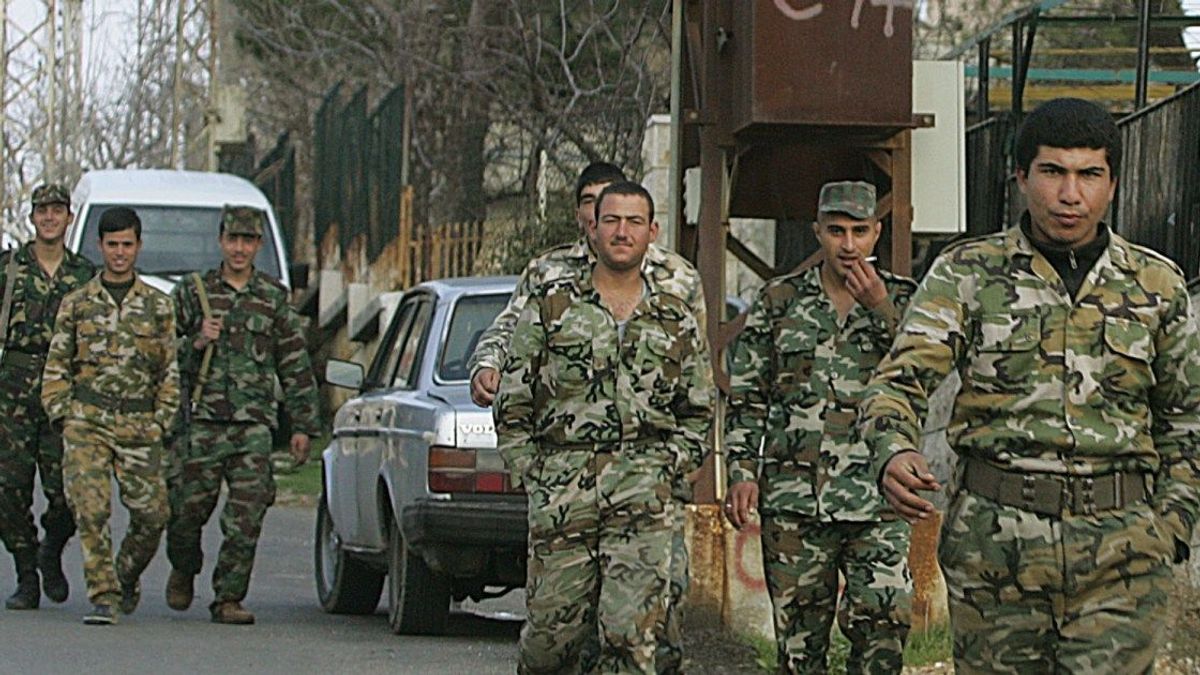
United States President Donald Trump has repeatedly suggested that Syria intervene in Lebanon to disarm Hezbollah. This proposition, floated by Washington, aims to create another pressure point against Iran and potentially force Hezbollah to relinquish its military capabilities. However, for Damascus, the prospect of sending its forces across the border into Lebanon is fraught with immense risks, threatening to unravel its delicate post-conflict stability and economic recovery efforts.
The US sees a potential Syrian intervention as a low-cost option to advance its regional objectives, primarily weakening Iran's influence and Hezbollah's military power. For Syria's new leadership under President Ahmed al-Sharaa, the calculus is entirely different. Damascus is currently prioritizing internal stability, unifying its armed forces, attracting investment, and reintegrating its economy after years of devastating conflict. A military foray into Lebanon would directly undermine these goals. While Syria possesses geographical proximity and some tactical familiarity with Hezbollah's areas, its army is still consolidating and faces significant internal security and economic challenges. A broad operation would drain critical resources, risk military failures that could re-ignite factionalism within its ranks, and expose Syria to severe retaliation from Iran. Tehran, which demonstrated its capacity to strike inside Syria with the attack near al-Tanf, could leverage its allied groups in Iraq or directly target Syrian military sites with drones and missiles, plunging Syria back into a regional conflict arena. Moreover, any intervention without an official request from Beirut would be a blatant violation of Lebanese sovereignty, instantly evoking memories of Syria's nearly three-decade military occupation and undermining Damascus's regional and international legitimacy.
The primary human cost of such an intervention would be borne by the ordinary citizens of both Syria and Lebanon. For Syrians, a new external front means a direct threat to the fragile peace and economic recovery they desperately seek. Investment would flee, reconstruction efforts would halt, and the specter of renewed conflict and displacement would loom large. For the Lebanese, a Syrian military presence would not only reignite deep-seated resentments from the occupation era but also risk escalating internal divisions into a broader conflict. If fighting extends into populated areas like the Bekaa or Beirut's southern suburbs, it would trigger new waves of displacement, deepen Lebanon's already catastrophic economic collapse, and invite expanded interventions from both Iran and Israel. The US and other powerful actors, in their strategic calculations, rarely account for the daily lives and livelihoods of the millions who would be directly impacted by such a destabilizing move.
What is conspicuously downplayed or omitted in the US proposition is the profound complexity and historical baggage of Syrian military involvement in Lebanon. The suggestion treats Syria as a mere instrument, ignoring its own internal vulnerabilities and the deep-seated Lebanese animosity towards any foreign military presence. Governments and official statements often frame such interventions in terms of security objectives, but they rarely acknowledge that Hezbollah's power in Lebanon is not purely military; it is deeply interwoven with a social and political base. An external attempt to disarm it, especially one perceived as serving American or Israeli interests, would likely strengthen Hezbollah's hand by allowing it to rally a broader coalition against perceived foreign aggression. Furthermore, the ongoing Israeli occupation of Lebanese territory complicates any disarmament efforts, making them appear imposed and biased, thereby weakening the Lebanese government's ability to assert its authority. The US narrative simplifies a multi-layered, historically charged conflict into a transactional security problem, ignoring the human and political realities on the ground.
Readers should closely watch Syria's internal political and economic trajectory. President al-Sharaa's ability to maintain stability and attract foreign capital will be a key indicator of Damascus's resolve to avoid external entanglements. Any signs of renewed internal factionalism or economic stagnation could alter the calculus, though direct intervention remains highly unlikely given the costs. In Lebanon, the focus will remain on the government's attempts to assert its sovereignty and manage the delicate balance of power with Hezbollah. Any official request from Beirut for Syrian assistance, or a broad regional understanding providing political and legal cover, would be a significant, though improbable, shift. More realistically, watch for Syrian efforts to tighten border controls, curb smuggling, and enhance intelligence sharing with Lebanon – a less risky and more sustainable approach that limits Hezbollah's logistical depth without granting it the legitimacy of resisting foreign intervention. The true measure of power will be seen in who can avoid being drawn into a conflict that benefits few but costs many.
Source referenced: ALJAZEERA
This brief was synthesized by our Editorial Engine and reviewed by The Ground Narrative team.