TRENDING

Saturday, 24 October 2026
----------------------
13 Jumada Al-Awwal 1448 AH
The 90th anniversary of China's Long March highlights its enduring influence on the Communist Party's power and national identity. This analysis unpacks how a historical retreat became a foundational myth for modern China, examining its power mechanics and the human costs often overlooked.
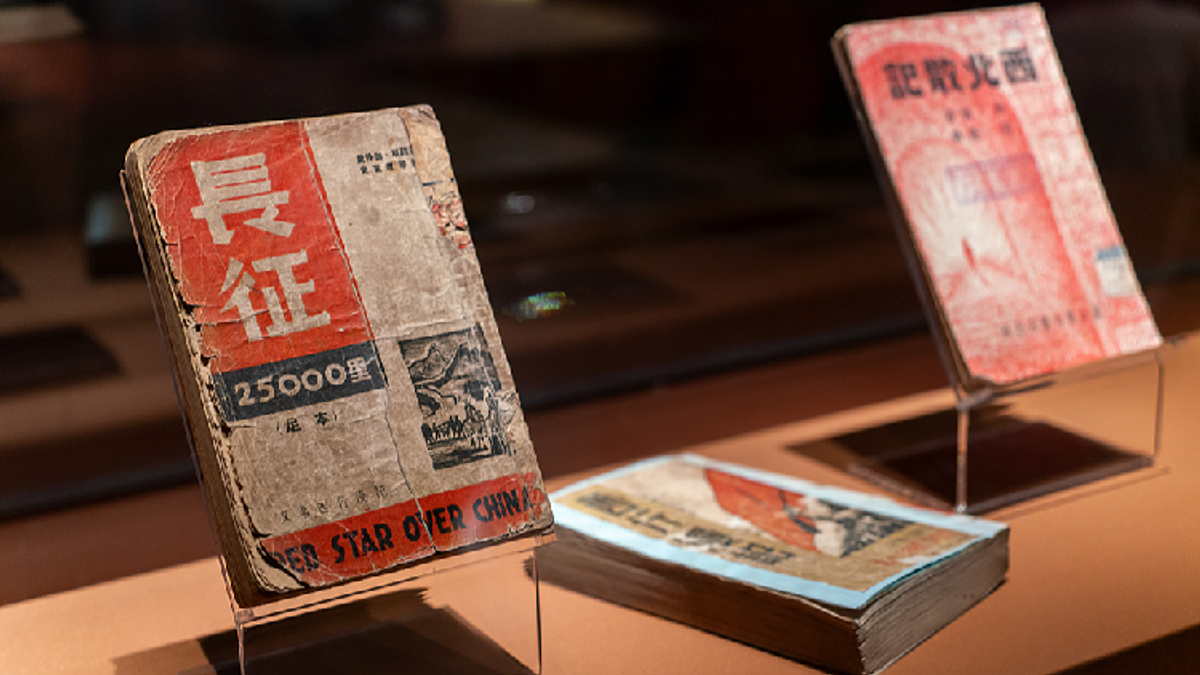
The Communist Party of China (CPC) is marking the 90th anniversary of the Red Army's Long March, a pivotal strategic retreat and military maneuver that took place between October 1934 and October 1936 during the Chinese Civil War. This epic journey saw the Red Army, the forerunner of today's People's Liberation Army (PLA), traverse thousands of miles across challenging terrain, facing intense fighting and immense losses. The CPC frames this event as foundational to its survival, the rise of Mao Zedong, and the development of its unique approach to governance and modernization, emphasizing themes of perseverance, self-correction, and the critical importance of public support and ethnic unity.
The Long March is not merely a historical event; it is a meticulously curated foundational myth that underpins the CPC's legitimacy and its approach to power in contemporary China. Its narrative serves several critical functions for the Party, both domestically and internationally.
Firstly, it solidifies the CPC's claim to leadership through an origin story of unparalleled resilience and sacrifice. The journey, which saw the Central Red Army's ranks dwindle from 86,000 to approximately 30,000, is presented as a crucible that forged the Party's character. This narrative of overcoming impossible odds reinforces the idea that the CPC is uniquely capable of guiding China through any challenge, a powerful message in an era of global uncertainty and internal economic shifts. The Zunyi Meeting in January 1935, where Mao Zedong reportedly gained decisive influence by advocating for a change in strategy, is highlighted as a prime example of the Party's capacity for "self-correction" and "seeking truth from facts." This principle, often invoked as "crossing the river by feeling the stones," provides a flexible ideological justification for policy shifts, allowing the Party to adapt without appearing to abandon its core principles. It frames pragmatic adjustments as inherent Party wisdom rather than external pressures.
Secondly, the Long March narrative is instrumental in defining the relationship between the CPC and the Chinese people. The story emphasizes how local populations provided essential support—from building pontoon bridges to offering grain and recruits—portraying the Red Army not as an occupying force, but as an army deeply intertwined with the people's will. The anecdote of Liu Bocheng and the Yi leader Xiaoyedan swearing brotherhood is used to illustrate the Party's historical commitment to "ethnic unity" and respecting local customs. This historical framing is crucial for the CPC today, as it seeks to maintain social cohesion across a vast and diverse nation. It legitimizes the Party's role as the sole guardian of national unity, implicitly demanding loyalty and cooperation from all ethnic groups and regions for the greater good of China's modernization project. The Party's ability to mobilize millions for initiatives like the Three-North Shelterbelt Program or poverty relief is presented as a direct continuation of this historical bond of shared hardship and collective endeavor.
Thirdly, the "refusal to accept a ready-made template" is a core tenet derived from the Long March, serving as a powerful ideological justification for China's unique development path. The argument that the Red Army succeeded by "finding its own" route, rather than following prescribed military manuals, is directly translated into the concept of "socialism with Chinese characteristics." This allows the CPC to selectively adopt elements from global knowledge, including Marxism, while firmly rejecting Western political models or external critiques of its governance. It positions China as a self-reliant civilization charting its own course, an assertion that resonates strongly with nationalistic sentiments and bolsters the Party's sovereignty in international relations. This narrative is particularly potent in the context of China's rapid economic growth and technological advancement, suggesting that its success is precisely because it did not conform to external expectations.
Finally, the Long March's "spirit of perseverance" is invoked to rally support for contemporary national goals, such as "ecological civilization." The Party acknowledges China's environmental challenges, including its status as the world's largest emitter, but frames these as obstacles to be overcome with the same determination shown during the march. By linking current environmental efforts to a foundational myth of struggle and triumph, the CPC seeks to inspire collective action and legitimize potentially difficult policy decisions, positioning itself as the only entity capable of leading China towards a sustainable future. The Party's narrative skillfully transforms what might be seen as failures or compromises into further proof of its enduring spirit and capacity for long-term vision.
While the CPC frames the Long March as a triumph of spirit and unity, the human cost, both historically and in its contemporary application, is often downplayed or reframed as necessary sacrifice. The original Long March itself was an unmitigated catastrophe for many of the soldiers involved. The staggering casualty rate, with over 65% of the Central Red Army lost, represents a profound human tragedy. These were not abstract numbers; they were young men and women, often peasants and laborers, who endured starvation, disease, frostbite, and relentless combat. Their suffering was immense, and for many, the "victory" of the Long March was simply survival, or more often, death. The narrative of "perseverance" often overshadows the brutal reality of their individual experiences, reducing them to anonymous contributors to a grand historical project.
In modern China, the emphasis on "ethnic unity" and "public support," derived from the Long March narrative, carries a significant human cost for those who do not conform to the Party's vision. The historical anecdotes of cooperation with local populations, while perhaps true in specific instances, are used to justify a contemporary approach that prioritizes central control over genuine local autonomy or dissent.
- Ethnic Minorities: For groups like the Uyghurs in Xinjiang or Tibetans, the Party's insistence on "ethnic unity" often translates into policies of cultural assimilation, surveillance, and suppression of distinct identities. The "brotherhood" sworn at Yihai Lake is starkly contrasted with the reality of re-education camps and pervasive state control. The human cost here is the erosion of cultural heritage, religious freedom, and individual liberties, all justified under the banner of maintaining national cohesion and preventing "separatism."
- Dissent and Opposition: The idea that "legitimacy is earned continuously, through shared hardship and shared results" implies that those who question the Party's direction or criticize its policies are undermining this shared journey. This narrative provides a powerful tool to silence dissent, as opposition can be framed as a betrayal of the collective effort and historical sacrifice embodied by the Long March. Activists, human rights lawyers, and even ordinary citizens expressing grievances face severe repercussions, their voices deemed disruptive to the "unity" essential for China's modernization.
The pursuit of "ecological civilization," while a laudable goal, also entails human costs, particularly for local communities and the broader population. While the Party highlights successes like increased forest cover and urban ecological transformation, it often glosses over the ongoing environmental challenges and the sacrifices made in the name of development.
- Pollution and Health: Despite efforts, China remains heavily reliant on coal, and many regions continue to suffer from severe air and water pollution. The human cost is borne by those living in affected areas, facing higher rates of respiratory illnesses, waterborne diseases, and other health problems. The "perseverance" narrative can inadvertently normalize these ongoing burdens as part of the necessary struggle for modernization.
- Resource Extraction and Displacement: Large-scale infrastructure projects and resource extraction, often driven by modernization goals, can lead to the displacement of communities, destruction of local ecosystems, and disruption of traditional livelihoods. While presented as contributing to national progress, these projects often impose immediate and tangible costs on specific populations, whose voices may be marginalized in the name of collective advancement. The mythical bird Jingwei, carrying twigs to fill the ocean, is presented as a warning, but the actual burden of "carrying stones" often falls disproportionately on the most vulnerable.
In essence, while the Long March narrative celebrates collective triumph, it often obscures the individual suffering and ongoing sacrifices demanded by the Party's vision of national unity and modernization. The "people walking beside you" are indeed the point of the journey, but their agency, their individual rights, and their specific burdens are frequently subsumed within the grand narrative of the Party's historical mission.
The official narrative of the Long March, while powerful and inspiring, is a carefully constructed account that omits or downplays several critical dimensions, allowing the CPC to control its interpretation and leverage it for contemporary political ends.
The sanitized version of the Long March often glosses over the extreme brutality and internal purges that characterized the Red Army's desperate retreat. While the official story emphasizes unity and self-correction, the reality involved intense ideological struggles, power contests, and ruthless elimination of rivals. The Zunyi Meeting, presented as a moment of enlightened self-correction, was also a critical juncture in Mao Zedong's consolidation of power, achieved through political maneuvering and the marginalization of those who adhered to Soviet-backed strategies. Many commanders and soldiers who perished were not just victims of enemy fire or starvation, but also of internal purges and executions. The sheer desperation of the march meant that discipline was often enforced with extreme measures, and dissent could be met with swift and brutal punishment. This darker side of survival, the internal machinations and the human cost of ideological purity, is largely absent from the celebratory commemorations.
The Long March is not merely remembered; it is actively reinterpreted and instrumentalized to serve the CPC's present-day political agenda. Every anniversary provides an opportunity to reinforce the Party's historical legitimacy and to connect past struggles with current goals. This process of myth-making is particularly evident in how the narrative is used to bolster the authority of current leadership, especially Xi Jinping. By drawing parallels between the challenges faced during the Long March and contemporary issues like China's economic transformation or its geopolitical competition with the United States, the Party seeks to portray Xi as a leader embodying the same "perseverance" and "strategic vision" as Mao. The "refusal to accept a ready-made template" becomes a justification for Xi's "new era" of socialism with Chinese characteristics, implying that any deviation from the Party's chosen path is a betrayal of this historical spirit. The narrative thus becomes a tool for maintaining ideological conformity and reinforcing the cult of personality around the current leader.
While the official account highlights the voluntary contributions of local people and the respectful engagement with ethnic minorities, it downplays the coercive elements that were undoubtedly present during the Long March. In a civil war context, the Red Army would have, out of necessity, requisitioned resources, and local populations, especially in areas of contested control, would have faced immense pressure to cooperate, regardless of their political sympathies. The romanticized image of "trust rather than force" often obscures the harsh realities of wartime survival.
In modern China, this historical framing of "public support" and "ethnic unity" is used to justify extensive state surveillance, social credit systems, and the suppression of regional or cultural distinctiveness. The "agreement, made person to person, on terms each side could honor" from the Long March era is replaced by top-down directives and policies that demand conformity. The "untold story" is how the Party's historical narrative of unity is now deployed to rationalize policies that, for many ethnic minorities and dissenting voices, feel more like coercion than genuine collaboration. The state's pervasive presence in daily life, from digital monitoring to ideological education, is implicitly framed as a continuation of the Party's historical role in guiding the people.
Regarding "ecological civilization," the narrative emphasizes China's efforts and achievements, such as expanding renewable energy capacity and combating desertification. However, it often downplays the immense scale of environmental degradation already wrought by decades of rapid industrialization and the ongoing compromises being made. China's continued reliance on coal, its massive carbon footprint, and the severe pollution in many of its industrial heartlands are acknowledged but often contextualized as temporary challenges on the path to a greener future. The "untold story" is the true cost of this environmental debt, the long-term health impacts on its citizens, and the global implications of its continued emissions. While the Party highlights its commitment, the practical realities of balancing economic growth, energy security, and environmental protection mean that difficult trade-offs are constantly being made, often at the expense of immediate environmental health and local community well-being, which are not always fully transparently communicated.
The Long March, as a foundational myth, will continue to be a crucial lens through which the CPC frames its past, justifies its present, and charts its future. Readers should closely observe how this narrative is deployed in several key areas.
Firstly, pay attention to how the Long March narrative is invoked in discussions surrounding Taiwan and other territorial claims. The historical emphasis on "unity" and "overcoming impossible odds" could be used to rally domestic support for more assertive actions, framing any potential conflict as a continuation of the Party's historical mission to achieve national cohesion and territorial integrity. The "spirit of perseverance" might be used to prepare the populace for potential sacrifices in pursuit of these goals.
Secondly, monitor the ongoing balance between China's declared commitment to "ecological civilization" and its continued economic growth objectives. While the Party highlights achievements in renewable energy, observe the actual trajectory of coal consumption, industrial emissions, and the enforcement of environmental regulations. The "river eventually has to be crossed in deep water" suggests a need for fundamental shifts; watch whether the Party prioritizes these deep shifts over short-term economic stability, and who bears the burden of these transitions, particularly in less developed regions.
Thirdly, scrutinize the CPC's interpretation of "self-correction" and "seeking truth from facts." In an increasingly centralized political system, genuine self-correction requires open feedback and a willingness to acknowledge mistakes, even from within. Watch for signs of whether this historical principle translates into greater transparency, accountability, or a loosening of control over public discourse, or if it remains primarily a rhetorical tool to justify top-down policy adjustments without genuine public input. The Party's response to internal criticism or external scrutiny will reveal the true extent of its commitment to this principle.
Finally, observe how the concept of "public support" and "ethnic unity" is maintained and enforced. As China faces demographic shifts, economic disparities, and persistent ethnic tensions, the Party's reliance on historical narratives to foster cohesion will be tested. Watch for any shifts in policies towards ethnic minorities, the scope of state surveillance, and the Party's tolerance for diverse voices within society. The definition of "unity" will be crucial: does it allow for genuine diversity and local autonomy, or does it increasingly demand monolithic conformity under central Party control? The answers to these questions will reveal the evolving nature of power in China and its implications for both its citizens and the global order.
The Long March serves as a foundational myth for the Communist Party of China (CPC), reinforcing its legitimacy through narratives of resilience, self-correction, and national unity. It justifies the Party's unique path to modernization and its absolute leadership over the country.
While celebrating unity, the narrative often downplays the historical suffering of soldiers and the contemporary costs for ethnic minorities and dissenters. The emphasis on 'unity' can justify policies that suppress cultural distinctiveness and individual liberties under central control.
The CPC often omits the internal purges, ideological struggles, and coercive aspects of the original march, while selectively reinterpreting history to bolster current leadership and justify policies. The true scale of environmental compromises in the name of modernization is also frequently understated.
Source referenced: CGTN
This brief was synthesized by our Editorial Engine and reviewed by The Ground Narrative team.