TRENDING

Saturday, 24 October 2026
----------------------
13 Jumada Al-Awwal 1448 AH
Israeli forces imposed a sweeping lockdown across the West Bank after a Hebron shooting, raiding towns and detaining dozens of Palestinians. The move deepens the humanitarian crisis and reshapes power dynamics ahead of elections.
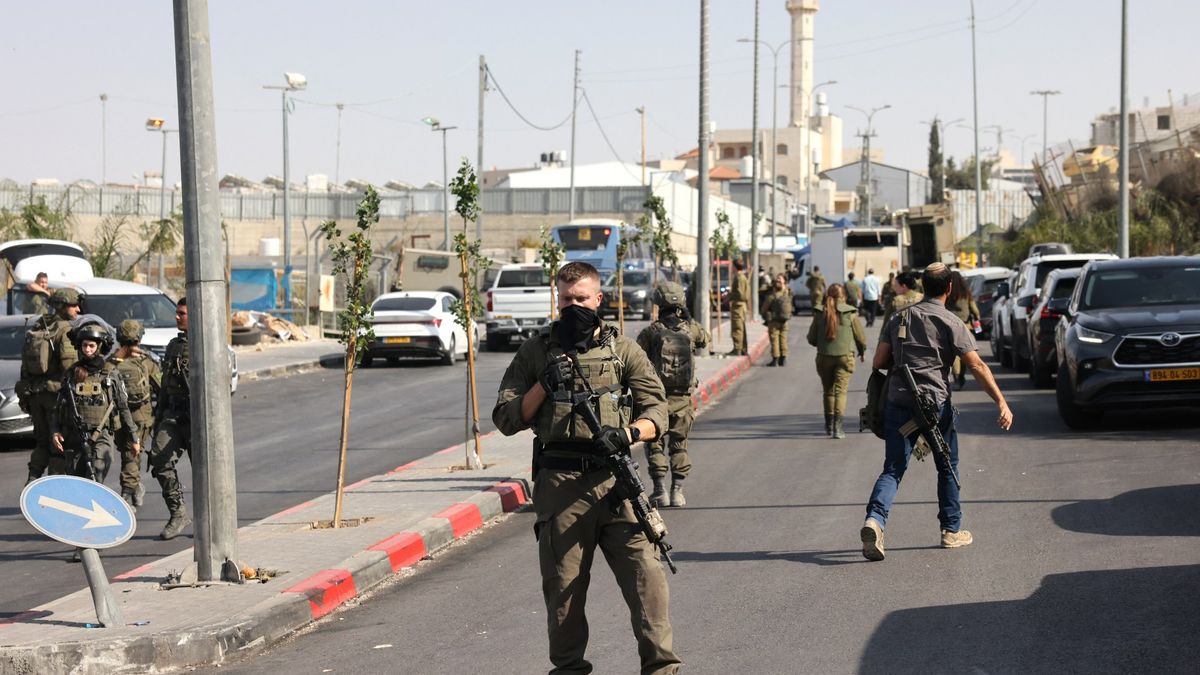
On 24 October 2026 Israel ordered a full‑scale lockdown of the occupied West Bank following a gunfight in Hebron that killed two Israeli soldiers. Within hours, troops swept through at least fifteen towns—including Nablus, Jenin, Tubas and Qalqilya—arresting dozens of Palestinians, demolishing a three‑storey building in Hebron, and ordering mass evacuations in the Ein Deir Bahha area. The operation, described by the army as lasting “several days,” was accompanied by the closure of nearly a thousand checkpoints, effectively turning the territory into a sprawling “small prison.”
The lockdown serves multiple strategic calculations. First, Prime Minister Benjamin Netanyahu faces a volatile election cycle; a hard‑line response projects strength to his right‑wing base and deflects criticism over stalled peace talks. Second, far‑right National Security Minister Itamar Ben‑Gvir has been pushing for full Israeli sovereignty over the West Bank, using the Hebron incident as a rallying point for settlement expansion. By framing the response as a security necessity, the government can justify the deployment of additional troops and the acceleration of settlement construction, which benefits construction firms and settler lobbyists.
Militarily, the operation leverages Israel’s superior surveillance and rapid‑deployment capabilities. The dense network of checkpoints, roadblocks and electronic monitoring stations allows the army to isolate flashpoints, limit Palestinian movement, and conduct targeted raids with minimal resistance. Economically, the closure throttles the already fragile West Bank economy: daily wage laborers cannot reach Israeli job sites, agricultural producers lose access to markets, and supply chains for essential medicines are disrupted. The cost of maintaining such a security apparatus is shouldered by the Israeli defense budget, but the political payoff—consolidating control over contested areas—far outweighs the fiscal outlay in the eyes of the ruling coalition.
Internationally, the move tests the limits of diplomatic pressure. While the United Nations and the European Union routinely condemn settlement activity as illegal under international law, they lack enforcement mechanisms. The United States, pre‑occupied with its own mid‑term elections, offers muted criticism, allowing Israel to act with relative impunity. This asymmetry underscores how power operates through selective enforcement: the more a state aligns with powerful allies, the less its actions are constrained.
The sudden closure of checkpoints chokes access to hospitals in Ramallah, Nablus and Hebron. Ambulances face delays of up to two hours, and patients with chronic conditions—diabetes, hypertension, cancer—miss life‑saving treatments. The demolition of a three‑storey building in Hebron displaced dozens of families, many of whom were already living in overcrowded conditions. Humanitarian NGOs report a surge in mental‑health cases as children witness raids and hear constant gunfire.
Schools in the northern West Bank were forced to shut down for weeks after soldiers set up roadblocks on main arteries. Teachers report that students miss up to 30 % of instructional time, jeopardizing exam preparation and increasing dropout rates. For many families, education is the only perceived pathway out of poverty; its interruption deepens socioeconomic disparities.
Daily wage earners, who constitute the bulk of the West Bank labor force, are unable to travel to Israeli industrial zones that employ roughly 30 % of the Palestinian workforce. Market stalls in Jenin and Qalqilya report a 40 % drop in sales, and olive‑harvesters—already targeted by settler violence—face additional losses as trucks cannot reach collection points. The cumulative effect is a sharp rise in unemployment, pushing more households toward food insecurity.
Official Israeli statements repeatedly label the lockdown as a “temporary security measure,” yet the scale—nearly a thousand checkpoints—mirrors the apartheid‑era system of control. International law experts note that collective punishment of an entire population for the actions of a few gunmen violates the Fourth Geneva Convention, a point largely omitted from diplomatic briefings. By avoiding the term “occupation” and focusing on “security,” the government sidesteps legal accountability.
State‑affiliated Israeli outlets emphasize the heroism of soldiers and the threat posed by “terrorist” elements, while Palestinian media highlight civilian casualties and the erosion of basic freedoms. International coverage often mirrors the Israeli narrative, using language like “clampdown” instead of “mass arrest” and relegating Palestinian voices to background quotes. This framing downplays the systematic nature of the crackdown and obscures the broader strategy of demographic control.
The demolition of structures and forced evacuations clear land for future settlement projects. Real‑estate developers with ties to the settler movement stand to profit from new housing units, yet official communiqués never mention these economic incentives. By presenting the actions solely as security responses, the government masks the profit motive driving territorial expansion.
The next weeks will reveal whether the lockdown remains a short‑term operation or becomes a permanent fixture. Key indicators include: (1) the pace of settlement approvals in the West Bank; (2) any shift in U.S. diplomatic language ahead of its November elections; (3) the response of the Palestinian Authority—whether it can mobilize civil‑society protests or will be further marginalized; and (4) the impact on the upcoming Israeli elections, where security rhetoric could tip the balance toward even more hard‑line candidates. Observers should track checkpoint density maps, humanitarian aid flow reports, and settlement construction permits to gauge the long‑term trajectory of control in the occupied territories.
The lockdown was announced after a gunfight in Hebron that killed two Israeli soldiers. It serves both a security narrative and a political strategy to strengthen the right‑wing coalition ahead of elections.
Nearly a thousand checkpoints restrict movement, delaying medical care, shutting schools, and halting wage labor. The result is heightened health risks, educational disruption, and a sharp rise in unemployment.
The Fourth Geneva Convention prohibits collective punishment of civilian populations. Many legal experts argue that the widespread closures and demolitions violate these provisions, though enforcement remains limited.
Source referenced: ALJAZEERA
This brief was synthesized by our Editorial Engine and reviewed by The Ground Narrative team.


