TRENDING

Sunday, 4 October 2026
----------------------
23 Rabi' Al-Thani 1448 AH
As the US and China engage in an AI supremacy race, China's pragmatic approach to AI has led to widespread public acceptance, while the US struggles with divisive debates and concerns over job displacement. The contrast between the two nations' approaches to AI reveals deeper differences in their technological, economic, and societal values.
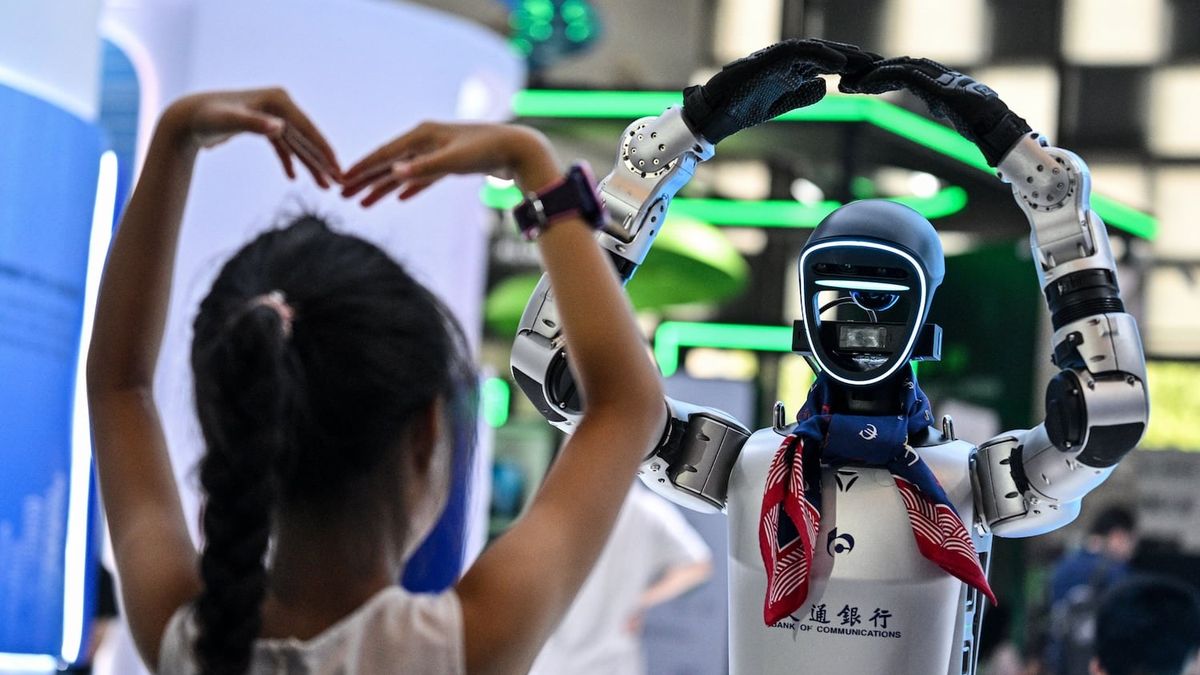
The United States and China are engaged in an AI supremacy race, with the US accusing China of interfering in local data center opposition. However, the issue of AI data centers in the US is genuinely divisive, reflecting the country's ideological and socially divisive AI debates. In contrast, China has a remarkably high level of public trust in AI, with 87% of people expressing trust in the technology.
China's approach to AI is rooted in a long tradition of cybernetics, treating AI as a vital future technology requiring careful management and public education. This approach has allowed China to integrate AI into its existing technological framework, with a focus on practical applications and bureaucratic control. In contrast, the US AI debate is driven by Silicon Valley's millenarian fantasies about superintelligence, leading to a winner-takes-all mentality and concerns over existential threats.
The human cost of the US-China AI rivalry is likely to be significant, particularly in terms of job displacement and societal disruption. As AI becomes increasingly integrated into various industries, workers in the US may face significant challenges in adapting to new technologies, while China's more pragmatic approach may allow it to better mitigate these effects. Furthermore, the US's divisive AI debates may lead to increased social and economic inequality, as those with access to AI education and training may be better equipped to thrive in an AI-driven economy.
What is being downplayed in the US-China AI rivalry is the extent to which China's approach to AI is driven by a desire for social control and surveillance. While China's AI integration has been relatively smooth, the technology is also being used to enhance the country's systems of social control, including surveillance and censorship. The US, on the other hand, is downplaying the potential benefits of a more collaborative approach to AI development, instead emphasizing the need for AI supremacy and dominance.
As the US and China continue to engage in an AI supremacy race, readers should watch for signs of increased cooperation and collaboration between the two nations. The upcoming Xi-Biden summit may provide an opportunity for the two leaders to discuss AI cooperation and establish common standards for AI development. Additionally, readers should monitor the impact of AI on workers and communities in both the US and China, as well as the potential for AI to exacerbate existing social and economic inequalities.
Editor's Note: The analysis is based on publicly available information and may not reflect the full complexity of the US-China AI rivalry.
Source referenced: FOREIGNPOLICY
This brief was synthesized by our Editorial Engine and reviewed by The Ground Narrative team.


