TRENDING

Monday, 26 October 2026
----------------------
15 Jumada Al-Awwal 1448 AH
President Luiz Inácio Lula da Silva credited Brazil’s young voters for his historic fourth‑term victory, while his rival threatens legal challenges. The win reshapes power balances but leaves ordinary Brazilians facing uncertain futures.
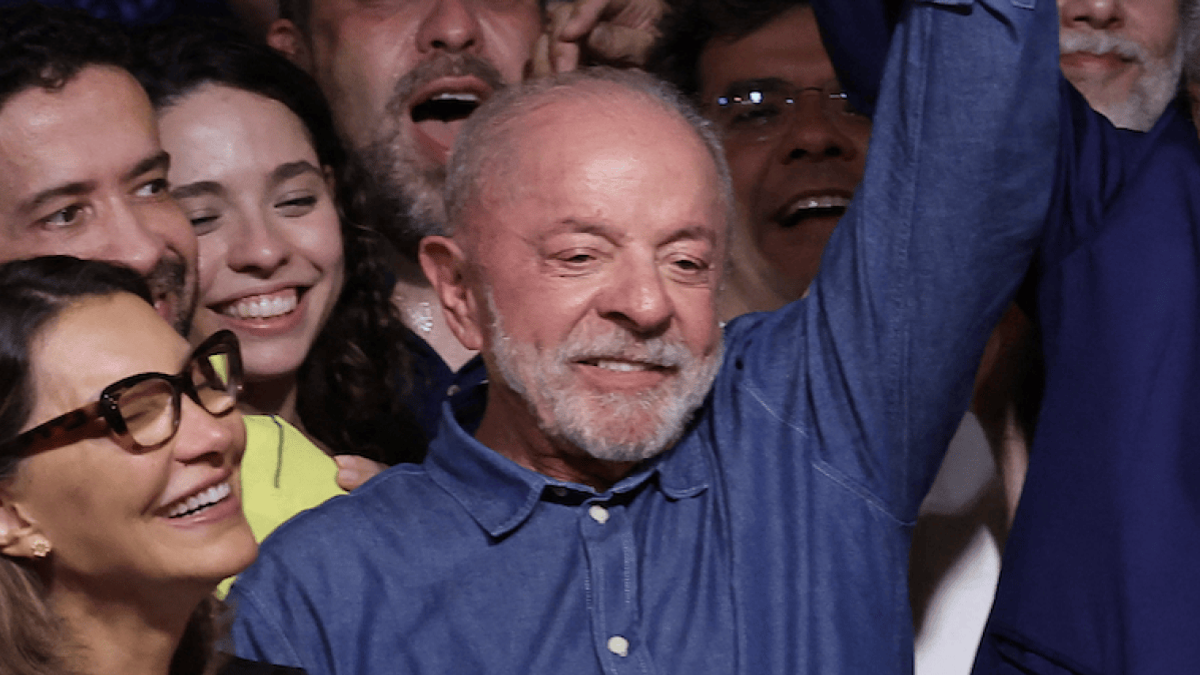
President Luiz Inácio Lula da Silva announced a fourth‑term victory, securing just over 51% of the vote against right‑wing Senator Flávio Bolsonaro. The result, confirmed by Brazil’s electoral authority, marked the first time a Brazilian president has won a non‑consecutive fourth term. In his victory speech, Lula singled out the country’s youth, saying their turnout turned the tide. Bolsonaro, however, refused to concede and vowed to pursue legal avenues to annul the outcome.
The election was less a simple contest between two personalities than a clash of competing institutional interests. First, Brazilian youth—now a larger share of the electorate than any previous generation—were mobilized through social media campaigns, university networks, and grassroots NGOs that framed the vote as a defense of public education, climate policy, and labor rights. Second, the Workers' Party (PT) leveraged its legacy of social programs to promise a continuation of cash transfers, minimum‑wage hikes, and expanded health coverage, appealing to voters still feeling the aftershocks of the 2022 recession. Third, the electoral court (TSE) played a decisive role by tightening rules on misinformation and by pre‑emptively rejecting Bolsonaro’s attempts to flood the media with unverified claims. Behind the scenes, corporate agribusiness lobbies, wary of Lula’s environmental agenda, funneled funds into regional candidates to dilute the PT’s influence, while the military establishment, historically a kingmaker in Brazilian politics, remained publicly neutral but kept a watchful eye on any signs of civil unrest. Internationally, the United States and the European Union signaled cautious support for Lula, hoping to stabilize Brazil’s market‑friendly reforms while avoiding overt interference that could fuel nationalist backlash.
While the headline celebrates youthful enthusiasm, the deeper impact lands on Brazil’s most vulnerable groups. Low‑income families in the favelas of Rio and São Paulo see the election as a potential lifeline for cash‑transfer programs that keep food on the table, yet they also fear that prolonged legal battles could stall funding. Indigenous groups in the Amazon, who have long opposed agribusiness expansion, view Lula’s return as a chance to revive protections, but the ongoing political uncertainty threatens to delay enforcement of land‑rights courts. Public sector workers, especially teachers and health nurses, anticipate wage increases promised during the campaign, but any interruption in governance could postpone budget allocations, leaving schools and clinics under‑resourced. Moreover, the specter of a contested result fuels anxiety among informal workers who rely on stable macro‑economic conditions; a prolonged crisis could depress wages and increase unemployment, undoing years of modest gains.
Official narratives highlight a democratic triumph, yet several powerful actors are quietly reshaping the post‑election landscape. Agribusiness conglomerates, which account for a sizable share of Brazil’s export earnings, have intensified lobbying efforts to secure concessions on land use, hoping a legal stalemate will force the government to negotiate. The military, though not overtly involved, has been conducting discreet briefings with senior officials, signaling readiness to intervene should street protests threaten national security—a legacy of Brazil’s 1964‑85 dictatorship that still informs power calculations. Meanwhile, foreign capital from China and the United States watches the dispute closely; investors are preparing contingency plans that could involve shifting supply chains if policy certainty erodes. These actors benefit from a prolonged ambiguity that keeps policy levers—environmental regulations, trade tariffs, and fiscal spending—flexible. Their messaging downplays the risk of democratic backsliding, framing any legal contest as a routine constitutional process, while the broader public hears repeated assurances that “the system will correct itself.”
The next weeks will reveal whether Brazil’s Supreme Electoral Court can deliver a decisive ruling on Bolsonaro’s annulment petition; a delayed verdict could embolden protest movements and erode confidence in institutions. Watch for shifts in social programs funding as the PT seeks to cement its base before the court’s decision, potentially reallocating resources away from infrastructure projects favored by the private sector. Regional alliances, especially the Mercosur bloc, will monitor Brazil’s stability closely, as any prolonged crisis could ripple through trade negotiations with the European Union and China. Finally, keep an eye on the mobilization of youth groups beyond the ballot box—student unions, climate activists, and digital organizers are already planning nationwide demonstrations that could pressure the government to act swiftly on climate policy and education reform. Their ability to sustain momentum will determine whether the election’s symbolic victory translates into tangible policy change or remains a contested footnote in Brazil’s turbulent political saga.
Bolsonaro can file appeals with Brazil’s Superior Electoral Court, alleging irregularities and seeking a suspension of the vote count. The court will review evidence, but past challenges have rarely overturned clear majorities.
Lula’s administration is expected to strengthen environmental enforcement, which could limit deforestation and land expansion. Agribusiness may face stricter regulations, prompting them to lobby for concessions or shift investment to other regions.
Editor's Note: Analysis based on publicly available election data and known political dynamics; ongoing legal proceedings may alter outcomes.
Source referenced: ALJAZEERA
This brief was synthesized by our Editorial Engine and reviewed by The Ground Narrative team.