TRENDING

Monday, 26 October 2026
----------------------
15 Jumada Al-Awwal 1448 AH
In October 2026, armed motorcyclists swept through camps near Menaka, killing 54 members of the Daoussahak community. The bloodshed exposes a tangled web of jihadist ambition, junta survival, and ordinary people caught in the crossfire.
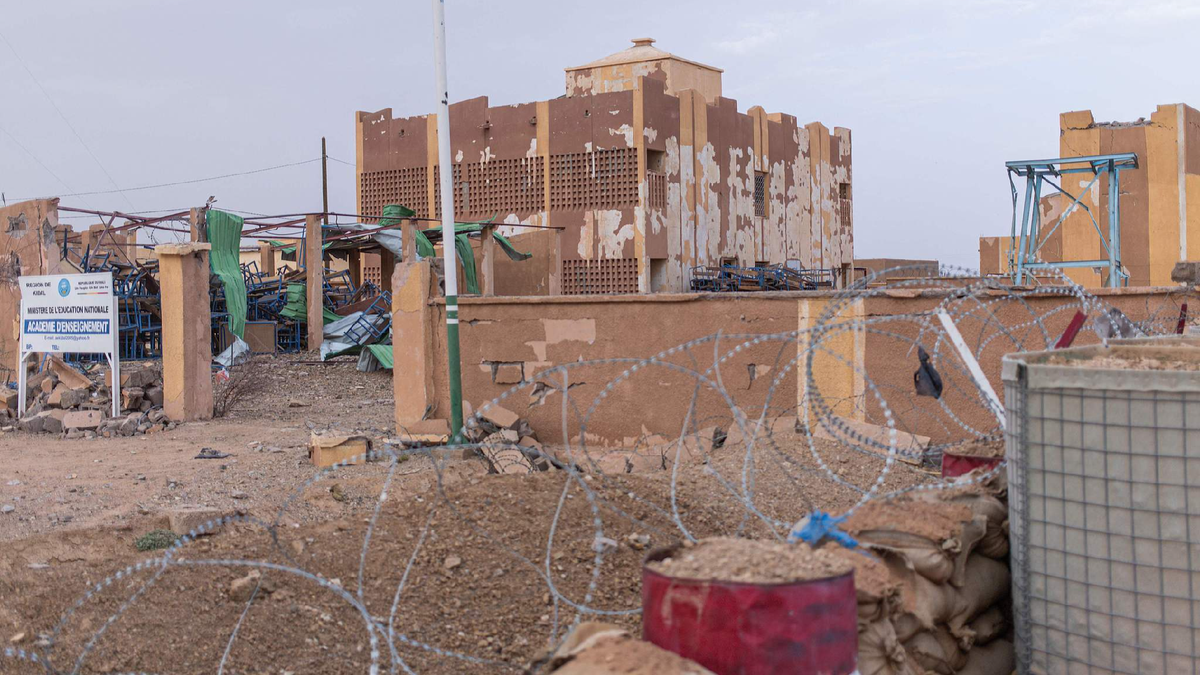
The Mali armed forces confirmed that 54 bodies were recovered after a weekend assault on two makeshift camps in the Tagadayat area, about 50 km from the town of Menaka. Survivors said gunmen on motorcycles opened fire on the camps, which were largely populated by members of the Daoussahak community. The military attributed the attack to the Sahel branch of the Islamic State group, citing local testimonies, while other analysts suggest retaliation linked to the Movement for the Salvation of Azawad (MSA).
The Islamic State Sahel franchise has spent the past decade embedding itself in the porous borders of Mali, Niger, and Burkina Faso. By claiming responsibility for high‑visibility attacks, it seeks to project an image of unstoppable momentum, attracting foreign fighters and local recruits disillusioned by the state’s failure to provide security or services. The motorcycle‑based hit‑squad model is a low‑cost, high‑mobility tactic that exploits the region’s weak road policing and the abundance of cheap, two‑wheel transport.
Since the 2020 coup, Mali’s ruling junta has struggled to legitimize its rule while battling both jihadist groups and separatist movements. Aligning with the MSA, a splinter of the earlier Tuareg rebellion, offers the junta a veneer of local partnership and a way to outsource counter‑insurgency duties. However, the MSA’s roots in the Daoussahak community mean that any attack on Daoussahak civilians can be framed as a punitive response to recent MSA‑backed operations against jihadist outposts.
France’s 2023‑24 withdrawal of Operation Barkhane left a security vacuum that France’s former allies, notably the European Union and the United Nations, have tried to fill with training missions and limited air‑support. Yet funding constraints and political fatigue mean that on‑the‑ground capacity remains thin. Meanwhile, Russia’s Wagner Group has reportedly supplied arms to both state forces and certain rebel factions, creating a paradox where the same weapons may be turned against civilians in attacks like Menaka.
The Sahel’s informal economy—smuggling of minerals, livestock, and narcotics—fuels the conflict. Control of routes near Menaka grants groups access to cross‑border trade with Niger and Algeria. An attack that destabilises a Daoussahak‑dominated camp can shift the balance of power over these lucrative corridors, allowing jihadist groups to impose taxes or seize stockpiles of livestock, directly enriching their command structures.
The immediate victims were Daoussahak men, women, and children who had gathered in makeshift shelters after being displaced by earlier clashes. Nine survivors were rescued and taken to Menaka, but the trauma extends far beyond the dead. Families now face the loss of breadwinners, leaving children without school fees and women without means to support their households. The burial of bodies on the camp site, rather than in formal cemeteries, underscores the breakdown of state‑provided services.
The attack forced the remaining camp residents to flee deeper into the desert, joining already over‑crowded displacement sites near Kidal. These sites suffer from chronic water shortages, limited medical care, and inadequate shelter, heightening the risk of disease outbreaks. Past UN reports have linked such displacements to spikes in malnutrition among children under five, a trend likely to repeat here.
The Daoussahak are traditionally pastoralists; the loss of livestock—either killed in the assault or abandoned during the scramble—represents a severe economic blow. Livestock constitute both a source of income and a cultural asset, meaning that the attack erodes not only immediate purchasing power but also long‑term community resilience.
Mali’s junta has repeatedly framed the violence as a purely internal jihadist problem, omitting references to the flow of weapons from external actors like Russia or the lingering influence of former French bases. By keeping the focus on “terrorist” actors, the regime sidesteps scrutiny over its own procurement channels and the strategic missteps that allowed jihadist groups to acquire motorbikes and small arms.
International outlets have highlighted the Islamic State claim but rarely explore the possibility that the Movement for the Salvation of Azawad may have provoked the retaliation. Local sources suggest that recent MSA raids on jihadist supply caches angered the militants, prompting a brutal message aimed at the Daoussahak community that supports the MSA. This nuance is absent from most official statements, which prefer a binary good‑versus‑evil framing.
Aid agencies have reported that funding for Sahel humanitarian operations fell by 30 % in 2025, yet this contraction is rarely mentioned in government briefings. The resulting shortfall means fewer trucks, less medical staff, and limited capacity to document mass graves or provide psychosocial support to survivors—an omission that masks the full scale of the human tragedy.
The next weeks will reveal whether the Mali military can mount a decisive response without further civilian casualties. Key indicators include: (1) the deployment of additional air‑strike assets, possibly supplied by the EU or Russia, (2) any shift in the junta’s rhetoric toward acknowledging external weapon flows, and (3) the reaction of the MSA—whether it will negotiate a cease‑fire with the junta or intensify its own attacks. Observers should also monitor the flow of humanitarian aid to the displaced Daoussahak families; a sudden surge could signal international pressure, while continued neglect may embolden jihadist groups to repeat such massacres.
In the broader Sahel context, the Menaka massacre may become a bellwether for how state‑backed militias, jihadist franchises, and local ethnic militias will interact as external powers recalibrate their involvement. The balance of power in this desert frontier is fragile, and each violent episode reshapes the calculus for both ordinary people trying to survive and the powerful actors vying for influence.
Mali's armed forces say the Sahel branch of the Islamic State claimed responsibility, but local witnesses suggest the assault may have been retaliation for recent operations by the Movement for the Salvation of Azawad, a group linked to the ruling junta.
The massacre underscores the fragile balance between jihadist groups, the junta‑aligned militias, and displaced civilians, potentially prompting more aggressive counter‑insurgency measures and influencing foreign powers' willingness to intervene or fund humanitarian aid.
Editor's Note: Analysis based on available reports; details may evolve as investigations continue.
Source referenced: CGTN
This brief was synthesized by our Editorial Engine and reviewed by The Ground Narrative team.