TRENDING

Monday, 5 October 2026
----------------------
24 Rabi' Al-Thani 1448 AH
Armenia's Prime Minister Nikol Pashinyan has accused Israel's Foreign Minister Gideon Saar of 'weaponizing' the 1915 genocide, sparking diplomatic tensions between the two nations.
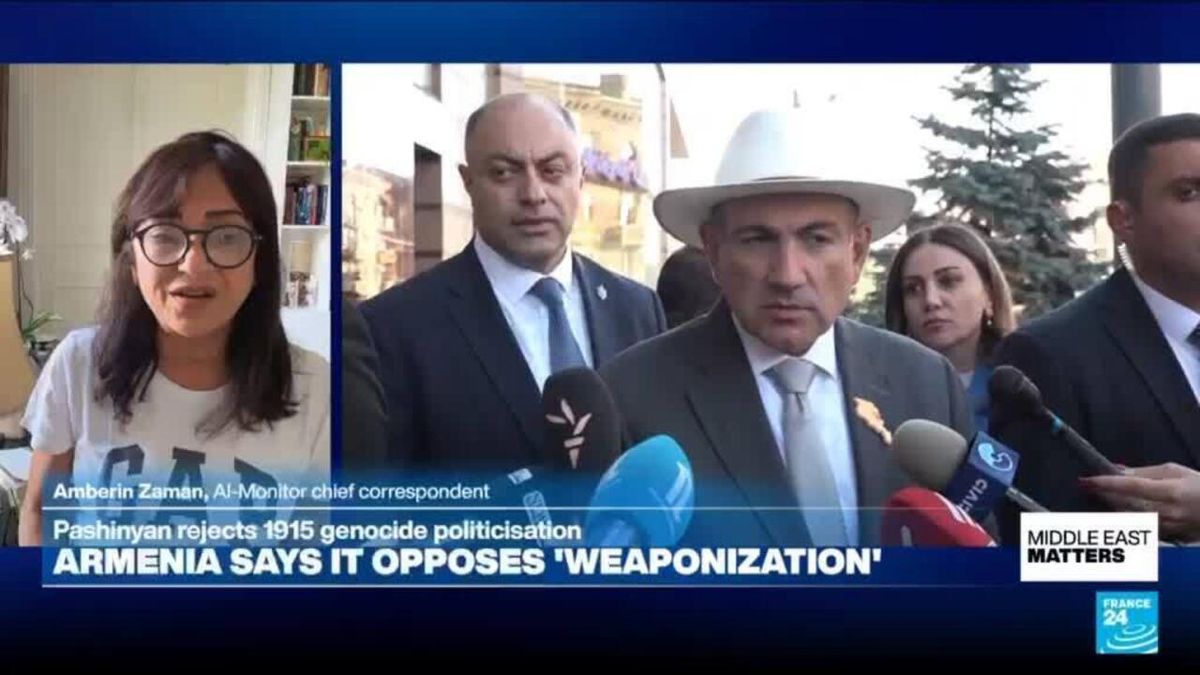
The recent decision by Israel to officially recognize the Armenian genocide has sent shockwaves throughout the region, with far-reaching implications for diplomatic relations between Armenia, Israel, and Turkey.
The Armenian genocide, which resulted in the deaths of approximately 1.5 million people, has long been a contentious issue between Armenia and Turkey. The recognition of this genocide by Israel is a significant development, as it marks a shift in Israel's stance on the matter. This move is likely to be seen as a challenge to Turkey's narrative on the genocide, which has long been a source of tension between the two nations.
Israel's decision to recognize the Armenian genocide is likely driven by a desire to improve its relations with Armenia, a strategic partner in the region. Armenia's location on the border with Turkey and Azerbaijan makes it a crucial player in the region's geopolitics. By recognizing the genocide, Israel may be attempting to strengthen its ties with Armenia and gain a foothold in the region.
The recognition of the Armenian genocide by Israel has significant implications for the region. Turkey, a key ally of Israel and Azerbaijan, is likely to view this move as a challenge to its narrative on the genocide. This could lead to a deterioration in relations between Turkey and Israel, with potential consequences for regional stability.
The diplomatic tensions between Armenia and Israel are likely to have far-reaching consequences for the region. The recognition of the Armenian genocide by Israel may lead to a re-evaluation of Armenia's relations with other nations in the region, including Turkey and Azerbaijan. This could have significant implications for regional stability and the balance of power in the region.
Armenia's Prime Minister Nikol Pashinyan has refused to welcome the recognition of the genocide by Israel, accusing the country's Foreign Minister Gideon Saar of 'weaponizing' the genocide. This response suggests that Armenia is unlikely to engage with Israel on this issue, at least in the short term.
The recognition of the Armenian genocide by Israel has sent shockwaves throughout the region, with far-reaching implications for diplomatic relations between Armenia, Israel, and Turkey. The strategic motivations behind this move are likely driven by a desire to improve Israel's relations with Armenia, but the regional implications are complex and multifaceted. The future consequences of this development are uncertain, but one thing is clear: the diplomatic tensions between Armenia and Israel are likely to have significant implications for regional stability.
Source referenced: FRANCE24
This brief was synthesized by our Editorial Engine and reviewed by The Ground Narrative team.