TRENDING

Monday, 5 October 2026
----------------------
24 Rabi' Al-Thani 1448 AH
Bangladesh's fervent support for Argentina's football team, a phenomenon spanning generations from Maradona to Messi, has transcended sports to influence diplomatic relations, notably leading to the reopening of Argentina's embassy in Dhaka. This unique cultural bond highlights the potent role of soft power in international affairs, even as it underscores the paradox of Bangladesh's own domestic footballing struggles.
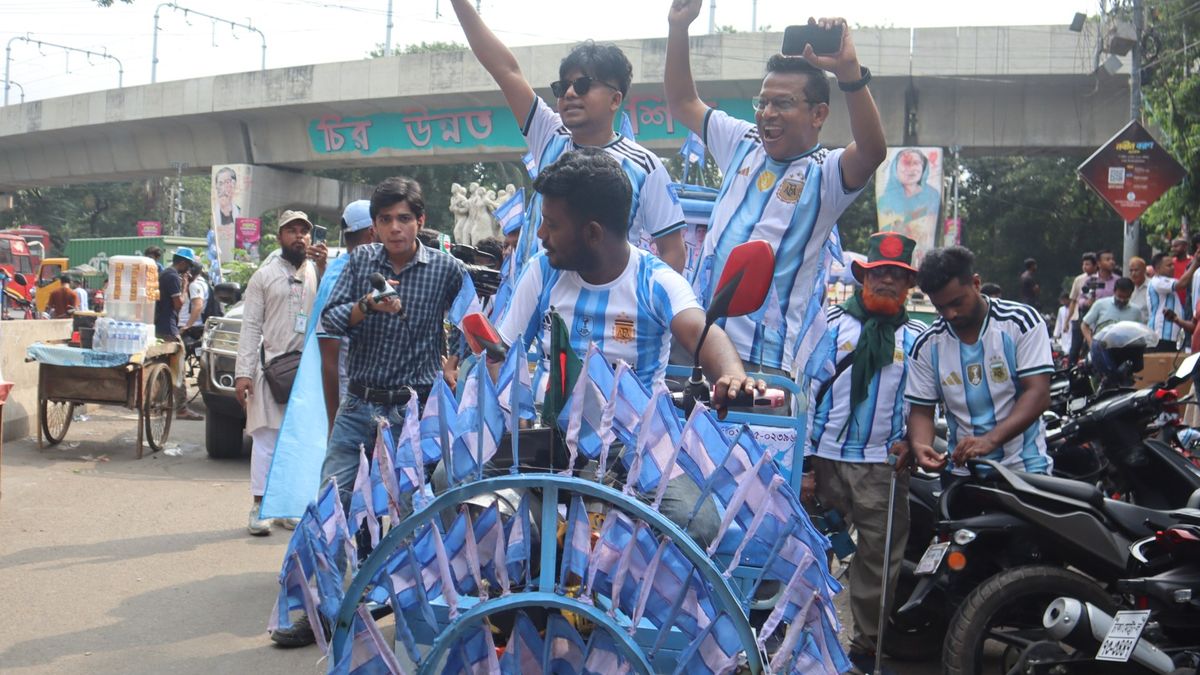
Across the vast expanse of 17,000 kilometers, a vibrant and enduring cultural phenomenon connects the South American nation of Argentina with the South Asian country of Bangladesh. Every four years, during the FIFA World Cup, the streets of Dhaka and cities across Bangladesh erupt in a sea of sky blue and white, mirroring the fervent celebrations typically seen in Buenos Aires. This deep-rooted passion for Argentina's national football team, a legacy passed down through generations, has recently garnered global attention, demonstrating the profound impact of sports on national identity and, increasingly, on international diplomacy.
The intensity of this support was vividly on display during Argentina's opening match in the 2026 World Cup against Algeria. Thousands of Bangladeshi fans gathered before giant screens, chanting 'Argentina! Argentina! Messi! Messi!' as Lionel Messi completed a hat-trick. This scene, far from being an isolated incident, is a recurring spectacle, reflecting a devotion that has shaped cultural narratives and even influenced bilateral relations between the two nations.
The genesis of Bangladesh's unwavering allegiance to Argentina can be traced back to the 1986 World Cup, a tournament indelibly marked by the legendary Diego Maradona. For many, like 50-year-old Abdul Hai, Maradona's individual brilliance, his passionate play, and even the infamous 'Hand of God' moment captivated a generation. This period was particularly significant as Argentina's victory over England, coming just four years after the Falklands War, resonated deeply, perhaps tapping into broader anti-colonial sentiments or simply an admiration for a symbolic triumph against a former imperial power.
Before 1986, Brazil held a dominant following in Bangladesh due to its earlier World Cup successes and iconic players. However, Maradona's heroics established Argentina as a formidable 'counter' to Brazil, creating a passionate rivalry that continues to divide families and neighborhoods across Bangladesh. The emotional connection was further solidified by Argentina's defeat in 1990, where Maradona's tears after the final touched the hearts of ordinary Bangladeshis, cementing a bond that transcended mere sporting success. This emotional space, once occupied by these two South American giants, left little room for other footballing powerhouses like Germany or Italy to cultivate similar followings.
While the older generation's devotion was forged in the fires of Maradona's genius, younger fans today are primarily drawn by the mesmerizing skills of Lionel Messi. For them, Messi's long-awaited World Cup triumph in Qatar in 2022 brought immense joy and validated decades of unwavering support. This intergenerational transfer of allegiance, where children inherit their parents' footballing loyalties, ensures the continuity of this unique cultural phenomenon. Despite the geographical distance and often inconvenient match timings – with many World Cup games played in the dead of night in Bangladesh – the passion remains undimmed, a testament to the magnetic appeal of these footballing heroes.
The global attention garnered by Bangladesh's extraordinary support for Argentina during the 2022 World Cup did not go unnoticed in Buenos Aires. This widespread public affection served as a powerful catalyst for diplomatic engagement. In 2023, Argentina reopened its embassy in Dhaka, ending a 45-year absence that began in 1978 due to budget cuts by a military dictatorship. While the move was driven by broader diplomatic and commercial interests, officials from both nations explicitly acknowledged football's role in fostering closer people-to-people ties, effectively leveraging soft power to strengthen bilateral relations.
Argentina's ambassador to Bangladesh, Marcelo Carlos Cesa, has actively engaged with local fans, joining public screenings and celebrating matches alongside them. This 'football diplomacy' exemplifies how shared cultural passions can be strategically utilized to build goodwill, open channels for dialogue, and potentially pave the way for increased trade, cultural exchange, and political cooperation between distant nations. It underscores the growing recognition of sports and popular culture as significant tools in the modern geopolitical landscape.
Despite the immense passion for international football, Bangladesh faces a stark paradox: its national men's team ranks a lowly 181st in FIFA rankings. This disconnect between fervent fan engagement and domestic sporting underperformance raises critical questions about national development and resource allocation. Experts point to a severe lack of infrastructure, facilities, and proper pathways for young athletes who aspire to play professionally. Unlike cricket, where Bangladesh has achieved significant international success through strategic investment, football has languished, failing to translate public enthusiasm into a robust national program.
Former national coach Shafiqul Islam Manik and sports journalist Shahanoor Rabbani lament the absence of a system to nurture talent and build the next generation of footballers. They argue that while the passion exists, the institutional support and investment required to transform it into national sporting success are conspicuously missing. The example of Bangladesh's cricket triumphs in the late 1990s demonstrates that targeted investment can indeed galvanize national pride and achieve significant sporting milestones. The challenge for Bangladesh now is to harness the same collective energy and translate its deep-seated love for football into a tangible roadmap for its own national team's future, ensuring that the 'ours' in 'the World Cup is ours' can one day refer to Bangladesh itself.
This unique bond between Argentina and Bangladesh, fueled by footballing legends and sustained by generations of fans, serves as a compelling case study in the power of cultural diplomacy. It illustrates how shared human experiences, even those as seemingly simple as a game, can bridge vast geographical and cultural divides, fostering connections that ultimately serve broader geopolitical and commercial interests, while also highlighting the internal challenges of national sporting development.
Source referenced: ALJAZEERA
This brief was synthesized by our Editorial Engine and reviewed by The Ground Narrative team.


