TRENDING

Monday, 5 October 2026
----------------------
24 Rabi' Al-Thani 1448 AH
Houthi forces struck Yemen's Mocha port, killing civilians and military personnel, escalating a conflict that threatens global shipping. This attack signals a dangerous new phase in the regional power struggle, with ordinary people and international trade caught in the crossfire.
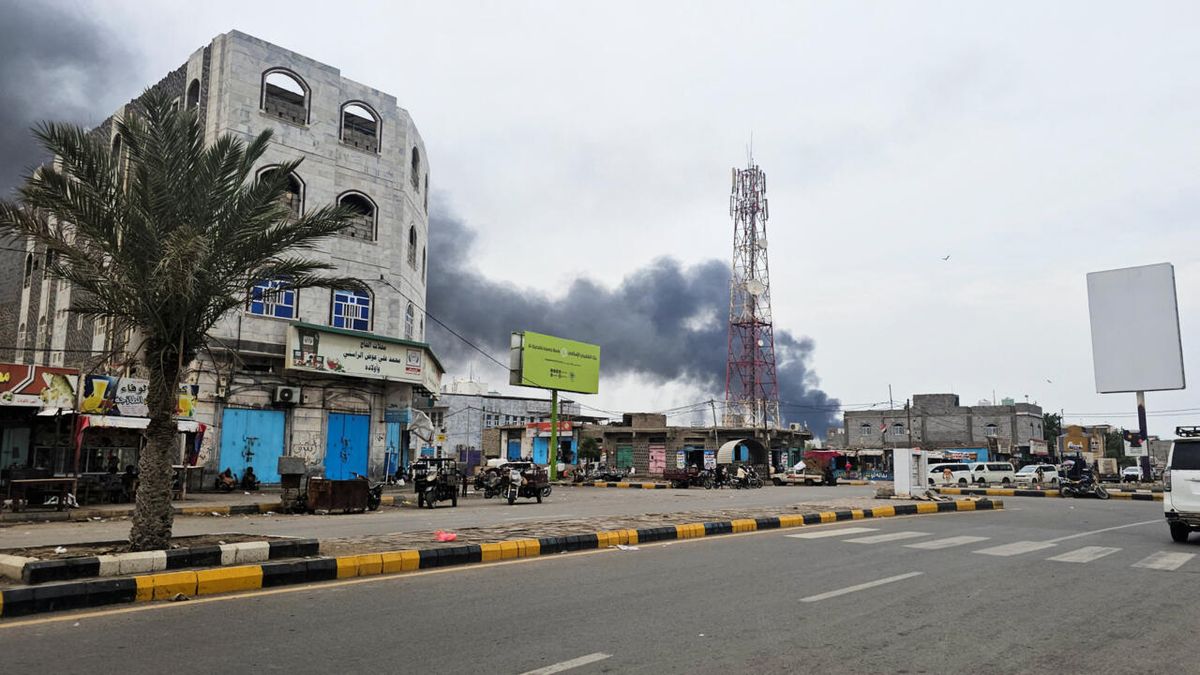
Yemen's Iranian-backed Houthi rebels launched a significant missile and drone attack on the government-held Red Sea port city of Mocha. The strikes resulted in the deaths of seven people, including military personnel and civilians, and wounded 30 others, while also damaging civilian infrastructure. This aggression marks one of the largest waves of Houthi strikes since a 2022 truce, reigniting fears of a full-scale return to civil war and posing a direct threat to the strategic shipping routes of the Red Sea and Bab el-Mandeb Strait.
The Houthi strike on Mocha is not an isolated incident; it's a calculated move in a larger regional power struggle. For the Houthis, controlling or disrupting access to Yemen's Red Sea coast offers significant leverage. Their declared naval blockade against Saudi Arabia, framed as a response to a 'siege,' serves as a direct challenge to Riyadh's maritime security and economic interests. As a key proxy for Iran, these actions allow Tehran to project power and destabilize critical trade arteries without direct military engagement, effectively using asymmetric warfare to pressure adversaries and respond to perceived regional threats, such as the 'US-Israeli war on Shiite Iran' mentioned by the Houthis.
Saudi Arabia, leading a coalition against the Houthis, views these attacks as a direct threat to its borders and regional stability. The recent defense pact signed with Turkey and Pakistan is a strategic maneuver to bolster its security architecture, diversify alliances, and project a unified front against Iranian-backed influence. This alliance aims to secure vital energy infrastructure and maritime trade, signaling a resolve to counter escalating aggression. For global trade, the Red Sea and Bab el-Mandeb are indispensable chokepoints. With ongoing issues in the Strait of Hormuz, any disruption here forces shipping reroutes, increasing costs, transit times, and insurance premiums, effectively impacting global supply chains.
The most immediate and devastating human cost falls upon the Yemeni people. The attack on Mocha, with its civilian casualties and damage to residential areas, is a stark reminder that ordinary citizens remain the primary victims of this protracted conflict. Millions in Yemen already face a dire humanitarian crisis, marked by famine, displacement, and a collapsed economy. The renewed violence and the specter of a full-blown civil war mean more suffering, more lost lives, and a further erosion of any hope for recovery. For them, the geopolitical chess game is a daily struggle for survival.
Beyond Yemen's borders, the ripple effects touch global consumers. Increased shipping costs, driven by higher insurance premiums and longer transit routes, translate directly into higher prices for everyday goods, from electronics to food. This is a hidden tax on ordinary citizens worldwide, a direct consequence of regional instability. Furthermore, the safety of sailors and maritime workers operating in these volatile lanes is compromised, adding a layer of risk to an already challenging profession.
Powerful actors in this conflict consistently downplay or omit crucial aspects of their roles. Saudi Arabia and its allies will emphasize the purely defensive nature of their new pact with Turkey and Pakistan, framing it as a necessary measure against 'terrorism' while downplaying how it might be perceived as an escalation by Iran and its proxies. They will also largely omit the immense civilian suffering in Yemen, focusing instead on the security threat posed by the Houthis to justify their actions.
Conversely, Iran and the Houthis will frame their attacks as legitimate acts of resistance against a 'siege' and regional aggression, while downplaying the targeting of civilian infrastructure and the broader destabilizing impact on international trade. They will also minimize their direct coordination, preferring to emphasize Houthi autonomy to avoid direct accountability for actions that have global ramifications. The international community, while condemning attacks, often simplifies the deep historical grievances and internal Yemeni dynamics, focusing on immediate security threats rather than addressing the complex root causes and the long-term human and economic costs of a fragmented, unstable Yemen.
The immediate future hinges on several critical developments. Readers should watch for potential further Houthi escalation, particularly whether they expand their targets to more international shipping or critical Saudi/allied infrastructure, given their declaration of a naval blockade. The response from Saudi Arabia and its new allies — Turkey and Pakistan — will be crucial. How will this defense pact be operationalized? Will it lead to more direct military confrontation, or a more robust, coordinated defensive posture? The commitment of significant resources from Turkey and Pakistan will signal the pact's true weight.
Globally, the shipping industry's reaction will dictate economic consequences. Will major shipping lines implement widespread rerouting, leading to sustained global economic impact through increased costs and delays? Finally, any international diplomatic efforts to de-escalate the conflict or revive stalled peace talks in Yemen will be vital, though the current trajectory suggests a deepening of the conflict rather than a move towards resolution.
Source referenced: FRANCE24
This brief was synthesized by our Editorial Engine and reviewed by The Ground Narrative team.