TRENDING

Monday, 5 October 2026
----------------------
24 Rabi' Al-Thani 1448 AH
The arrest of a U.S. Marine for the killing of a Japanese woman has reignited Okinawa’s simmering resentment toward the American military presence. Tokyo’s protest underscores the fragile balance between security ties and local anger.
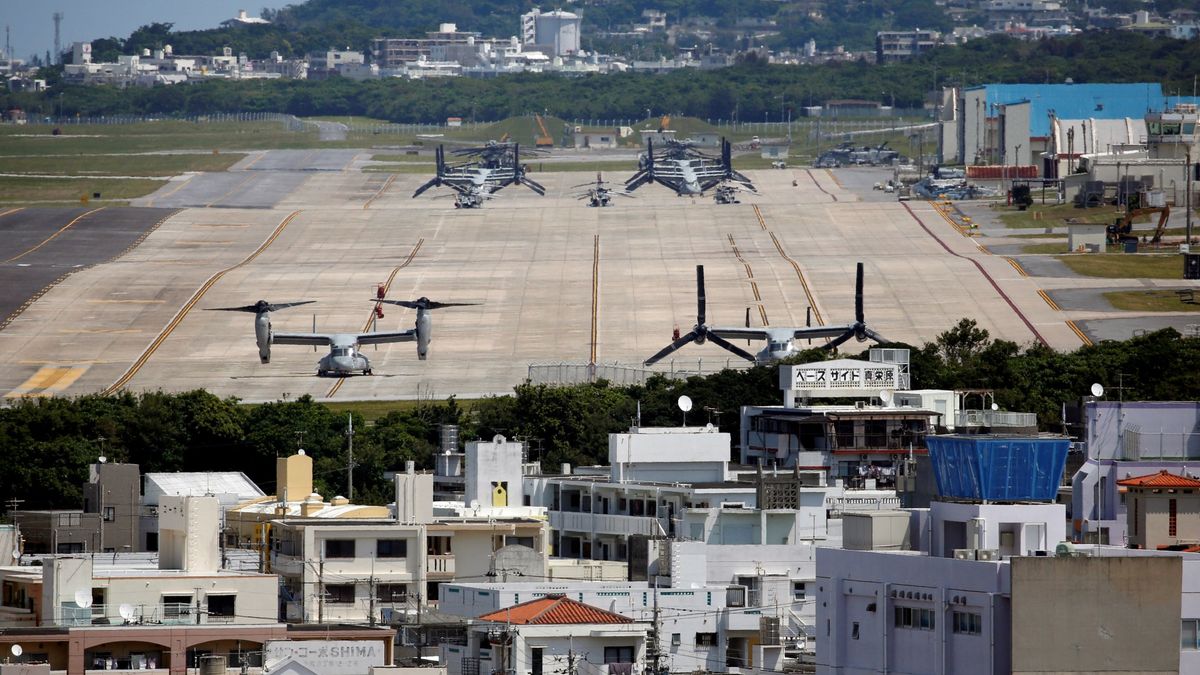
The incident unfolded on a quiet evening in Naha, the capital of Okinawa, when 20‑year‑old Lance‑Corporal Devin Jacob Ballard was taken into custody on suspicion of robbing and murdering 39‑year‑old Anna Yagi. CCTV footage released by local media shows a non‑Japanese man entering a hotel room with Yagi, emerging alone minutes later carrying a bag that appears to contain her belongings. The Japanese prime minister, Sanae Takaichi, posted a statement of “profound regret” and announced a formal protest, while the U.S. ambassador, George Glass, pledged “full cooperation” with Japanese investigators. The case marks the latest in a series of crimes involving U.S. service members that have sparked public outcry on the island, where roughly 54,000 American troops are stationed.
The US‑Japan security pact underpins a decades‑long arrangement that places the bulk of America’s forward‑deployed forces in Okinawa, a legacy of the post‑World War II occupation. For Washington, the island offers a strategic foothold to project power across the East China Sea and to counterbalance China’s growing naval capabilities. For Tokyo, the presence is a double‑edged sword: it guarantees a security umbrella but also obliges the government to shoulder the political fallout of any misconduct. Local politicians, especially those from the opposition, leverage incidents like this to pressure the ruling party into demanding stricter base‑use rules or even relocation. Meanwhile, the U.S. military’s internal justice system, the Uniform Code of Military Justice, operates largely behind closed doors, creating a perception of opacity that fuels Japanese skepticism.
The most immediate victims are Okinawan families who live under the constant hum of military aircraft and the shadow of occasional violent crimes. Yagi’s death reverberates through a community already coping with high unemployment rates and limited economic diversification, where many rely on tourism that can be tarnished by negative headlines. The incident also strains the local economy; businesses near U.S. installations experience periodic boycotts, and property values can dip when base‑related tensions rise. On the American side, the U.S. service members stationed on the island face heightened scrutiny, leading to morale challenges and a sense of being caught between two nations. The broader Japanese public, especially younger Okinawans, grow increasingly disillusioned with a security arrangement that seems to prioritize geopolitical calculations over everyday safety.
While officials on both sides emphasize cooperation, the US military justice process remains largely insulated from civilian oversight, meaning many details of the investigation will not be publicly disclosed until a court‑martial concludes. Japanese authorities, constrained by diplomatic protocols, often cannot compel the U.S. to hand over evidence or personnel for civilian trial, a point that fuels local resentment. Simultaneously, Japanese political pressure is being amplified by opposition lawmakers who see the case as a lever to extract concessions on base‑relocation talks, a contentious issue that has lingered since the 1990s. Beyond the bilateral arena, China’s regional calculations are quietly at play; Beijing monitors U.S. base controversies to argue that American presence destabilizes the area, using incidents like this to bolster its narrative of a “peaceful” regional order under Chinese leadership.
The upcoming court proceedings in the U.S. will test the transparency of military justice and could set a precedent for future incidents. Parallel to the legal process, Japanese lawmakers are expected to intensify calls for a review of the base relocation talks, especially the planned move of Marine Corps Air Station Futenma to a less populated area. Observers should also track any shifts in the bilateral talks between Tokyo and Washington, as concessions on jurisdiction or compensation could signal a recalibration of the security pact. Finally, the narrative surrounding the case in Chinese state media will be a barometer for how Beijing seeks to exploit U.S. base controversies to advance its own strategic messaging in the Indo‑Pacific.
The marine will be tried under the Uniform Code of Military Justice, which conducts court‑martial proceedings within the U.S. military system, not in Japanese civilian courts.
Japanese officials may use the case to pressure Washington for accelerated relocation of contentious bases, potentially reshaping the timeline and scope of the ongoing Futenma relocation negotiations.
Source referenced: ALJAZEERA
This brief was synthesized by our Editorial Engine and reviewed by The Ground Narrative team.