TRENDING

Wednesday, 14 October 2026
----------------------
3 Jumada Al-Awwal 1448 AH
China’s all‑seeing camera network and digital ID regime promise stability but exact a heavy price on migrants, Uyghur families and cash‑strapped local governments. The system’s hidden debts and social friction may soon test Beijing’s grip.
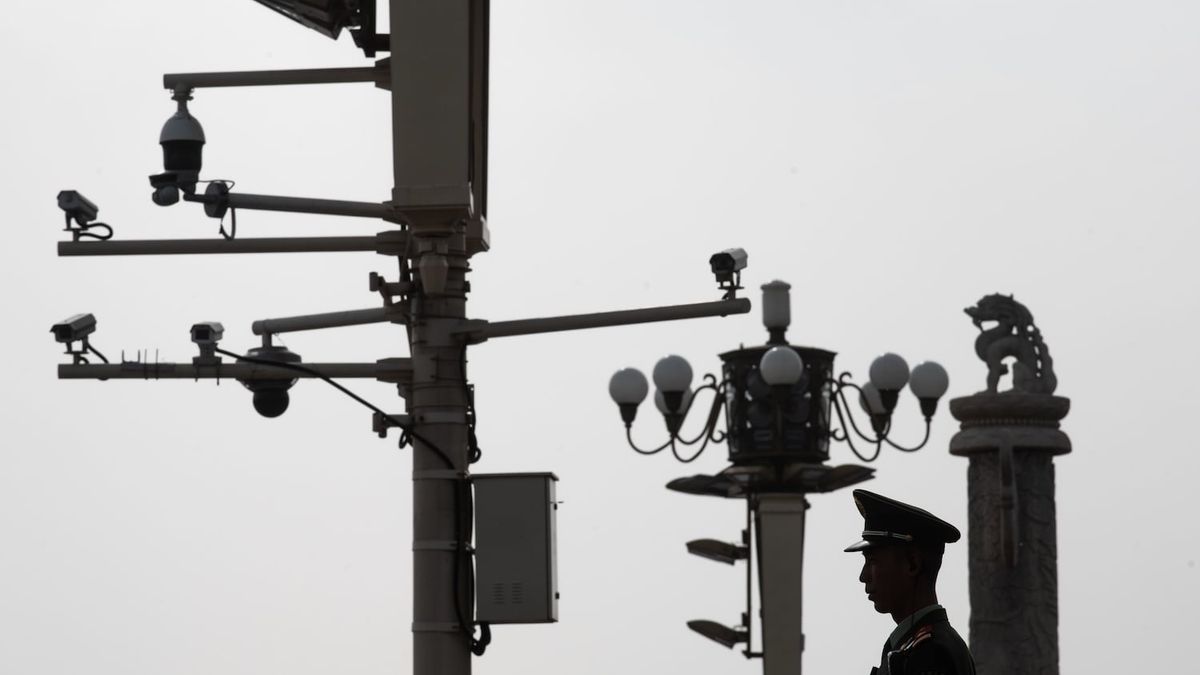
China’s surveillance apparatus has reached a new level of saturation, with facial‑recognition cameras on virtually every street corner, mandatory real‑name registration for phones, and a digital health‑tracking regime that powered the zero‑COVID lockdowns. The system, originally built to monitor dissent, now powers daily commerce, travel and even the delivery of groceries, while the state continues to tighten control in Xinjiang and other restive regions. Recent reporting highlights how the network’s upkeep is draining local budgets and pushing the private sector into the role of unpaid watchdog.
The surveillance boom serves three intertwined goals for the Chinese leadership. First, it reinforces Xi Jinping’s personal grip on the Party by creating a data‑rich environment that can pre‑empt challenges to his authority. Second, the network feeds a broader economic strategy: by digitising citizen movements, the state can steer consumption, allocate resources and suppress labor unrest without overt coercion. Third, the apparatus underpins a security doctrine that treats any deviation—from a protest in Beijing to a cultural practice in Uyghur villages—as a potential threat to national stability. The cost of this architecture is shouldered by provincial and municipal budgets, which are forced to hire thousands of contract workers, purchase massive data‑centres and maintain a fleet of armed patrols. To keep the system afloat, Beijing subsidises hardware purchases by state‑linked tech firms, while quietly shifting operational expenses onto private landlords, delivery platforms and even migrant labour agencies. This creates a feedback loop: the more data the state gathers, the more it can justify expanding its reach, which in turn deepens fiscal strain and dependence on corporate partners.
Migrant workers, who already face precarious employment, are now required to carry an ID‑linked SIM card for any internet access. Failure to comply can result in denied entry to public transport or blocked access to housing complexes. Many are recruited into the massive testing and quarantine workforce that kept the zero‑COVID policy alive, often for wages barely above the local minimum. The relentless monitoring of their movements leaves little room for privacy or spontaneous social interaction, eroding community bonds.
In Xinjiang, surveillance is not a neutral tool but a mechanism of cultural erasure. Facial‑recognition checkpoints, mandatory health‑code scans and constant police patrols have confined Uyghur families to gated compounds where even daily chores are logged. The region’s booming extractive industries—oil, coal and rare‑earth mining—profit from this control, while Uyghur labour is funneled into low‑pay, high‑risk jobs with little chance of upward mobility. The psychological toll of living under perpetual watch is compounded by the loss of language, religion and traditional practices.
Small‑scale farmers and shop owners in the countryside now must install surveillance cameras to obtain permits for market stalls or to qualify for micro‑loans. The cost of hardware and the time spent navigating bureaucratic approvals divert resources from production. When local officials fail to meet surveillance quotas, they are penalised, creating a cascade of fines that push already indebted villages deeper into debt.
Official narratives celebrate the “smart city” vision, yet they omit the staggering debts accrued by provincial treasuries. The central government’s bail‑out packages are piecemeal, leaving many municipalities to service loans taken to fund camera networks and data‑centres. This fiscal pressure limits their ability to invest in health, education or infrastructure, perpetuating a cycle of underdevelopment that fuels migration to megacities.
State‑linked tech giants profit from mandatory contracts to supply surveillance hardware and software. Their earnings reports highlight growth in “public‑sector solutions,” but they rarely disclose the extent to which they subsidise the deployment of cameras in private residential compounds. By embedding surveillance into everyday services—delivery apps, ride‑hailing platforms and e‑commerce sites—these firms become de‑facto extensions of the security apparatus, blurring the line between commercial convenience and state control.
Western media often focus on the “social‑credit” myth or the plight of a few high‑profile dissidents, while downplaying the systemic economic strain the system imposes on China’s own population. Beijing frames the surveillance network as a public‑health triumph and a tool for “social harmony,” sidestepping discussions about how the same data is sold to foreign partners for intelligence‑gathering or how the model is being exported to allied regimes through the Belt and Road Initiative.
Observers should monitor three developing fronts. First, the fiscal health of provincial budgets: a sudden wave of defaults on surveillance‑related loans could force Beijing to scale back the network or to impose new taxes on tech firms. Second, labour unrest in the gig‑economy: as workers grow weary of constant monitoring, spontaneous strikes or coordinated online protests could test the limits of digital repression. Third, the export of China’s surveillance playbook to partner states in Africa and Southeast Asia; any backlash abroad could expose the contradictions of a model that promises stability while sowing resentment. The convergence of these pressures will reveal whether Beijing can sustain its all‑seeing state without triggering a broader crisis of legitimacy.
Citizens must use real‑name IDs for phones, face camera checkpoints in public spaces and often work in low‑pay jobs that keep the system running. Privacy is minimal and non‑compliance can limit access to transport, housing and services.
Municipalities borrow heavily to buy cameras, data centres and staff security personnel. Central bail‑outs are limited, leaving many provinces with debt that crowds out spending on health, education and infrastructure.
Yes, Beijing promotes its digital‑control technologies through the Belt and Road Initiative, offering hardware and software to allied regimes, which raises concerns about the spread of authoritarian monitoring tools.
Source referenced: FOREIGNPOLICY
This brief was synthesized by our Editorial Engine and reviewed by The Ground Narrative team.