TRENDING

Tuesday, 13 October 2026
----------------------
2 Jumada Al-Awwal 1448 AH
In 1962, the Kennedy administration prosecuted journalist William Worthy for reporting from Cuba without a passport, a move that quietly established a precedent for suppressing dissent. This overlooked historical event reveals how governments can weaponize obscure laws to control narratives and challenge those who question official geopolitical interests.
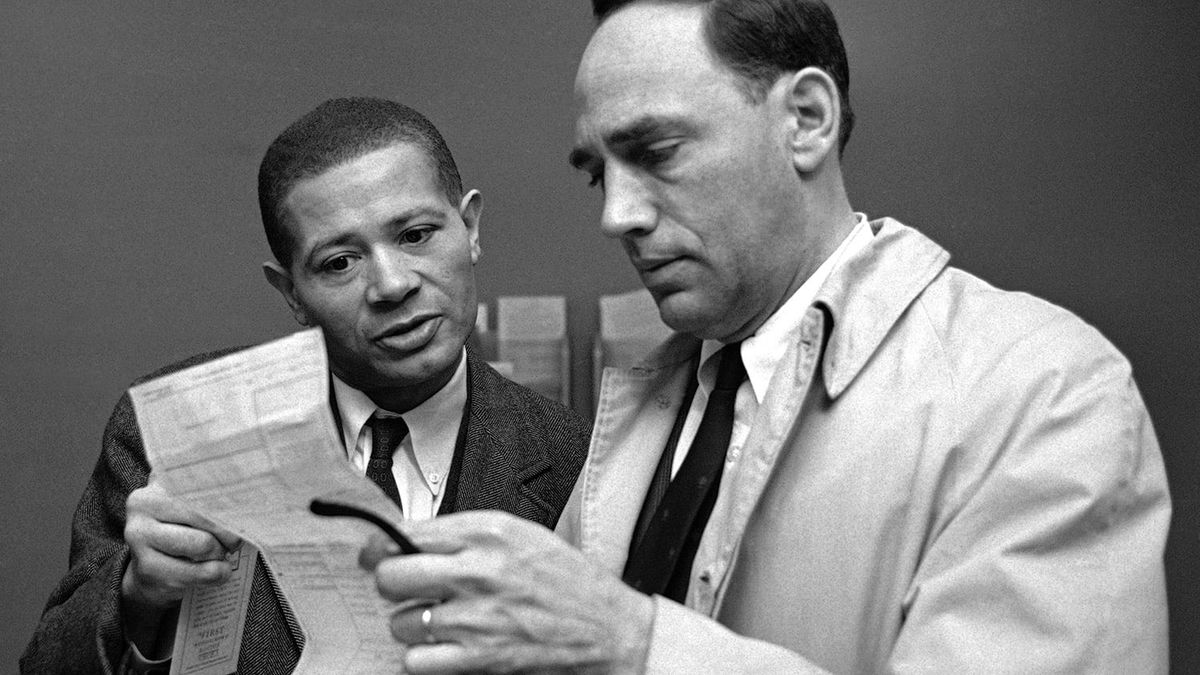
In 1962, the United States Justice Department, under the administration of President John F. Kennedy, prosecuted distinguished journalist William Worthy. His alleged crime was re-entering the country without a valid passport after a reporting trip to Cuba. This legal action followed years of state pressure against Worthy, which began in 1957 when he defied a US travel ban to China to conduct groundbreaking interviews. Despite his passport being revoked, Worthy continued his international reporting, often highlighting parallels between anti-colonial movements abroad and the civil rights struggle at home, a narrative that directly challenged official US foreign policy and domestic stability claims.
Worthy’s prosecution was notable for its selective enforcement: he, a Black muckraking reporter, was targeted under an obscure provision of the Immigration and Nationality Act, while numerous white Americans had re-entered the country without passports for various reasons without facing similar charges. This case, largely forgotten by mainstream history, established a significant precedent, demonstrating how the US government could weaponize administrative and legal frameworks to control the movement and speech of its citizens, particularly those whose reporting or activism challenged prevailing geopolitical interests.
The prosecution of William Worthy was not an isolated incident but a calculated move within the broader context of Cold War anxieties and the assertion of US global power. At its core, the case revealed the state’s willingness to use legal and administrative tools to maintain narrative control and suppress voices that complicated its geopolitical agenda.
The Cold War was more than a military standoff; it was an ideological battle for global influence. In this climate, any narrative that deviated from the official line — especially one that humanized communist states or criticized US foreign policy — was perceived as a threat. Worthy’s reporting from China and Cuba directly contradicted the US government’s efforts to isolate these nations and paint them as monolithic threats. His ability to secure interviews with figures like Zhou Enlai and his independent observations from Cuba undermined the carefully constructed image of these countries as impenetrable, hostile regimes. The government’s actions against Worthy were, therefore, an attempt to reassert control over the information flow and to signal to other journalists the dangers of independent reporting on sensitive topics.
The choice to prosecute Worthy under an obscure provision of the Immigration and Nationality Act for re-entering without a passport, rather than for defying the travel ban itself, highlights a key power mechanic: the strategic use of legal technicalities. The government had previously threatened Worthy under the Trading with the Enemy Act for his China trip, but that avenue proved difficult. The passport issue offered a cleaner, more administrative path to control. The State Department’s power to deny or revoke passports, upheld by the courts, effectively became a tool to restrict freedom of movement and, by extension, freedom of the press. This established a dangerous precedent: the government could punish speech not directly, but indirectly, by controlling access to the means of reporting.
The timing of Worthy’s prosecution in 1962 was critical. Months after the disastrous Bay of Pigs invasion in April 1961, the Kennedy administration was under immense pressure to demonstrate strength against Fidel Castro’s Cuba. Worthy’s reporting, which blamed the US embargo for suffering on the island and urged Black Americans to oppose the
Source referenced: FOREIGNPOLICY
This brief was synthesized by our Editorial Engine and reviewed by The Ground Narrative team.


