TRENDING

Tuesday, 13 October 2026
----------------------
2 Jumada Al-Awwal 1448 AH
A draft law that would presume police self‑defence has ignited mass protests across France. Families of those killed by officers, students and rights groups demand accountability before the Senate votes.
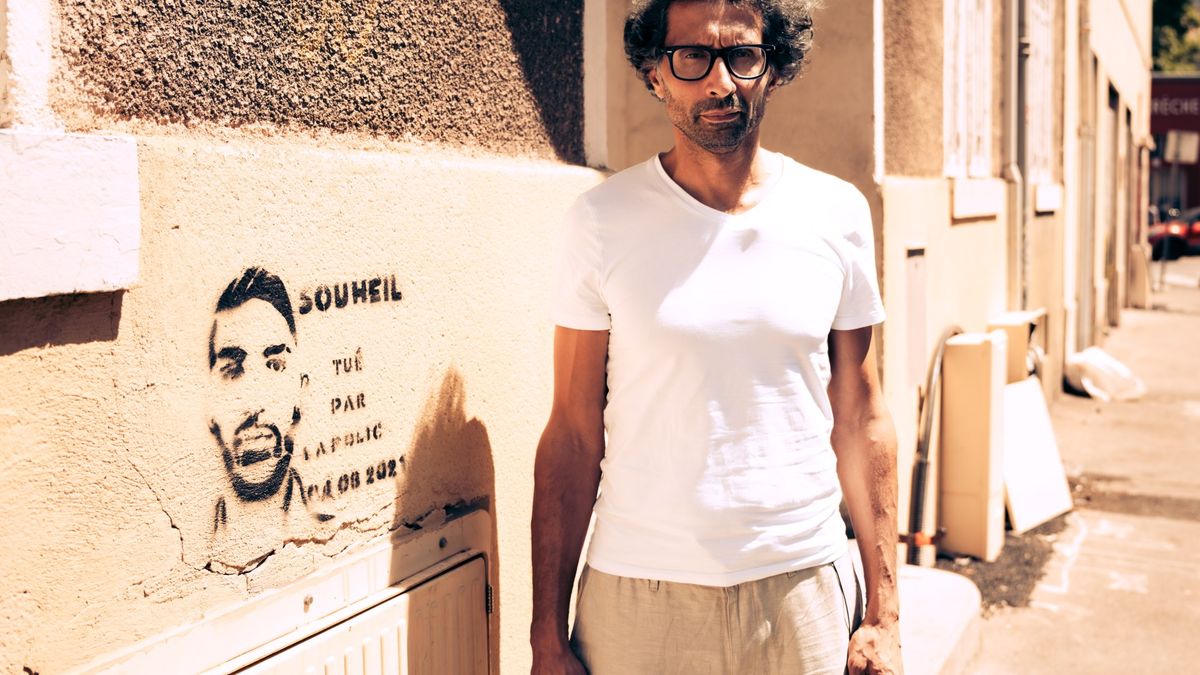
France is on the brink of approving a draft bill that would automatically deem any police use of firearms as self‑defence, shifting the burden of proof onto citizens. The proposal, passed by the National Assembly in July 2026, now awaits a Senate vote amid street demonstrations in Paris, Marseille, Lyon and Toulouse. The law was triggered by a series of high‑profile shootings, including the 2021 death of 19‑year‑old Souhail El Khalfaoui during a traffic stop, and the 2023 killing of 17‑year‑old Nahel Merzouk, which sparked weeks of unrest.
Protesters, organized by groups such as Stop State Violence (SAVE) and the Human Rights League (LDH), have gathered nearly 50,000 people in recent weeks, demanding the repeal of the bill and an independent inquiry into police misconduct. A petition started by Souhail’s father, Issam El Khalfaoui, has amassed over 700,000 signatures, reflecting a broad cross‑section of society that includes students, immigrants, and left‑wing lawmakers.
Police unions sit at the centre of the legislative push. The Fédération Nationale des Unions de Police (FNUP) has lobbied intensively, arguing that officers need legal protection to perform their duties without fear of prosecution. Their narrative frames the bill as a safeguard against “politically motivated” investigations, a message amplified by right‑leaning media outlets.
The political calculus is equally crucial. After the 2024 parliamentary elections, Emmanuel Macron lost his absolute majority and must negotiate with centrist and right‑wing parties to pass legislation. Aligning with the far‑right’s hard‑line stance on law‑and‑order helps the president’s coalition court voters drifting toward the National Rally, a party that has surged in recent polls. The police‑firearms law, originally introduced in 2017 with bipartisan support, has been repackaged to appeal to these voters, positioning Macron as tough on crime while preserving his centrist image.
Budgetary considerations also play a role. Over the past two years, the state has increased funding for police equipment, including military‑grade crowd‑control weapons, under the pretext of counter‑terrorism. This fiscal commitment creates a vested interest among ministries and contractors to maintain a narrative of an increasingly dangerous public sphere that justifies further spending.
Internationally, the European Union’s emphasis on rule of law puts France under a subtle pressure to conform to human‑rights standards. Yet the government balances this against domestic political survival, often downplaying EU criticism to avoid appearing weak on security.
The most visible victims are families like the El Khalfaoui clan, who lost a son in a traffic stop that was later classified as a justified shooting. Their struggle illustrates how legal presumptions can erase avenues for redress, leaving them to navigate a system where evidence disappears—surveillance footage vanished, witnesses were not interviewed, and case files were misplaced.
Student protests over education funding have turned deadly. A 15‑year‑old lost a hand after a police‑deployed stun grenade, and a 14‑year‑old suffered a shattered jaw from a close‑range tear‑gas canister. The injuries have long‑term health implications, increasing medical costs for families already strained by rising living expenses.
Statistical studies by the CNRS reveal that non‑white citizens are over‑represented in police stops—by more than 50 % in the Marseille region. This disparity translates into a higher likelihood of violent encounters, as seen in the 2023 Nahel Merzouk case. The proposed law would exacerbate this imbalance by making it harder for affected individuals to contest police actions.
Missing evidence is a recurring theme. In Souhail’s case, the internal police investigation (IGPN) lost the crucial video, and the court file disappeared. Such gaps are rarely highlighted in official statements, which focus on “procedural integrity” while ignoring systemic record‑keeping failures.
Union lobbying operates largely behind closed doors. Financial contributions to political parties, revolving‑door appointments of former officers to advisory roles, and coordinated media campaigns are rarely disclosed, allowing the narrative that the law is purely about officer safety to dominate public discourse.
Media framing often emphasizes isolated incidents of “violent protesters” while marginalising the broader pattern of police aggression. State‑run broadcasters give airtime to union spokespeople, whereas independent outlets that report on victims’ testimonies receive limited reach.
International pressure is muted. Although the European Court of Human Rights has condemned France for racial profiling, the French government has not faced substantive sanctions. Diplomatic statements tend to praise France’s “commitment to security,” sidestepping the deeper human‑rights concerns.
The Senate’s vote, scheduled for early November, will be the immediate flashpoint. A narrow approval could trigger a new wave of civil disobedience, potentially spilling into the 2027 presidential campaign, where security‑focused rhetoric will likely dominate.
Legal challenges are also on the horizon. Human‑rights NGOs are preparing to bring the law before the Constitutional Council, citing the 2023 high‑court ruling that recognised systemic racial profiling. Their success will hinge on whether the Council can compel the government to produce the missing evidence and enforce transparent oversight.
Finally, the budgetary trajectory will reveal whether the state continues to arm police with military‑grade equipment. Any increase in procurement contracts, especially those awarded without competitive bidding, will signal a deepening of the security‑first paradigm.
Observers should track: (1) Senate debate transcripts for language that reveals the balance of power between the executive and police unions; (2) protest mobilisation patterns, especially among youth groups; (3) EU and UN human‑rights bodies’ statements; and (4) any shifts in public opinion polls that could affect the upcoming presidential election. The interplay of these factors will determine whether France moves toward greater police impunity or a recalibration of state authority in response to popular demand.
The draft bill would presume that any police officer who fires a weapon did so in self‑defence, shifting the burden of proof to the complainant and limiting investigations.
Human‑rights NGOs such as SAVE and the LDH, student unions, families of victims, and left‑wing parliamentarians have organized protests and legal challenges against the legislation.
By aligning with hard‑line law‑and‑order rhetoric, the government hopes to win over far‑right voters, but widespread protests could also mobilise opposition and influence the 2027 presidential race.
Source referenced: ALJAZEERA
This brief was synthesized by our Editorial Engine and reviewed by The Ground Narrative team.


