TRENDING

Tuesday, 13 October 2026
----------------------
2 Jumada Al-Awwal 1448 AH
China issued a statement condemning attacks on civilian facilities after Houthi forces targeted Riyadh's airport. This incident highlights China's careful diplomatic strategy in a volatile Middle East, balancing economic interests with calls for peace.
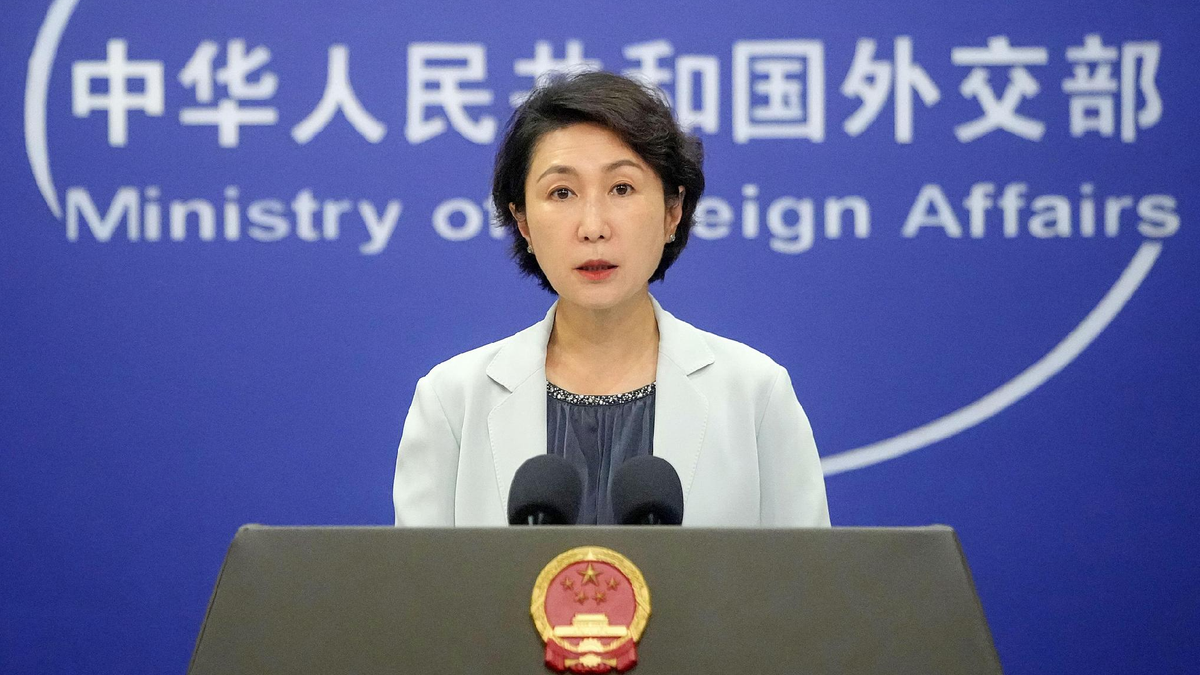
China's Foreign Ministry spokesperson Mao Ning issued a public statement condemning attacks targeting civilians and civilian facilities, urging all parties to avoid actions that could escalate regional tensions. The remarks came in response to a reported strike by Yemen's Houthi forces on King Khalid International Airport in Riyadh, Saudi Arabia. Mao Ning emphasized the importance of resolving differences and disputes through dialogue and negotiations to achieve peace and stability in the region as swiftly as possible, reflecting Beijing's consistent diplomatic posture in complex geopolitical flashpoints.
China's carefully worded statement following the Houthi strike on Riyadh's airport is a masterclass in strategic ambiguity, designed to serve its burgeoning interests in the Middle East without alienating any major player. At its core, Beijing's approach is driven by economic imperatives: the Middle East is the primary source of China's energy imports, and a crucial node in its ambitious Belt and Road Initiative (BRI). Instability in the region directly threatens these vital supply lines and investment projects. Saudi Arabia is a cornerstone of China's energy security and a significant partner in BRI infrastructure development, while Iran, often seen as the Houthis' primary backer, is also a key oil supplier and a strategic partner for China in its broader geopolitical calculus against Western influence.
China's traditional foreign policy doctrine of non-interference dictates a reluctance to take explicit sides in internal or regional conflicts. This stance allows Beijing to maintain open channels with all actors, positioning itself as a potential mediator or a reliable economic partner, rather than a partisan power. In contrast to the historical and often interventionist role of the United States in the Middle East, China seeks to project an image of a responsible global power advocating for peace and development, unburdened by colonial legacies or ideological crusades. This approach subtly challenges the US's long-standing security architecture in the region, offering an alternative model of engagement that prioritizes economic stability over military alliances.
The Houthi forces, meanwhile, wield their missile and drone capabilities as a potent, asymmetric tool against the technologically superior Saudi-led coalition. These strikes, even if intercepted or causing minimal physical damage, serve a critical psychological and political purpose: they demonstrate the Houthis' reach, their defiance, and their ability to inflict a sense of vulnerability on Saudi Arabia's heartland. This pressure tactic aims to force concessions, break the Saudi-led blockade on Yemen, and elevate their standing in any future peace negotiations. The attack on Riyadh's civilian airport, regardless of its direct impact, sends a clear message that no target is entirely safe, thereby raising the stakes for Saudi Arabia and its allies.
For Saudi Arabia, the constant threat of Houthi attacks underscores the ongoing failure to secure its borders and achieve a decisive victory in Yemen. It forces Riyadh to expend significant resources on air defense and to continually seek international support and legitimacy for its military campaign. China's call for de-escalation, while seemingly neutral, implicitly acknowledges the legitimacy of Saudi concerns about security while also nudging Riyadh towards a diplomatic resolution, which aligns with Beijing's broader interest in regional calm.
While the Houthi strike on Riyadh's King Khalid International Airport garners international headlines, the true human cost of the Yemen conflict is overwhelmingly borne by the ordinary citizens of Yemen. For nearly a decade, this brutal proxy war has plunged the nation into what the United Nations has repeatedly called the world's worst humanitarian crisis. The airport strike in Riyadh, though a significant event for Saudi Arabia, is a distant echo of the daily terror and deprivation faced by millions across the border.
In Yemen, the human cost manifests in widespread famine, preventable diseases like cholera, and the systematic destruction of infrastructure. Millions are internally displaced, living in makeshift camps with inadequate access to food, clean water, and medical care. Children are particularly vulnerable, facing malnutrition and stunted development, often becoming child soldiers or victims of unexploded ordnance. The conflict has decimated the country's economy, leaving the majority of the population reliant on humanitarian aid, which itself is often hampered by blockades and fighting. For the average Yemeni, the airport strike in Riyadh is a stark reminder that the war, which has consumed their lives, continues to rage, with no end in sight.
Beyond the immediate casualties, the conflict's economic ripples extend far and wide. For Saudi Arabia, while the physical damage from such strikes might be limited, the psychological impact on its citizens and the disruption to air travel and business confidence are real. Frequent attacks, or even the threat of them, can deter foreign investment, impact tourism, and force increased military spending, diverting resources from domestic development. Globally, the instability in the Middle East, exacerbated by attacks on critical infrastructure, contributes to volatility in oil markets, affecting energy prices for consumers worldwide. The human cost is not just measured in lives lost, but in livelihoods destroyed, futures derailed, and the pervasive fear that permeates societies caught in the crossfire of geopolitical power struggles.
China's statement, while seemingly a straightforward call for peace, carries a deeper, unspoken narrative about its evolving role in global power dynamics. What governments, including Beijing, often downplay or omit is the calculated self-interest underpinning such diplomatic pronouncements, and the broader context that fuels the very conflicts they condemn.
China's much-touted principle of non-interference in the internal affairs of other nations is not a moral absolute, but a strategic tool. While it allows Beijing to avoid the political and military entanglements that have historically plagued Western powers, it simultaneously enables China to pursue its economic agenda with minimal ideological baggage. In the Middle East, this means doing business with everyone – Saudi Arabia, Iran, the UAE, and others – without being forced to choose sides. The
Source referenced: CGTN
This brief was synthesized by our Editorial Engine and reviewed by The Ground Narrative team.


