TRENDING

Tuesday, 13 October 2026
----------------------
2 Jumada Al-Awwal 1448 AH
India's ambitious $87 billion river-linking project aims to solve water scarcity but is forcing countless villagers from their homes. This analysis uncovers the true costs and power dynamics.
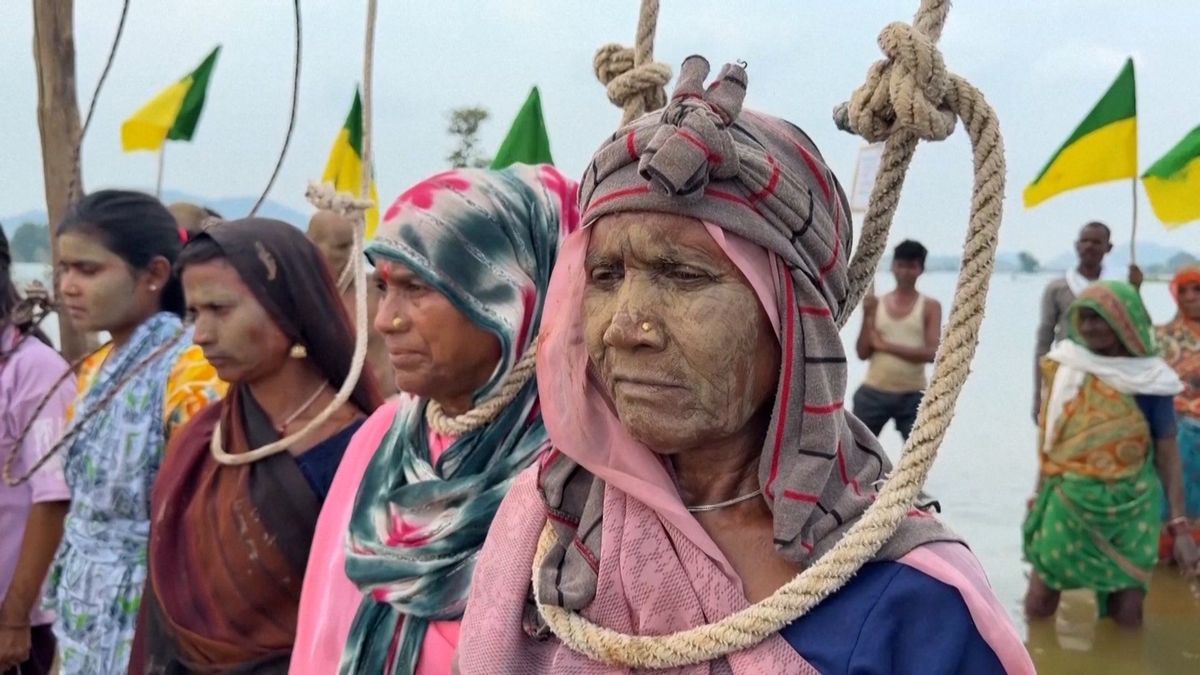
India has embarked on an ambitious $87 billion river-linking project, a monumental infrastructure undertaking designed to connect major rivers across the country. The stated goal is to alleviate chronic water scarcity in some regions while mitigating devastating floods in others, ensuring water security for agriculture, industry, and burgeoning urban populations. However, the initial phases of this vast network are already triggering widespread displacement, with countless villagers facing the loss of their homes, ancestral lands, and traditional livelihoods as reservoirs and canals are constructed.
The sheer scale of India's river-linking project reflects a deep-seated belief in grand engineering solutions to complex environmental challenges, a legacy rooted in both colonial-era infrastructure development and post-independence nation-building. For the Indian government, this project is framed as a critical step towards national development and resource management. The political incentives are clear: promises of abundant water for drought-prone areas, increased agricultural output, and reliable power generation resonate deeply with a vast electorate, particularly in regions suffering from acute water stress. Such mega-projects allow political leaders to project an image of decisive action and long-term vision, often overshadowing the immediate, localized disruptions they cause.
Economically, the project is driven by the demands of a rapidly industrializing nation and an agricultural sector that remains the backbone of the economy. Water diversion aims to support intensive irrigation for cash crops, feed industrial corridors, and provide potable water to expanding megacities. The construction itself creates massive contracts, benefiting large engineering firms and their political patrons, fostering a powerful nexus of economic and political interests. Hydropower generation, another key component, promises clean energy, further bolstering the project's appeal to policymakers looking to meet growing energy demands and climate commitments.
The legal framework for such projects often relies on the principle of eminent domain, allowing the state to acquire private land for public purposes. While compensation is legally mandated, the process is frequently fraught with challenges, including undervaluation of land, delayed payments, and inadequate rehabilitation packages. This mechanism grants immense power to the state, enabling it to override local objections in the name of national interest. The fragmented nature of governance, with water being a state subject but large inter-state projects requiring central oversight, also creates a complex power dynamic where the central government can push through its agenda, sometimes over the objections of individual states or local communities. The project also taps into a broader narrative of national pride and technological prowess, positioning India as a global player capable of executing projects of immense complexity, further solidifying the political will behind it.
The ambitious vision of a water-secure India comes at a profound and often irreversible cost to its most vulnerable citizens. The primary burden falls squarely on the shoulders of rural communities, particularly those living in the path of proposed canals, dams, and reservoirs. These are often subsistence farmers, indigenous groups, and fishing communities whose entire existence is inextricably linked to their land and local water bodies.
For thousands, the project means forced relocation. Their homes, built over generations, are slated for demolition. Their agricultural fields, the source of their food and income, will be submerged or bisected. Unlike urban populations who might transition to other forms of employment, these rural communities often lack transferable skills or alternative economic opportunities. The compensation offered, while significant on paper, rarely accounts for the true value of ancestral lands, community ties, or the disruption to a way of life that cannot be quantified in monetary terms. Many find themselves pushed to the margins of society, struggling to adapt to new environments with insufficient support, often ending up as migrant laborers in overcrowded cities.
Beyond economic loss, the displacement represents a devastating blow to cultural identity. Many affected communities are Adivasi (tribal) groups with unique languages, traditions, and spiritual connections to their land and forests. The forced relocation severs these ties, leading to the erosion of their distinct cultural heritage. Sacred groves, traditional burial grounds, and community spaces are lost, breaking the continuity of their history and collective memory. The project, in its pursuit of national development, inadvertently homogenizes diverse cultures, sacrificing local distinctiveness for a perceived greater good.
While the project aims to manage water, its construction itself carries significant environmental costs that directly impact human well-being. Massive deforestation is required for new reservoirs and canals, leading to habitat loss, soil erosion, and increased carbon emissions. Altering the natural flow of rivers can disrupt delicate ecosystems, affecting fish populations that many communities rely on for food and income. Downstream areas might experience reduced water flow, impacting agriculture and increasing the risk of waterborne diseases due to altered water quality. The sheer scale of construction also brings dust, noise, and pollution, directly affecting the health of nearby residents. The promise of flood control in one area might inadvertently exacerbate water scarcity or ecological imbalances in another, creating a ripple effect of human suffering.
Behind the grand pronouncements of national development and water security, several critical aspects of India's river-linking project remain downplayed or entirely omitted from the official narrative. These are the inconvenient truths that challenge the project's foundational assumptions and expose the deeper power dynamics at play.
The project is premised on the idea that some rivers have "surplus" water while others suffer from "deficit." However, this binary view often oversimplifies complex hydrological realities. River systems are dynamic, and what constitutes a surplus can vary dramatically with seasonal monsoons and changing climate patterns. Diverting water from one basin to another can have unforeseen consequences, potentially creating new scarcities in the "surplus" regions or altering the ecological balance in ways not fully understood. Governments often downplay the uncertainty inherent in these calculations, presenting them as scientific certainties to justify massive investments. The long-term impacts of climate change, particularly erratic rainfall and glacial melt, are often underrepresented in these projections, making the entire premise potentially unstable.
Official environmental impact assessments, when conducted, often focus on localized effects and mitigation measures, rarely capturing the systemic, long-term ecological damage of altering entire river basins. The fragmentation of river habitats, the disruption of fish migration routes, and the cumulative impact on biodiversity are frequently underestimated. Furthermore, the project's proponents rarely acknowledge the potential for increased seismic activity in dam construction zones or the long-term changes to groundwater tables. The narrative emphasizes human benefit, while the intrinsic value of natural ecosystems and their services, which are crucial for human survival, is largely ignored or dismissed as secondary. The potential for the project to exacerbate, rather than solve, future water crises due to unforeseen ecological shifts is a risk rarely discussed openly.
While the project is presented as serving the common good, the benefits are often disproportionately skewed. Water diverted through these canals frequently prioritizes large-scale industrial agriculture, urban centers, and industrial zones over the needs of small, marginalized farmers in the "deficit" regions. This creates a new form of water inequality, where those with political and economic power gain preferential access. Furthermore, the massive construction contracts involved attract large corporations, both domestic and international, whose profit motives can influence project design and implementation. The official discourse rarely highlights the significant financial gains for these powerful corporate entities and their political allies, focusing instead on the abstract benefits to the "nation." The rehabilitation packages, often managed by these same entities, can be opaque, leading to further exploitation of displaced communities.
The decision-making process for such mega-projects is typically top-down, with limited genuine consultation with affected communities. Public hearings, if held, are often performative, with decisions already made. Local knowledge, traditional water management practices, and community-led solutions are routinely ignored in favor of centralized, large-scale engineering. The government rarely discusses viable, less disruptive alternatives such as decentralized rainwater harvesting, watershed management, efficient irrigation techniques, or the restoration of local water bodies. These smaller-scale, community-driven approaches, while less glamorous, often offer more sustainable and equitable solutions without the massive human and environmental costs. Their omission from the public debate serves to reinforce the narrative that only grand engineering can solve India's water woes.
The unfolding narrative of India's river-linking project will be shaped by several critical dynamics in the coming years. Observers should pay close attention to the persistence and scale of local resistance movements. As more communities face displacement, the protests are likely to intensify, potentially leading to broader social unrest and legal challenges that could delay or alter parts of the project. The effectiveness and fairness of rehabilitation and compensation packages will be a key indicator of the government's commitment to its displaced citizens, or lack thereof. Inadequate support will fuel further dissent and highlight the human cost.
Furthermore, the long-term environmental impact assessments and their independent verification will be crucial. As the project progresses, scientists and environmental groups will scrutinize changes in biodiversity, water quality, and regional climate patterns. Any significant ecological disruptions could spark international concern and pressure. Finally, the economic viability and actual benefits of the project must be closely monitored. Will the promised agricultural boom materialize? Will urban water needs be met sustainably? Or will the immense investment yield diminishing returns, leaving behind a legacy of environmental damage and social inequity? The political implications for the ruling party, particularly in upcoming elections, will also be a significant factor, as the project's successes or failures could sway public opinion in critical regions.
India's river-linking plan is an $87 billion infrastructure project aimed at connecting major rivers across the country. Its goal is to transfer water from 'surplus' basins to 'deficit' ones to address water scarcity, mitigate floods, and provide water for agriculture, industry, and urban areas.
The project primarily affects rural communities, including subsistence farmers, indigenous groups, and fishing communities. These populations face displacement from their homes and ancestral lands, loss of livelihoods, and the erosion of their cultural identity due to the construction of dams, canals, and reservoirs.
Critics argue that the project's environmental costs are underestimated, benefits are unequally distributed towards industrial and urban sectors, and there's a lack of genuine consultation with affected communities. Concerns also exist about the long-term ecological impact and the viability of the 'water surplus' concept under climate change.
Source referenced: ALJAZEERA
This brief was synthesized by our Editorial Engine and reviewed by The Ground Narrative team.