TRENDING

Tuesday, 13 October 2026
----------------------
2 Jumada Al-Awwal 1448 AH
The US Ambassador to Greece, Kimberly Guilfoyle, has resigned amid allegations of offering political access for money and attempting to influence Greek internal affairs. This incident lays bare the transactional nature of some diplomatic appointments and the hidden costs to public trust.
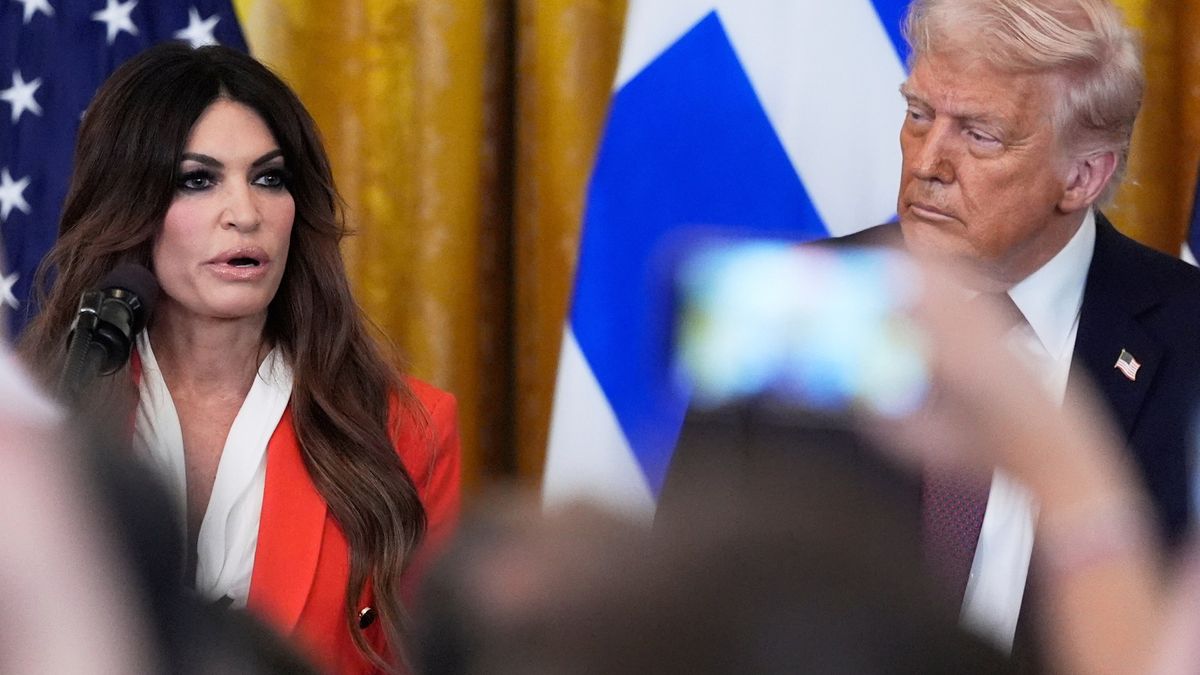
Kimberly Guilfoyle, the United States Ambassador to Greece, has resigned from her post following a series of serious misconduct allegations. The White House confirmed she was asked to step down, just weeks after reports surfaced detailing claims that she offered a political donor access to senior administration officials in exchange for money. Further allegations included soliciting a $100,000 payment from a donor to cover a credit card bill, promising to use US influence to undermine the Greek government, and promoting the interests of a specific Greek construction and energy company while allowing its lobbyist into private diplomatic meetings. Guilfoyle has publicly denied all allegations, stating her intention to defend her reputation vigorously.
This incident is a stark illustration of how political patronage can intersect with, and potentially corrupt, the formal mechanisms of international diplomacy. The appointment of Kimberly Guilfoyle, a former media personality with deep personal and political ties to President Donald Trump and his family, rather than a career diplomat, immediately placed her within a system where loyalty often outweighs traditional diplomatic experience. This dynamic is central to understanding the power mechanics at play.
The core allegation of offering access to US administration officials in exchange for money reveals a transactional approach to power. In this model, influence becomes a commodity, blurring the lines between public service and private gain. For political donors, access to powerful figures is invaluable, potentially translating into favorable policies, contracts, or regulatory decisions. For the official, it can mean personal enrichment or political favors. This creates an opaque parallel system of diplomacy, where decisions are made outside traditional channels and often without public scrutiny, undermining the very principles of transparent governance.
The claim that Guilfoyle sought to use US influence to undermine the Greek government is particularly alarming. Greece is a vital NATO ally, strategically positioned in the Eastern Mediterranean, a region of immense geopolitical importance. Any attempt by a US ambassador to interfere in the internal affairs of an allied, sovereign nation constitutes a grave breach of diplomatic protocol and international norms. Such actions can destabilize a partner country, erode trust, and create opportunities for rival powers like Russia or China to expand their influence. The initial defense by Secretary of State Marco Rubio, followed by his swift retreat, underscores the political sensitivity and potential damage these allegations posed to US foreign policy credibility.
The alleged promotion of a specific Greek construction and energy company by the US Ambassador highlights how diplomatic positions can be leveraged for private economic interests. This is not merely about an individual's personal gain; it can involve shaping policy, securing contracts, or influencing regulatory environments to benefit particular corporate entities. In a country like Greece, which has significant infrastructure needs and is a key energy transit hub, such influence can translate into massive financial gains for the favored company, often at the expense of fair competition and market integrity. The presence of a company lobbyist in private diplomatic meetings further suggests an inappropriate commingling of commercial and state interests.
The Trump administration's decision to ask for Guilfoyle's resignation, despite her close ties, reflects a domestic political calculation. As allegations mounted and gained media traction, the potential for scandal to damage the administration's reputation, especially concerning ethical conduct and the integrity of its foreign policy, became too great. Distancing the administration from the controversy was a move aimed at damage control, seeking to contain the fallout and protect the broader political agenda, particularly in the lead-up to future elections.
While the immediate focus of such scandals often falls on the individuals involved and the political maneuvering, the true cost is borne by ordinary citizens, both in the United States and Greece. The alleged actions of a high-ranking diplomat have ripple effects that undermine democratic institutions, distort economic fairness, and erode public trust.
For citizens in both nations, the allegations of influence peddling and the transactional nature of diplomacy foster deep cynicism about their governments and international relations. When diplomatic posts appear to be rewards for political loyalty rather than merit, and when public office is allegedly used for private gain, it chips away at the belief that institutions operate in the public interest. This erosion of trust can lead to disengagement, apathy, and a weakening of democratic participation, as people feel their voices are drowned out by powerful, self-serving interests.
If the claims of attempting to undermine the Greek government are true, the human cost to Greece is profound. It implies an external actor attempting to destabilize a democratically elected administration, potentially leading to political unrest or a loss of faith in the democratic process. Furthermore, the alleged favoritism shown to a specific Greek construction and energy company distorts the local economy. Small and medium-sized businesses, which are the backbone of any economy, struggle to compete when powerful diplomatic connections, rather than innovation or efficiency, dictate success. This unfair advantage can stifle growth, limit job creation, and concentrate wealth in the hands of a select few, exacerbating economic inequality for ordinary Greek citizens.
For the United States, the human cost is less direct but equally significant. The US relies heavily on its
Source referenced: ALJAZEERA
This brief was synthesized by our Editorial Engine and reviewed by The Ground Narrative team.


