TRENDING

Tuesday, 27 October 2026
----------------------
16 Jumada Al-Awwal 1448 AH
Arson attacks on two mosques in the Israeli-occupied West Bank, following a surge in deadly violence, signal a dangerous escalation in the Israeli-Palestinian conflict. The incidents underscore growing concerns over unchecked settler violence and its potential to destabilize the region.
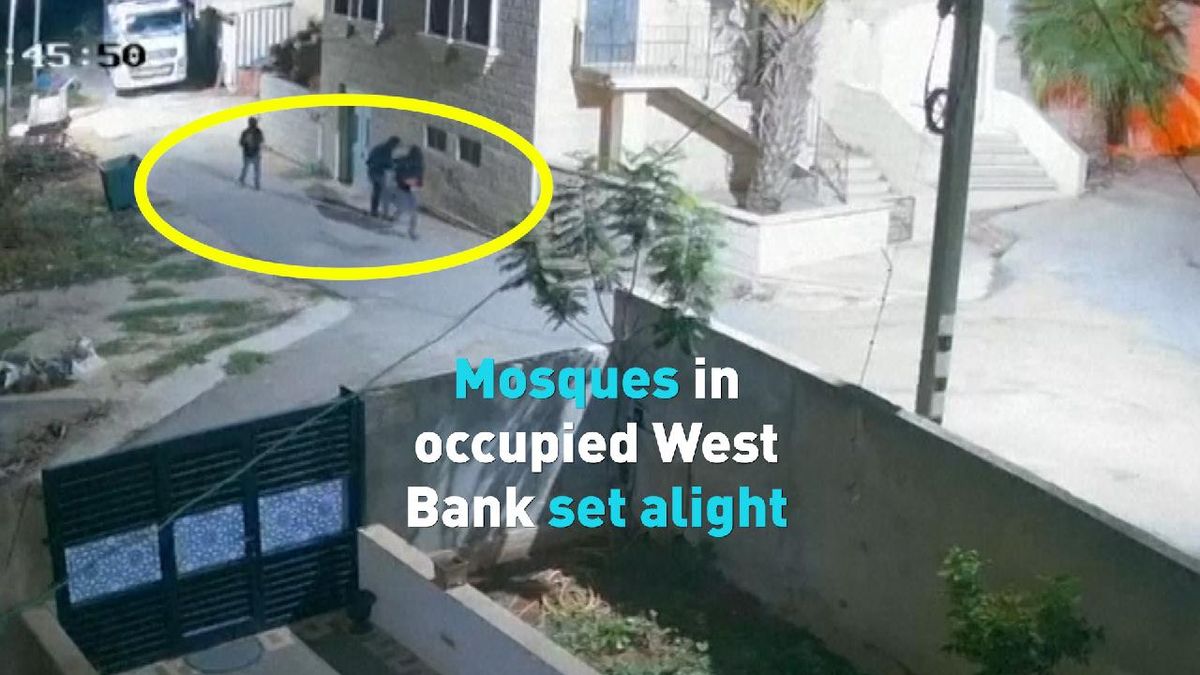
Overnight on Sunday, July 26, 2026, two mosques in the northern Israeli-occupied West Bank villages of Qusra and Kour were set ablaze in what officials described as an apparent Israeli settler attack. This provocative act, which caused extensive damage to the religious sites, follows a recent spate of deadly violence that claimed the lives of four Palestinians and two Israeli soldiers, significantly ratcheting up tensions in an already volatile region.
Security footage from Kour reportedly showed three individuals in civilian clothes detonating an explosive at the mosque's entrance, having spray-painted the Hebrew message "Jewish blood is not cheap" on its wall. This act of desecration and destruction of religious sites marks a concerning escalation in the ongoing conflict, moving beyond typical clashes to direct attacks on symbols of religious identity, which are highly inflammatory.
The mosque arsons appear to be a retaliatory act following a series of violent confrontations. Israeli media and local Palestinian officials reported that the deadly incidents on Friday, July 24, were sparked when a group of settlers entered the village of Tell. Residents, fearing an attack, confronted the settlers. According to the Israeli military, one Palestinian seized a settler's weapon and fired upon the group, killing Benayahu Mellet, a 32-year-old security guard from a nearby settlement. This incident, along with the deaths of two Israeli soldiers and four Palestinians, created a highly charged atmosphere ripe for further violence.
The villages surrounding Nablus, where these incidents occurred, are situated in one of the most contentious and violent parts of the Israeli-occupied West Bank. This area has long been a flashpoint, characterized by frequent confrontations between Israeli settlers and Palestinian residents, often involving land disputes, resource control, and ideological motivations.
Palestinian officials and Israeli opposition figures have increasingly accused Prime Minister Benjamin Netanyahu’s hard-line government of deliberately overlooking or failing to adequately address attacks by Israeli settlers against Palestinians. This perceived impunity is a critical factor fueling the cycle of violence. While the Israeli military stated it is investigating the mosque attack and condemned harm to religious sites, the article notes that such investigations into violence against Palestinians by settlers rarely result in arrests or prosecutions.
Human rights organizations and Palestinian groups have extensively documented a rising trend of armed Israeli settlers entering Palestinian villages, engaging in acts such as livestock theft, arson, and the defacement of mosques. The Palestinian Health Ministry reported that 87 Palestinians have been killed in the occupied West Bank this year, with 21 attributed to Israeli settlers. In contrast, three Israelis, including the two soldiers on Friday, have been killed by Palestinian militants in 2026.
The presence of over 700,000 Israeli settlers in the occupied West Bank and East Jerusalem, territories captured by Israel in 1967 and sought by Palestinians for a future independent state, forms the core of this enduring conflict. The international community overwhelmingly considers these Israeli settlements illegal under international law and a significant impediment to achieving a lasting peace agreement.
The recent escalation, particularly the targeting of religious sites, carries profound geopolitical implications. It risks igniting widespread violence across the West Bank, potentially destabilizing the broader Israeli-Palestinian conflict and impacting regional security. The perceived lack of accountability for settler violence not only exacerbates Palestinian grievances but also undermines any prospects for de-escalation or a political resolution. The international community watches closely, as unchecked violence could lead to a more entrenched and intractable conflict, further complicating diplomatic efforts and potentially drawing in other regional actors.
In response to the escalating violence, Israeli soldiers and police deployed across the West Bank, closing major roads and blocking access to a hospital where two militants were reportedly hiding. More than 70 Palestinians were arrested over the weekend in an effort to contain the unrest. However, these measures, without addressing the root causes and ensuring accountability for all acts of violence, are unlikely to provide a long-term solution to the deeply entrenched tensions in the occupied territories.
Source referenced: CGTN
This brief was synthesized by our Editorial Engine and reviewed by The Ground Narrative team.