TRENDING

Sunday, 4 October 2026
----------------------
23 Rabi' Al-Thani 1448 AH
A surge in violent acts in the West Bank has drawn rare criticism from the US, but the human cost of the conflict remains largely unseen. As Israel inaugurates new settlements, the power dynamics at play threaten to further destabilize the region.
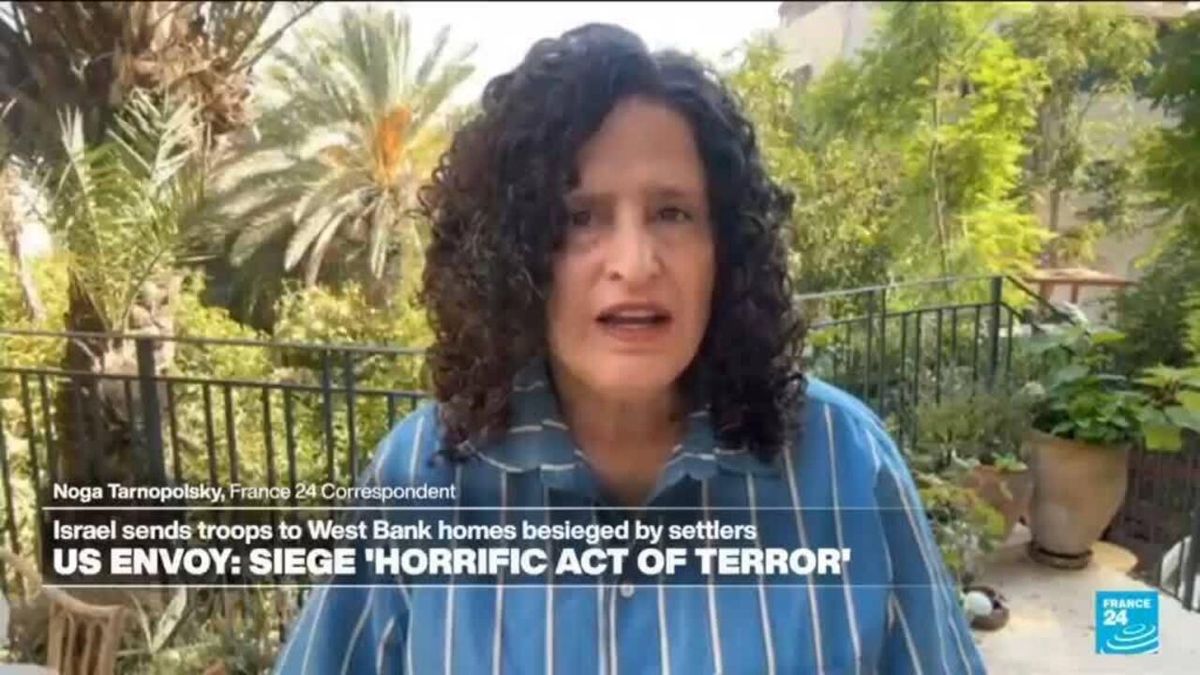
In recent weeks, the West Bank has witnessed a striking escalation in violent acts, with rogue settlers laying siege to Palestinian communities. The situation has prompted Israeli forces to intervene, albeit amidst unusually strong criticism from the US. Meanwhile, Israel has inaugurated a new settlement in the West Bank, a move that is likely to exacerbate tensions.
The escalation of violence in the West Bank is a symptom of a larger power struggle. Israel's continued expansion of settlements is a key driver of the conflict, as it undermines the prospects for a two-state solution and exacerbates the displacement of Palestinians. The US, traditionally a strong ally of Israel, has been critical of the recent violence, but its influence over Israel's actions remains limited. The Israeli government's decision to send troops to quell the settler siege may be seen as a attempt to placate international criticism, but it does little to address the underlying issues driving the conflict.
The people bearing the brunt of the escalating violence are the Palestinian communities living in the West Bank. The settler sieges have disrupted daily life, restricting access to basic necessities like food, water, and healthcare. The psychological toll of living under constant threat of violence should not be underestimated, with many Palestinians experiencing trauma and anxiety. The inauguration of new settlements only serves to further entrench the occupation, making it increasingly difficult for Palestinians to build a stable and secure future.
What is being downplayed in the official narrative is the role of Israeli settlement expansion in driving the conflict. The Israeli government's actions are often framed as a response to Palestinian violence, but this narrative ignores the fact that settlement growth is a major provocation. The US ambassador's condemnation of the settler siege as an "act of terror" is a rare acknowledgement of the harm caused by Israeli actions, but it does not address the systemic issues that perpetuate the conflict. The international community's failure to hold Israel accountable for its actions has created a power imbalance that allows the occupation to continue unchecked.
As the situation in the West Bank continues to deteriorate, readers should watch for signs of increased international pressure on Israel to halt settlement expansion. The US criticism, although rare, may be a indication of a shifting landscape, where Israel's actions are no longer entirely unquestioned. However, without a fundamental shift in the power dynamics, the human cost of the conflict will continue to mount. The upcoming diplomatic efforts, including potential negotiations between Israel and Palestine, will be crucial in determining the trajectory of the conflict. Will the international community finally take concrete steps to address the root causes of the violence, or will the status quo prevail, leaving Palestinians to suffer the consequences?
Editor's Note: The analysis is based on publicly available information and may not reflect the full complexity of the situation on the ground.
Source referenced: FRANCE24
This brief was synthesized by our Editorial Engine and reviewed by The Ground Narrative team.


