TRENDING

Monday, 5 October 2026
----------------------
24 Rabi' Al-Thani 1448 AH
China, backed by 27 other nations, has issued a strong condemnation of unilateral coercive measures at the UN, arguing they undermine international law and inflict severe human suffering. This move signals a growing pushback against Western economic leverage and a call for a more equitable global order.
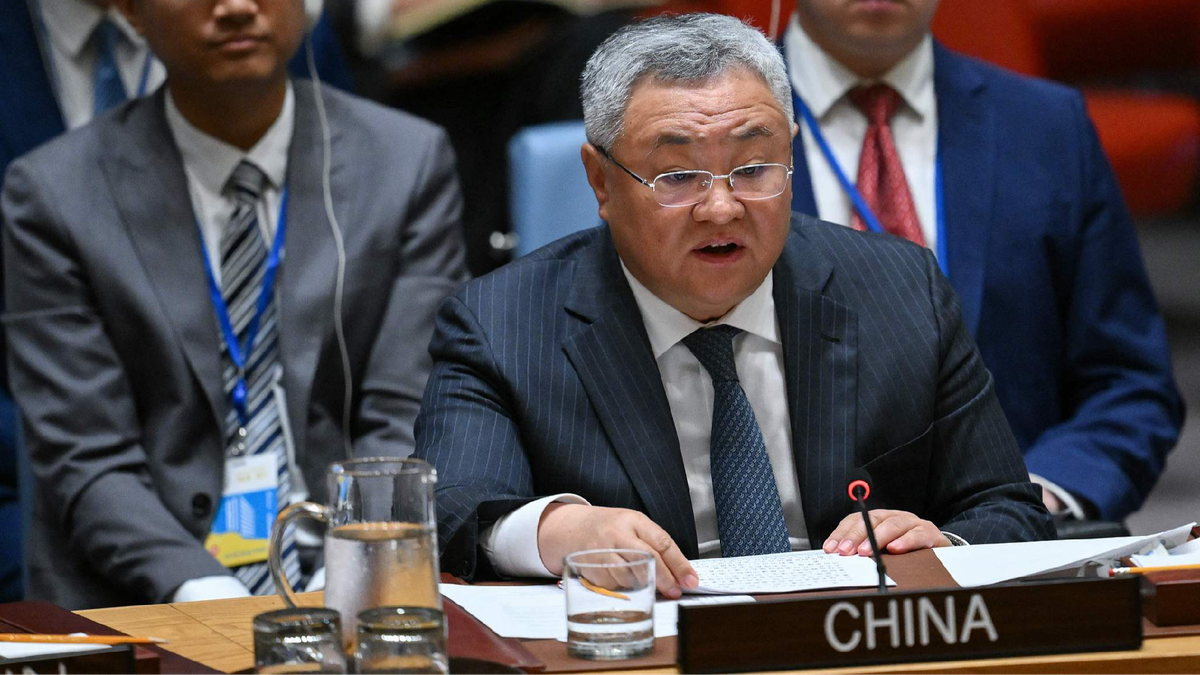
China's Permanent Representative to the United Nations, Fu Cong, recently delivered a joint statement on behalf of 28 member states at the UN General Assembly's Third Committee. The statement called on the international community to firmly oppose and bring an end to unilateral coercive measures (UCMs), arguing they represent rampant unilateralism and a major source of international turbulence. These nations asserted that UCMs violate the principle of sovereign equality, interfere in internal affairs, and undermine the foundations of multilateralism and international law, with devastating consequences for developing countries and their populations.
The joint statement at the UN represents a coordinated challenge to a fundamental tool of modern statecraft: the use of economic leverage to achieve political objectives. Unilateral coercive measures, often synonymous with sanctions, are deployed by powerful nations or blocs, primarily the United States and the European Union, to compel other states to change their behavior without resorting to direct military intervention. These measures range from targeted financial restrictions and asset freezes to comprehensive trade embargoes and tariffs, often compounded by secondary sanctions that penalize third parties for doing business with the sanctioned entity.
The power dynamic is inherently asymmetrical. The effectiveness of UCMs relies heavily on the global dominance of certain currencies, particularly the US dollar, and the control over international financial systems and trade routes. By limiting access to these vital arteries of global commerce, sanctioning powers can exert immense pressure on targeted economies. This approach sidesteps the need for UN Security Council approval, allowing individual states or coalitions to act outside a universally agreed-upon framework, thereby challenging the very principle of sovereign equality that underpins the UN Charter.
China's leadership in this initiative is a calculated move to position itself as a champion of a "multipolar world" and a leader of the Global South. By uniting a diverse group of 28 nations – many of whom are currently under Western sanctions, such as Cuba, Iran, Venezuela, Russia, DPRK, and Syria, or are aligned with China in resisting Western influence – Beijing is attempting to build a formidable bloc against what it perceives as Western economic hegemony. This coalition seeks to delegitimize UCMs as unlawful practices that undermine the international rule of law and promote a more balanced global order where economic coercion is less potent. The choice of the UN General Assembly's Third Committee, focused on human rights, is strategic; it reframes UCMs not merely as political tools but as violations of fundamental human rights, a narrative that resonates broadly across the international community.
While often framed by imposing powers as precise instruments targeting regimes or specific actors, the reality of unilateral coercive measures frequently translates into profound suffering for ordinary citizens. The joint statement highlighted that developing countries and their peoples "bear the brunt" of these measures, with devastating and sometimes "life-threatening consequences."
The most immediate and severe human cost manifests in the denial of basic human rights. Sanctions can severely impede a country's ability to import essential goods, leading to widespread shortages of healthcare services, medication, and energy supplies. This directly impacts the right to life and health, particularly for the most vulnerable populations. The UN Human Rights Council's Special Rapporteur has repeatedly pointed out that women, children, and the elderly face "particularly dire circumstances," as they are often the least resilient to economic shocks and the most dependent on public services that crumble under sanction pressure. Access to life-saving medicines for chronic illnesses, vaccines, and even basic foodstuffs becomes a daily struggle, turning economic policy into a matter of survival.
Beyond immediate humanitarian crises, UCMs cripple the long-term economic prospects of targeted nations. They disrupt food, energy, and financial security, leading to inflation, unemployment, and a general decline in living standards. The ability of affected countries to achieve the Sustainable Development Goals (SDGs) – from eradicating poverty and hunger to ensuring good health and quality education – is severely hampered. Foreign investment and access to critical technologies are often cut off, stifling innovation and economic diversification. The result is often a cycle of underdevelopment, pushing entire populations further into poverty and despair.
The impact extends beyond material deprivation to social and cultural isolation. UCMs and the fear of "over-compliance" by international entities can hinder cooperation in culture, arts, sports, travel, and people-to-people exchanges. This means fewer opportunities for educational scholarships, cultural programs, scientific collaboration, and even basic tourism, effectively cutting off populations from global interaction and the free flow of ideas. Such isolation not only limits personal freedoms but also erodes the societal fabric, fostering resentment and hindering reconciliation efforts, even when political objectives are supposedly met.
The narrative presented by China and the 28 nations at the UN focuses on the illegality and humanitarian impact of unilateral coercive measures. However, there are critical layers of context and motivation that are often downplayed or omitted by all parties involved.
The states that primarily impose UCMs – notably the United States and its European allies – rarely frame them as "unilateral coercive measures." Instead, they present sanctions as legitimate tools of foreign policy, often justified as necessary to:
- Prevent nuclear proliferation (e.g., Iran, DPRK).
- Combat terrorism (e.g., various non-state actors).
- Promote human rights and democracy (e.g., Venezuela, Myanmar).
- Respond to aggression or violations of international law (e.g., Russia's invasion of Ukraine).
These powers argue that sanctions are a non-military alternative to armed conflict, a means to pressure rogue regimes or actors without direct military intervention, thereby minimizing loss of life. They often assert that sanctions are "smart" or "targeted," designed to impact leaders and their financial networks rather than the general population. This framing, however, is precisely what the 28 nations are challenging, pointing to the widespread suffering as evidence of their indiscriminate nature.
The joint statement specifically criticized the "growing use of tariffs as a tool of unilateral coercion, including additional tariffs based on unilateral determinations under domestic law and imposed under the pretext of national security or human rights." This is a thinly veiled reference to US trade policies and technology restrictions, particularly those directed at China. While Washington frames these actions as essential for protecting its national security interests or addressing human rights concerns (e.g., in Xinjiang), Beijing views them as protectionist measures designed to curb its economic rise and maintain US technological dominance. The "unilateral determination" aspect highlights the concern that powerful states can unilaterally define threats and impose penalties without international consensus, blurring the lines between legitimate security concerns and economic competition.
What is conspicuously absent from China's condemnation of UCMs is any acknowledgment of its own history of employing economic coercion. While Beijing does not typically use the term "sanctions" in the Western sense, it has demonstrably used its vast economic power to pressure countries that cross its red lines. Examples include:
- Unofficial trade restrictions on Australia following calls for an inquiry into the origins of COVID-19.
- Economic pressure on Lithuania for strengthening ties with Taiwan.
- Boycotts of South Korean goods and services over the deployment of the THAAD missile defense system.
These actions, while not formally labeled as "sanctions" by China, function as a form of economic coercion, aiming to alter the behavior of sovereign states through economic pain. This selective critique allows China to rally support against Western practices while deflecting scrutiny from its own similar, albeit often less formalized, tactics. The "untold story" here is the inherent hypocrisy that often accompanies such grand diplomatic pronouncements, where principles are selectively applied based on national interest.
The joint statement at the UN is more than just a diplomatic protest; it is a significant indicator of shifting global power dynamics and a growing challenge to the existing international order.
- Expanding Anti-Sanctions Coalition: Observe whether the "bloc of 28" expands to include more Global South nations. The effectiveness of this initiative will depend on its ability to attract broader support, moving beyond states already under sanctions to those concerned about potential future economic coercion. Such an expansion could significantly dilute the moral and political authority of sanctioning powers.
- Alternative Financial Architectures: Keep an eye on efforts to develop financial systems and trade mechanisms that bypass the US dollar and Western-dominated institutions. Initiatives like the expansion of BRICS payment systems, increased bilateral trade in local currencies, and the development of non-Western digital currencies are direct responses to the leverage granted by the current financial architecture. Any significant progress in these areas would fundamentally alter the effectiveness of UCMs.
- Western Policy Adjustments: How will the primary sanctioning powers, particularly the United States and the European Union, respond to this coordinated challenge? Will they dismiss it as a predictable alignment of adversaries, or will they re-evaluate the efficacy and humanitarian impact of their sanctions regimes? A continued reliance on UCMs without adaptation risks further alienating a significant portion of the international community and accelerating the push for alternative global structures.
- UN System's Role: The call for the UN Secretary-General to monitor the imposition of UCMs is crucial. Watch for the nature and impact of these monitoring reports. Will they lead to formal UN General Assembly resolutions condemning UCMs, even if non-binding, which could further delegitimize the practice on the international stage? The UN remains a key battleground for shaping international norms and perceptions.
- The Hypocrisy Factor: Pay attention to how China and its allies navigate the inherent contradiction of condemning UCMs while some members of the coalition, including China itself, engage in similar forms of economic coercion. The ability to maintain a consistent moral high ground will be critical to the long-term credibility of this anti-sanctions movement.
UCMs are economic or political sanctions imposed by one country or a bloc of countries without the explicit approval of the UN Security Council. They are often used to pressure target states into changing their policies or behavior.
China, along with 27 other nations, views UCMs as violations of international law and sovereign equality. By leading this initiative, China positions itself as a champion of multilateralism and a counterweight to Western economic influence.
Developing countries and their most vulnerable populations, including women, children, and the elderly, often bear the brunt of UCMs through shortages of essential goods, disrupted services, and hindered development.
Editor's Note: Analysis is based on the provided text, adding critical context and applying The Ground Narrative's editorial doctrine to explain power dynamics and human cost without moralizing.
Source referenced: CGTN
This brief was synthesized by our Editorial Engine and reviewed by The Ground Narrative team.


