TRENDING

Monday, 5 October 2026
----------------------
24 Rabi' Al-Thani 1448 AH
A recent gang attack in Haiti's Artibonite department highlights the nation's deepening security and humanitarian crisis. The UN's condemnation and calls for a stronger Gang Suppression Force underscore the international community's struggle to contain the violence.
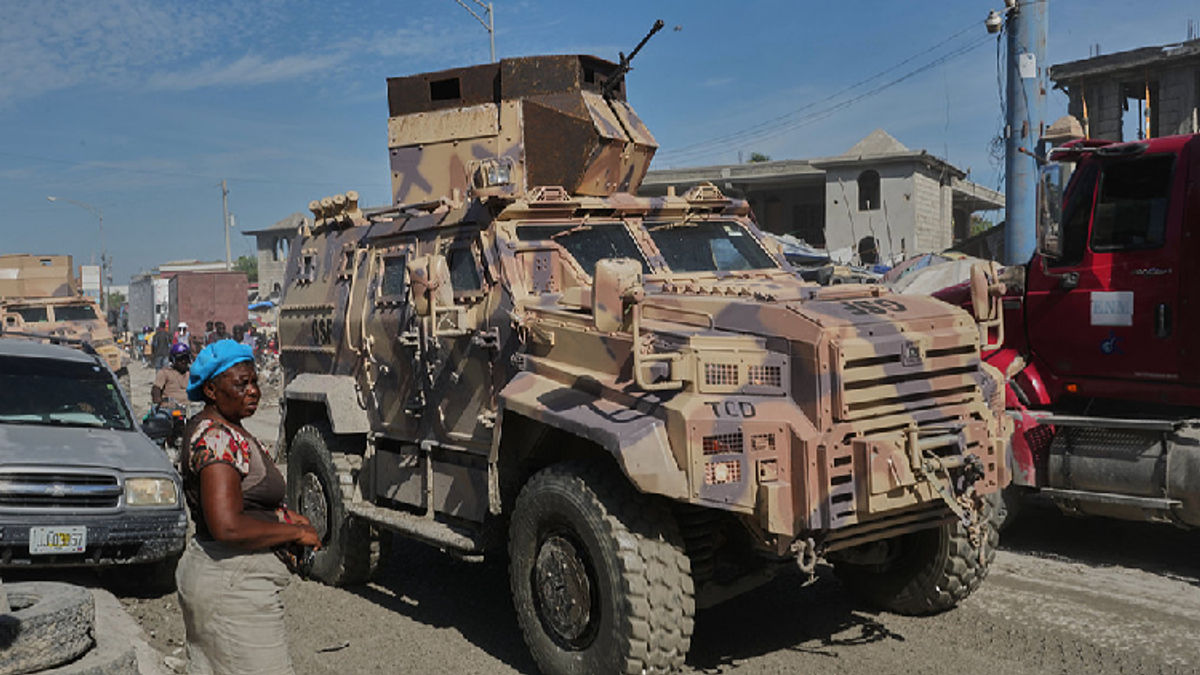
In a grim reminder of Haiti's escalating security crisis, a gang attack in the Gros-Morne area of the Artibonite department reportedly left at least 11 people dead. The incident drew condemnation from UN Secretary-General Antonio Guterres, whose spokesman highlighted the heavy toll gang violence continues to inflict on Haitians living under the sway of armed groups. This brutal event underscores the urgent need for robust security efforts, including the full deployment of the UN-backed Gang Suppression Force (GSF), whose mandate was recently extended by the Security Council for another six months.
The crisis in Haiti is not merely a breakdown of law and order; it is a profound collapse of the state, where armed gangs have effectively usurped governmental functions, creating a parallel system of power. This vacuum was not accidental but the culmination of decades of political instability, economic neglect, and external interventions that often left Haiti's institutions weaker, not stronger.
At the heart of the power mechanics is the Haitian state's near-total absence. Following the assassination of President Jovenel Moïse in 2021, the country has been mired in a leadership vacuum, with no legitimate, functioning government capable of exercising authority or providing basic services. This has allowed gangs, initially localized and often tied to political factions, to expand their territorial control, consolidate power, and diversify their revenue streams. They now control vast swathes of Port-au-Prince and increasingly, key rural areas like Artibonite, which is vital for agricultural production and transit.
These gangs operate as sophisticated, albeit brutal, economic and social entities. They levy taxes, control movement, distribute resources (often extorted), and even provide a perverse form of 'justice' or 'protection' in areas where the state is absent. Their power is derived from a combination of fear, the illicit economy – including kidnapping for ransom, drug trafficking, and arms smuggling – and the desperation of a populace with few alternatives. The international community's response, primarily through the UN, has been characterized by a cycle of intervention, withdrawal, and renewed calls for security assistance. The current GSF initiative, while framed as a solution, highlights the deep reluctance of powerful nations to commit substantial resources or troops, given past experiences and the complex, intractable nature of Haiti's problems. The deployment of a multinational force, led by Kenya, has faced significant delays, reflecting both internal Kenyan legal challenges and broader international apprehension.
The UN Security Council's decision to extend the GSF's mandate is a testament to the recognition of the severity of the crisis, but it also underscores the limitations of external security solutions without a concomitant political and developmental strategy. The power dynamic here is one of a weak, fractured Haitian state reliant on external actors for basic security, while these external actors themselves are hesitant, often prioritizing their own national interests and avoiding entanglement in what is perceived as a 'failed state' scenario. This creates a dangerous equilibrium where gangs thrive in the void, and the international community offers piecemeal solutions, never quite addressing the root causes of the power imbalance.
The human cost of Haiti's descent into gang rule is staggering and pervasive, affecting every aspect of daily life for ordinary Haitians. The reported 11 deaths in Gros-Morne are but a microcosm of a much larger catastrophe, with over 3,000 people killed between January and June alone, according to UN figures.
For millions, life under gang control means constant fear and uncertainty. Families live with the omnipresent threat of violence, kidnapping, and sexual assault. Children are unable to attend school as gang territories become battlegrounds, and parents fear sending them out. Access to food, water, and medical care is severely disrupted, as gangs blockade roads, loot humanitarian aid, and control vital infrastructure. The Artibonite department, a crucial agricultural region, sees its food supply chains choked, driving up prices and exacerbating food insecurity across the country. This systemic disruption pushes already vulnerable communities deeper into poverty, forcing impossible choices between safety and survival.
The pervasive violence has triggered a massive internal displacement crisis, with hundreds of thousands of Haitians forced to abandon their homes, often multiple times, seeking refuge in makeshift camps or with relatives in other areas. These displaced populations face dire conditions, lacking adequate shelter, sanitation, and access to basic services. Many attempt perilous journeys to neighboring countries or the United States, only to face deportation or exploitation. The psychological trauma inflicted on survivors, especially children exposed to extreme violence, will have long-lasting effects, perpetuating cycles of despair and instability for generations.
The UN and its partners are struggling to meet the overwhelming humanitarian needs. Providing food, healthcare, psychosocial support, and emergency cash assistance is a constant battle against dwindling resources. The humanitarian response plan, requiring $880 million to assist 4.2 million people, is less than half funded with only three months left in the year. This funding gap means that critical aid cannot reach those who need it most, leaving millions vulnerable to starvation, disease, and further violence. The international community's slow and insufficient financial commitment directly translates into preventable suffering and death on the ground.
While official statements from the UN and various governments condemn the violence and call for security deployments, they often downplay or omit several critical dimensions of Haiti's crisis, framing it primarily as a security issue rather than a complex interplay of historical, political, and economic factors.
The narrative often points to
The Gang Suppression Force (GSF) is a UN-backed multinational security mission aimed at assisting the Haitian National Police in combating powerful armed gangs. Its mandate was recently extended by the UN Security Council to help restore security and order in the country.
Haiti's severe gang violence stems from a profound state collapse, exacerbated by political instability, economic neglect, and a power vacuum following the assassination of President Jovenel Moïse. Gangs have filled this void, controlling territory and exploiting a desperate populace amidst a lack of legitimate governance and economic opportunity.
Haiti faces a dire humanitarian crisis marked by widespread displacement, extreme food insecurity, and severely disrupted access to basic services like healthcare and education. Gang control over key infrastructure and supply routes hinders aid delivery, leaving millions vulnerable, while international funding for relief efforts remains critically insufficient.
Source referenced: CGTN
This brief was synthesized by our Editorial Engine and reviewed by The Ground Narrative team.


