TRENDING

Monday, 5 October 2026
----------------------
24 Rabi' Al-Thani 1448 AH
The United States' 'maximum pressure' campaign against Cuba, including a fuel blockade and sanctions, has prompted significant economic reforms in Havana but is simultaneously fueling a severe humanitarian crisis and eroding the very foundations necessary for a stable, democratic transition, according to recent analysis. Critics argue this approach risks undermining long-term U.S. interests and regional stability.
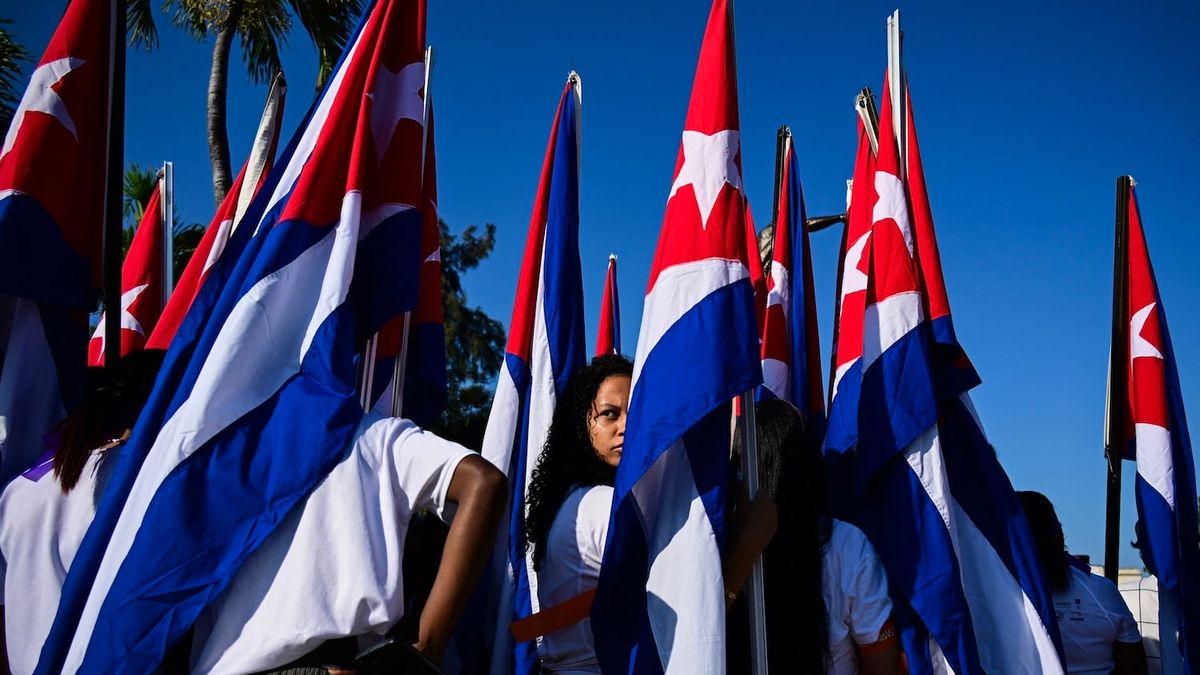
Since January, the United States has intensified its 'maximum pressure' campaign against Cuba, following the capture of Venezuelan President Nicolás Maduro and the subsequent disruption of oil flows that historically sustained the island nation. This strategy, spearheaded by the Trump administration, aims to leverage sanctions and an effective fuel blockade to compel Cuba's leadership toward a negotiated economic and political opening, ultimately envisioning the island as a dependent U.S. partner.
In response to this sustained pressure, Cuba's National Assembly approved a comprehensive package of 175 economic measures on June 18. These reforms represent a significant departure from the economic order established by the 1959 Cuban Revolution, allowing for the operation of private banks, opening real estate and state-owned enterprises to private and foreign capital, enabling Cubans abroad to invest, and largely dismantling price controls. Cuban President Miguel Díaz-Canel framed these overhauls as a defense of socialism, rather than an abandonment of its core principles.
Despite these economic concessions, the U.S. pressure campaign has precipitated a severe humanitarian crisis on the island. Just days after Cuba's reforms were announced, U.S. Secretary of State Marco Rubio imposed sanctions on five additional Cuban entities, including the primary bank handling foreign business, signaling a continued tightening of restrictions.
The humanitarian toll has drawn international concern. Volker Türk, the United Nations High Commissioner for Human Rights, directly attributed a humanitarian emergency in Cuba to the Trump administration's policies. His office reported a drastic decline in the survival rate for children with cancer, from approximately 85 percent to 65 percent, since the imposition of fuel restrictions in January. Blackouts, a direct consequence of fuel shortages, have crippled refrigeration and transport systems vital for medical supply chains. Infant mortality has reportedly doubled to nearly 10 deaths per 1,000 live births, and only about a third of essential medicines are available. Furthermore, fuel shortages have severely impacted food production, which has reportedly dropped by 60 percent, leaving vulnerable populations, particularly pregnant women and young children, exposed to malnutrition. Türk emphasized that sanctions designed to indiscriminately strangle entire economic sectors are incompatible with international human rights law.
Analysts argue that Washington's strategy, while eliciting economic reforms, may be fundamentally self-defeating. The severe hardship imposed by external pressure rarely translates into public anger directed solely at the local government; instead, it often fuels hostility toward the imposing foreign power. Moreover, the Cuban government has historically demonstrated a robust capacity to suppress internal dissent.
A deeper, structural concern is that the U.S. blockade is eroding the very foundations necessary for a stable and productive future partnership with Cuba, regardless of its political orientation. A functioning market economy requires accessible credit, foreign investment unburdened by punitive risks, and a stable workforce. The current energy shortages and collapse of basic services are counterproductive, accelerating emigration from Cuba—with over 1 million Cubans having left since 2021—and draining the island of its working-age population. Childhood malnutrition risks long-term reductions in per capita productivity, potentially for decades.
The article suggests that the longer U.S. pressure persists, the closer Cuba moves toward economic ruin, increasing its vulnerability to radicalization and mass exodus, and diminishing its capacity for an orderly transition to democracy. The Trump administration's perceived aim to replicate its Venezuela strategy—replacing Díaz-Canel with a more pliable figure—is noted, though no such candidate has emerged in Cuba.
Cuba, unlike Venezuela, possesses a relatively cohesive state with institutional capacity in healthcare, education, and administration, alongside high literacy rates. These structures, though strained, could potentially facilitate an orderly transition, akin to some Eastern European socialist states in the late 1980s. However, the U.S. siege is actively eroding these capacities.
History suggests that external pressure rarely produces desired democratic outcomes and often strengthens authoritarian narratives of national siege. Decades of U.S. sanctions have arguably hardened Havana's resolve and provided a convenient scapegoat for its own economic failures. Furthermore, foreign-imposed regime change risks tainting the legitimacy of any new Cuban government, potentially sowing seeds for future nationalist backlashes, as exemplified by Fidel Castro's rise in 1959 amidst resentment over perceived U.S. dominance.
To avoid squandering the opportunity for a gradual, sustainable transition, the article advocates for a shift in U.S. policy. Lifting the blockade and easing sanctions that disproportionately affect ordinary Cubans—allowing essential fuel, food, and medicine to reach the island—would preserve the human capital vital for recovery. Engagement, rather than siege, through widened trade, repeal of the Helms-Burton Act, and promotion of investment and travel, could foster internal political change and yield greater long-term benefits for the United States and the Cuban people alike.
Source referenced: FOREIGNPOLICY
This brief was synthesized by our Editorial Engine and reviewed by The Ground Narrative team.


