TRENDING

Saturday, 3 October 2026
----------------------
22 Rabi' Al-Thani 1448 AH
A week-long siege by settlers on Palestinian homes in Qusra highlights the daily pressures faced by communities in the West Bank, drawing a diplomatic condemnation from Washington.
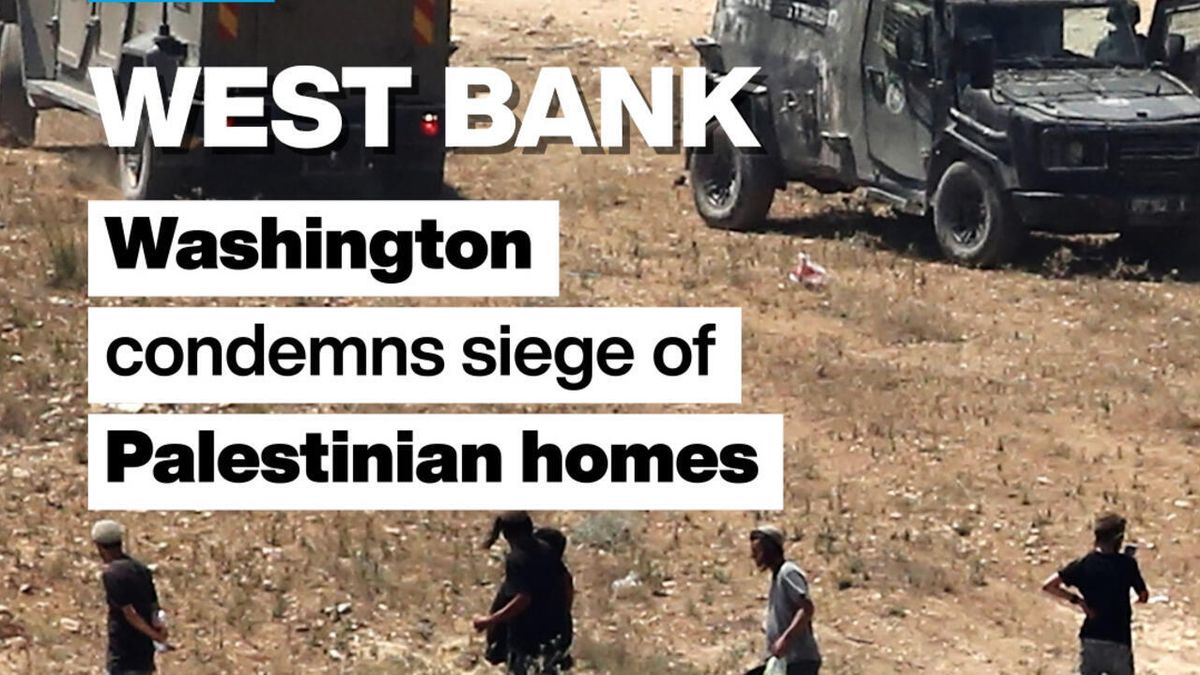
For nearly a week, Palestinian families in the village of Qusra, located in the occupied West Bank, have endured a siege by Israeli settlers. This sustained pressure on homes and residents has trapped families, restricting their movement and access to basic necessities. The incident prompted a diplomatic response from Washington, which issued a condemnation of the actions.
This localized siege in Qusra is a stark illustration of the structural forces at play in the West Bank. At its core, it represents a power dynamic where non-state actors—settlers—operate with a high degree of impunity, often leveraging the broader security apparatus of the Israeli state. The objective is frequently to establish facts on the ground, expanding de facto control over territory and resources without formal annexation decrees. For settlers, such actions can be driven by ideological convictions, a desire for land expansion, or a strategic aim to disrupt Palestinian contiguity. The Israeli state, while sometimes condemning violence, often finds itself in a difficult position: intervening against settlers risks alienating a key political constituency, while inaction reinforces the perception of tacit approval. For the United States, condemnations serve to uphold a diplomatic stance against unilateral actions that undermine a two-state solution, yet they rarely translate into tangible pressure that could alter the calculus of those on the ground. This creates a cycle where diplomatic statements become a predictable, yet often ineffective, part of the landscape, allowing the underlying power asymmetry to persist.
The most immediate and profound human cost falls upon the Palestinian residents of Qusra. Trapped in their own homes, their daily lives are upended. Children cannot attend school, adults cannot reach their workplaces or cultivate their fields, and access to essential services like healthcare or even food supplies becomes precarious. This isn't merely an inconvenience; it's a psychological burden of constant fear and uncertainty, a direct assault on their sense of security and belonging. Beyond Qusra, the incident sends a chilling message to other Palestinian communities in the West Bank: that their homes and livelihoods are vulnerable, and that international condemnations may offer little practical protection. The economic impact is also significant, as agricultural land becomes inaccessible and local economies are disrupted, further entrenching dependency and limiting future prospects for development.
While Washington's condemnation is noted, what is often downplayed or omitted in official statements is the systemic nature of these events. This is not an isolated incident but part of a broader, ongoing pattern of settler expansion and increasing friction, often occurring in areas designated as 'Area C' under the Oslo Accords, which are under full Israeli security and administrative control. Governments and official bodies often focus on individual acts of violence, framing them as aberrations, rather than acknowledging how they contribute to a larger, undeclared strategy of territorial control. The critical question of how settler activities are often facilitated—or at least not effectively prevented—by the presence of Israeli security forces is also frequently sidestepped. Furthermore, the long-term economic motivations, such as control over water resources and fertile land, which underpin many of these actions, are rarely highlighted in diplomatic discourse, which tends to focus on security concerns or abstract political solutions.
Readers should watch for several key indicators in the coming weeks and months. Firstly, observe whether the US condemnation is followed by any concrete policy shifts, such as targeted sanctions against individuals or entities involved in settler violence, or if it remains purely rhetorical. Secondly, monitor the response of the Israeli government: will there be increased enforcement against settler actions, or will the status quo of limited intervention prevail? Thirdly, observe how Palestinian communities, both in Qusra and elsewhere, adapt their strategies of resilience and resistance. Any escalation in settler activity in other vulnerable areas of the West Bank would signal a continued intensification of this slow squeeze. Finally, pay attention to any shifts in regional diplomatic efforts, as the sustained pressure on Palestinian communities continues to be a destabilizing factor in broader Middle East relations.
Source referenced: FRANCE24
This brief was synthesized by our Editorial Engine and reviewed by The Ground Narrative team.