TRENDING

Monday, 5 October 2026
----------------------
24 Rabi' Al-Thani 1448 AH
A high-level summit between the United States and China in Washington has concluded with a series of agreements on critical issues including artificial intelligence and trade. This diplomatic overture signals a managed de-escalation in specific areas, even as fundamental rivalries persist.
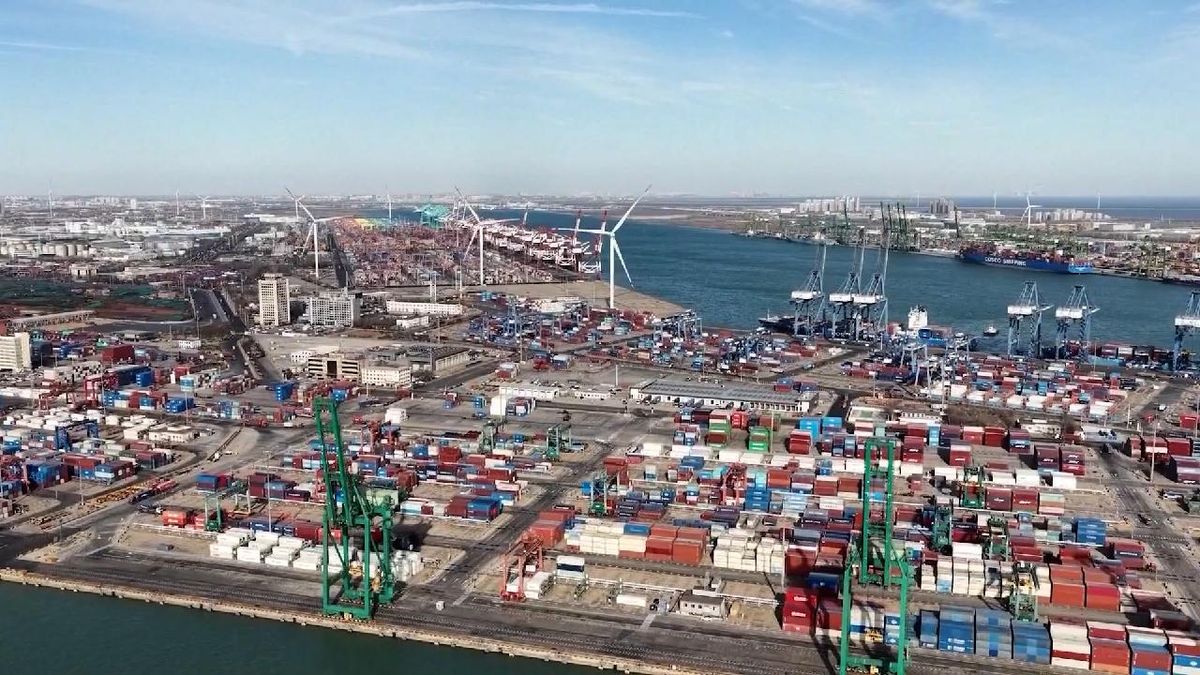
In late September 2026, a significant summit between the United States and China took place in Washington, culminating in the announcement of multiple agreements. These accords reportedly covered a range of issues, with particular emphasis placed on cooperation in artificial intelligence and the easing of certain trade tensions. The meeting, involving the heads of state from both nations, marked a notable moment in a period otherwise characterized by intense geopolitical competition and economic friction. While specific details of the agreements remain under close scrutiny, the overarching message was one of a deliberate effort to establish common ground and manage potential flashpoints between the world's two largest economies.
The decision by both Washington and Beijing to engage in such a high-stakes summit, and critically, to emerge with agreements, speaks volumes about the underlying power dynamics at play. Neither nation can afford a complete decoupling, despite the rhetoric often suggesting otherwise. For the United States, managing the relationship with China is a delicate balancing act. Economically, American businesses remain deeply intertwined with Chinese supply chains and its vast consumer market. Politically, the administration faces pressure to demonstrate leadership on global issues like climate change and pandemic preparedness, areas where Chinese cooperation, however reluctant, is essential. Militarily, the risk of miscalculation in flashpoints like the Taiwan Strait or the South China Sea necessitates channels for de-escalation and risk reduction. The agreements, particularly on AI, suggest a recognition that unchecked technological competition could lead to unpredictable and potentially catastrophic outcomes, compelling a pragmatic, if limited, approach to regulation and shared understanding.
On the Chinese side, the Communist Party of China (CCP) prioritizes internal stability and continued economic growth. While asserting its global influence and technological prowess, Beijing also understands that prolonged, severe economic confrontation with the US could jeopardize its long-term development goals and domestic legitimacy. Access to certain Western technologies, even if restricted, remains vital for key sectors, and maintaining a degree of market access for its exports is crucial for employment and prosperity. Furthermore, presenting China as a responsible global power, capable of engaging in constructive dialogue, serves its diplomatic objectives, particularly with nations in the Global South who are wary of being forced to choose sides. The agreements, therefore, represent a strategic calculation by both powers to stabilize specific areas of friction, allowing them to focus resources on other, perhaps more intractable, aspects of their rivalry without completely derailing their respective national agendas.
While high-level summits and trade agreements are often framed in terms of national interest and economic indicators, the human cost of the US-China relationship's volatility is profound and often overlooked. The constant shifts in trade policies, tariffs, and technological restrictions have created immense uncertainty for workers and communities on both sides of the Pacific.
In the United States, workers in manufacturing sectors have faced job losses and economic disruption as companies either reshore production at higher costs or shift operations to other low-wage countries, driven by the desire to avoid tariffs or geopolitical risks. Similarly, in China, export-oriented factories have seen orders fluctuate, leading to layoffs and reduced wages for millions of migrant workers who depend on stable international trade. These individuals, often lacking robust social safety nets, bear the direct brunt of policy decisions made in distant capitals, their livelihoods becoming collateral damage in a larger power struggle. Consumers in both nations also pay a price through higher prices for goods, reduced product variety, and slower innovation in certain sectors as companies navigate complex regulatory landscapes and supply chain disruptions.
The agreements on artificial intelligence, while potentially offering a veneer of cooperation, also carry a significant human dimension. The rapid advancement of AI without robust ethical frameworks and international oversight raises concerns about job displacement through automation, algorithmic bias, and the potential for enhanced state surveillance. For citizens in both countries, the unchecked development of AI could lead to a future where personal privacy is further eroded, and state control is amplified, particularly in China where AI is already integrated into its social credit system and extensive surveillance networks. Even in the US, the push for AI dominance raises questions about data security and individual liberties. The agreements, if they do not explicitly address these ethical and human rights dimensions, risk legitimizing a technological race that could ultimately diminish human agency and freedom.
Beyond the two superpowers, the human cost extends to the Global South. Smaller nations are often pressured to align with either Washington or Beijing, facing economic or political repercussions if they do not. This creates a climate of instability, diverting resources from development towards geopolitical maneuvering. Furthermore, global challenges like climate change, pandemics, and humanitarian crises, which require genuine multilateral cooperation, are often sidelined or complicated by the ongoing great power rivalry. The human populations most vulnerable to these global threats are the ones who ultimately pay the highest price for the limited scope of US-China cooperation.
While the summit's agreements are presented as a step towards stability, the official narratives from both Washington and Beijing inevitably downplay or omit the deeper, more intractable issues that remain unresolved. The public messaging focuses on shared interests and diplomatic achievements, but a closer look reveals a strategic calculus far more complex than simple cooperation.
What governments are downplaying is the highly circumscribed nature of these agreements. Cooperation on AI likely refers to narrow,
The summit concluded with numerous agreements, specifically highlighting cooperation on artificial intelligence and measures to ease trade tensions between the two global powers. These outcomes signal a strategic effort to manage key areas of competition.
Both nations recognize the mutual economic interdependence and the risks of unchecked technological competition. The agreements likely represent a pragmatic effort to stabilize specific areas of friction, prevent escalation, and maintain channels for dialogue, rather than a fundamental shift in their strategic rivalry.
The agreements likely did not address core geopolitical flashpoints such as the status of Taiwan, territorial disputes in the South China Sea, or fundamental ideological differences. These sensitive issues remain significant sources of tension between the United States and China.
Editor's Note: Analysis is based on projecting current US-China geopolitical dynamics and the nature of high-level diplomatic agreements onto the brief factual report of a 2026 summit.
Source referenced: CGTN
This brief was synthesized by our Editorial Engine and reviewed by The Ground Narrative team.


