TRENDING

Monday, 5 October 2026
----------------------
24 Rabi' Al-Thani 1448 AH
Nigel Farage's Reform UK party has secured a significant win, but the leader's absence from the election result ceremony raises questions about the underlying power dynamics at play. As Farage claims a 'resounding victory', what does this mean for the future of British politics and its people?
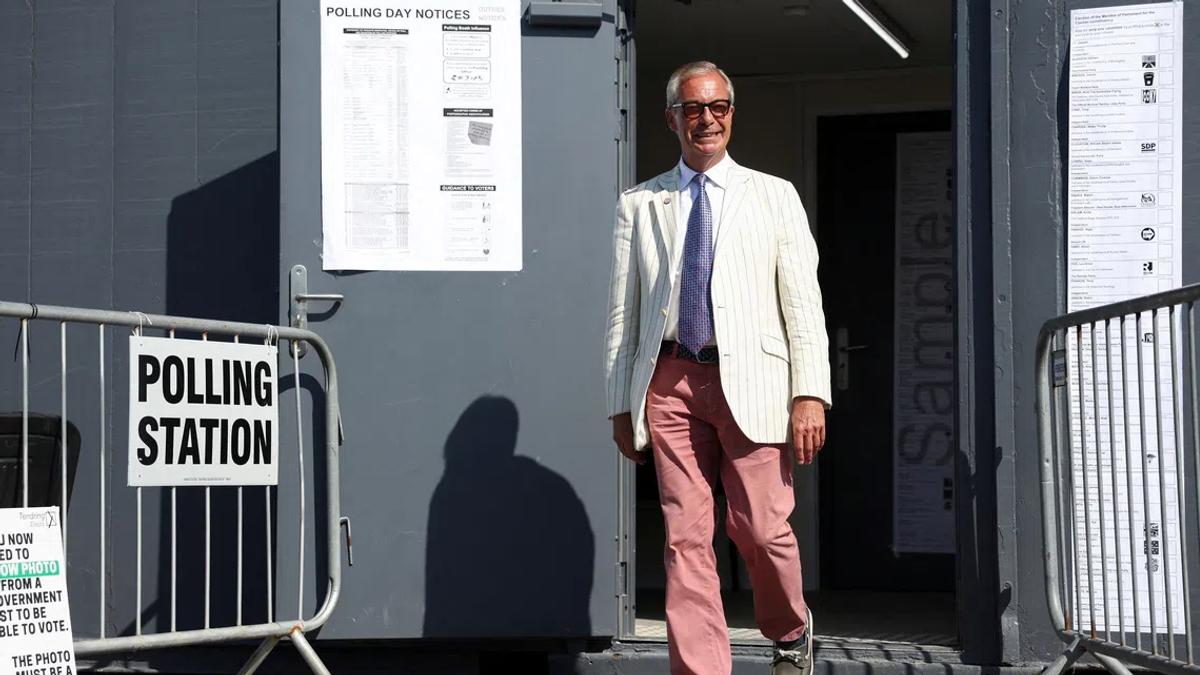
Nigel Farage, the leader of Britain's populist Reform UK party, has announced his victory in the recent election, but will not attend the official results ceremony due to a police warning about potential disruptions. This decision comes after weeks of controversy surrounding Farage's failure to declare millions of pounds in funding from a wealthy backer.
Farage's move to resign from parliament and seek a new mandate was a strategic attempt to rebrand himself as a champion of the people against the establishment. By framing his victory as an 'overwhelming endorsement', Farage aims to bolster his party's populist credentials and further polarize the British political landscape. However, the fact that he is not attending the results ceremony due to a police warning suggests that there are underlying tensions and potential security concerns that could impact the legitimacy of the election outcome.
The people of Clacton, where the election took place, are likely to be affected by the ongoing controversy surrounding Farage's funding and the potential disruptions to the election result. The local community may feel that their democratic process is being undermined by external factors, leading to a sense of disillusionment and disenfranchisement. Moreover, the absence of Farage from the results ceremony may be seen as a snub to his constituents, who may feel that their voices are not being represented.
What is being downplayed in this scenario is the potential impact of Farage's victory on the broader British political landscape. With his party's populist agenda gaining traction, there are concerns that the UK's political discourse may become increasingly polarized, leading to further divisions within society. Additionally, the fact that Farage is citing a police warning as the reason for his absence from the results ceremony raises questions about the role of law enforcement in policing political events and the potential for external interference in the democratic process.
As the dust settles on this election, readers should watch for how Farage's victory will be received by the broader British public and the potential implications for the country's political landscape. Will Farage's populist agenda continue to gain traction, and how will the established parties respond to this challenge? Furthermore, what measures will be taken to address the underlying concerns about the legitimacy of the election outcome and the potential for external interference in the democratic process?
Editor's Note: The analysis is based on publicly available information and may not reflect the full complexity of the situation.
Source referenced: STRAITSTIMES
This brief was synthesized by our Editorial Engine and reviewed by The Ground Narrative team.


