TRENDING

Sunday, 25 October 2026
----------------------
14 Jumada Al-Awwal 1448 AH
Volker Turk has been reappointed as the UN High Commissioner for Human Rights for a second term, a move that faced strong opposition from the United States, Russia, and Israel. This decision underscores the inherent tensions between national sovereignty and international human rights oversight, reflecting deep geopolitical fault lines within the global body.
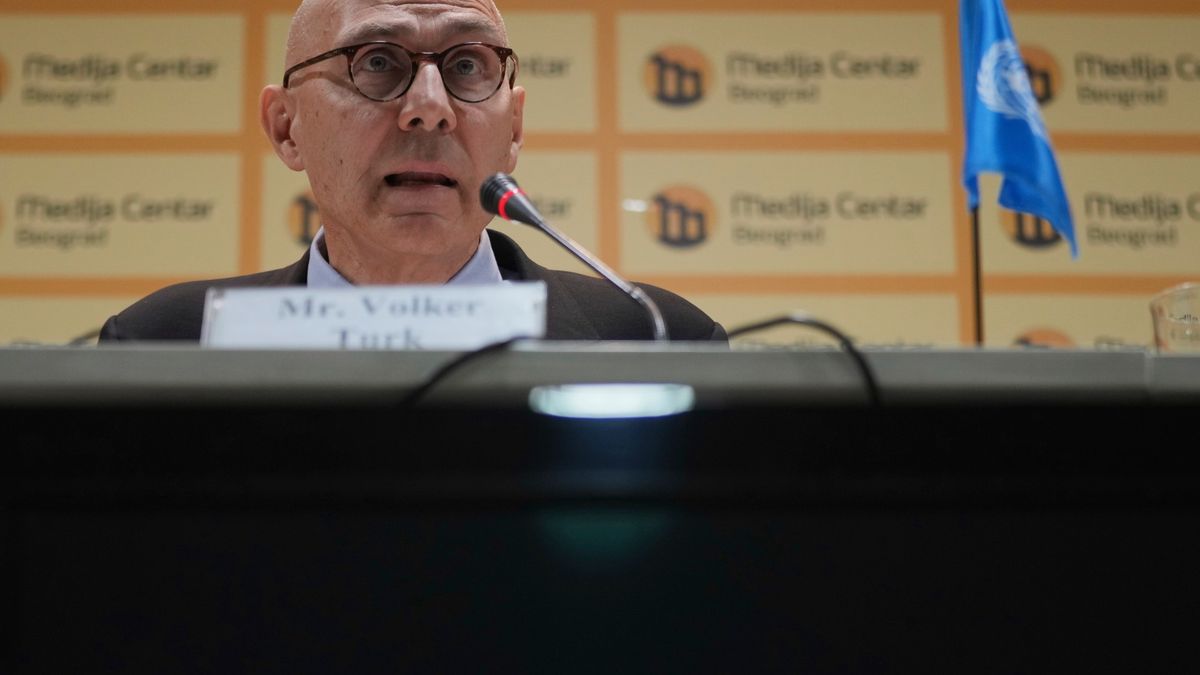
Volker Turk, the incumbent United Nations High Commissioner for Human Rights, has been reappointed for an unprecedented second four-year term, a decision ratified by an overwhelming vote in the UN General Assembly on Friday, July 25, 2026. This reappointment is particularly significant as it marks the first time since the position's inception in 1993 that an individual will serve two full terms. The process, however, was fraught with controversy, drawing strong objections from key member states including the United States, Russia, and Israel, thereby illuminating the complex geopolitical landscape surrounding international human rights mechanisms.
Turk, an Austrian lawyer with a long career within the UN, primarily in its refugee agency, assumed the role of High Commissioner in 2022. His tenure has been characterized by outspoken criticism of human rights violations across numerous global hotspots. This includes his strong condemnation of Israel's military actions in Gaza and Lebanon, which he has described as a "genocidal war" and a "deadly assault," alongside a "shameful" lack of accountability for abuses in occupied Palestinian territories. Similarly, he has labeled Russia's invasion of Ukraine as "senseless" and a "blatant affront to the UN Charter and international law." The United States also found itself in Turk's crosshairs, particularly concerning its "war on Iran" and the "dehumanisation" of immigrants under former President Donald Trump, citing routine "abuse and denigration of migrants and refugees."
The vigorous opposition to Turk's reappointment stemmed directly from these criticisms. Israel's Ministry of Foreign Affairs accused Turk's office of "erasing the atrocities of October 7," misusing funds, and betraying UN neutrality. Russia's Deputy Ambassador to the UN, Dmitry Chumakov, similarly charged Turk with bias and making unfounded allegations. The US Department of State criticized the reappointment process as "rushed" and indicative of the UN's "inherent corruption and incompetence," further accusing Turk of pursuing a "radical ideological agenda" while turning "a blind eye to real atrocities."
Despite these formidable objections, the UN General Assembly decisively backed UN Secretary-General Antonio Guterres's proposal for Turk's second term, with 144 votes in favor, 10 against, and 13 abstentions. Attempts by the US to delay the vote and by Russia to shorten the proposed term were both rejected. This outcome signifies a notable assertion of independence by the broader UN membership against the preferences of some of its most powerful states. Secretary-General Guterres, whose own term concludes at the end of the year, defended the process, stating that UN rules were followed and consultations were conducted transparently with member states and regional groups.
Turk's reappointment, despite the significant pushback, carries profound geopolitical implications. It underscores the inherent tension in the role of the UN Human Rights Chief, which by its very nature requires public criticism of sovereign states for alleged violations. The General Assembly's vote can be interpreted as a collective endorsement of the principle of independent human rights oversight, even when it challenges the interests of powerful nations. This decision reinforces the notion that the UN's human rights mechanisms, while often controversial, retain a degree of autonomy and moral authority in the eyes of a majority of member states.
For the Office of the High Commissioner for Human Rights (OHCHR), Turk's second term offers continuity and potentially strengthens its institutional capacity and long-term strategic planning. However, the sustained accusations of bias from major global players like the US, Russia, and Israel could continue to challenge the OHCHR's perceived neutrality and effectiveness in certain contexts. The episode highlights the deep divisions within the international community regarding the application of international law and human rights standards, particularly when intertwined with major geopolitical conflicts such such as the ongoing war in Ukraine and the Israeli-Palestinian conflict.
Moreover, Turk has also faced criticism from other quarters, including for not being sufficiently vocal on China's treatment of Uighurs or for stopping short of explicitly joining independent UN experts in accusing Israel of genocide against Palestinians in Gaza. These criticisms illustrate the precarious tightrope walk required of the High Commissioner, who must navigate a complex web of political sensitivities while upholding a universal mandate. The successful reappointment of Volker Turk, therefore, is not merely a procedural event but a significant indicator of the evolving dynamics of international relations, the enduring relevance of human rights in global discourse, and the ongoing struggle for accountability in a multipolar world.
Source referenced: ALJAZEERA
This brief was synthesized by our Editorial Engine and reviewed by The Ground Narrative team.