TRENDING

Saturday, 26 September 2026
----------------------
15 Rabi' Al-Thani 1448 AH
Twin earthquakes in Venezuela have laid bare the catastrophic state of the nation's public health infrastructure, overwhelmed by a decade of economic crisis and chronic mismanagement. The disaster highlights the profound vulnerability of the Venezuelan state and its citizens to natural calamities.
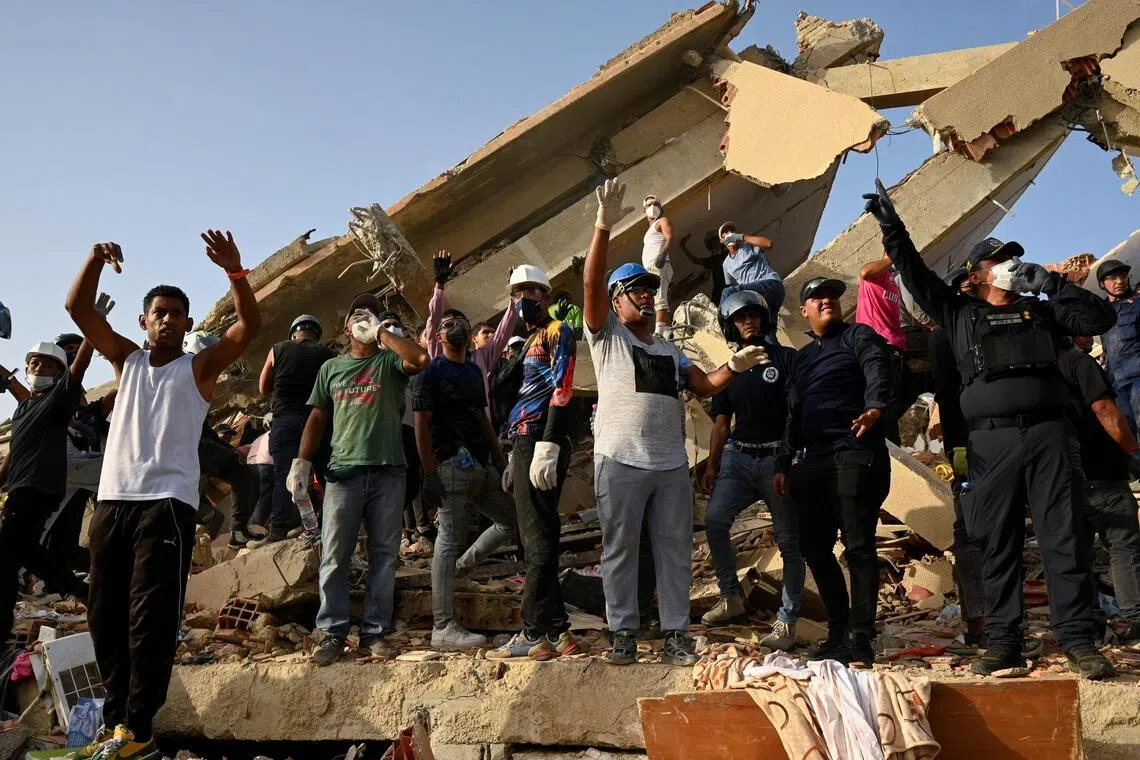
On June 24, 2026, a pair of powerful earthquakes struck Venezuela, primarily impacting the capital, Caracas, and the nearby state of La Guaira. The immediate aftermath, as observed on June 26, revealed a humanitarian crisis of staggering proportions, not merely due to the seismic activity itself, but exacerbated by the profound decay of the nation's public services. Hospitals and morgues, already struggling under years of neglect, were instantly overwhelmed, exposing the systemic vulnerabilities that have plagued Venezuela for over a decade.
The scenes described by medical personnel and witnesses painted a grim picture: children with severe injuries, patients languishing on gurneys in hospital yards with IV drips suspended from tree branches, and morgues designed for two bodies overflowing with thirty, their refrigeration units failing due to lack of electricity, accelerating decomposition and creating an unbearable stench. The sheer volume of casualties, combined with a critical shortage of ambulances, forced citizens to transport the injured in private vehicles, often with makeshift signs pleading for help. Clinics accustomed to routine check-ups were transformed into triage centers, only to later become collection points for the deceased.
The catastrophic response to the earthquakes is not an isolated incident but a direct consequence of Venezuela's protracted economic crisis and chronic government mismanagement. For more than ten years, the nation's public health system has been a primary victim, systematically stripped of funding, resources, and essential infrastructure. Doctors, many of whom have endured these deteriorating conditions for years, described the post-quake scenario as unprecedented in its scale of suffering and systemic failure.
This historical context is crucial for understanding why the disaster response was so inadequate. A nation with a robust, well-funded public health system, even in the face of a major natural disaster, would typically mobilize resources, deploy emergency services, and establish temporary facilities with greater efficiency. In Venezuela, however, the state's capacity to respond was virtually non-existent. The article highlights the absence of state help, forcing ordinary citizens and medical volunteers to step in, providing water, medicines, and supplies, and even establishing field hospitals in unconventional locations like bus terminals. This reliance on grassroots efforts underscores the profound vacuum left by a failing state apparatus.
The humanitarian crisis unfolding in Venezuela carries significant geopolitical implications. Internally, the disaster is likely to further erode public trust in the government and could potentially fuel social unrest. The inability of the state to protect its citizens and provide basic services in a time of extreme need highlights the fragility of its governance and its detachment from the populace. This could intensify existing political tensions and calls for reform or change.
Regionally, a deepening humanitarian crisis in Venezuela could trigger renewed waves of migration, placing additional strain on neighboring countries already grappling with the influx of Venezuelan refugees and migrants over recent years. Countries like Colombia, Brazil, Peru, and Ecuador, which have borne the brunt of this exodus, could face exacerbated challenges in providing shelter, healthcare, and social services to new arrivals. This could, in turn, destabilize border regions and create new diplomatic pressures.
Internationally, the crisis presents a complex challenge. While the immediate need for humanitarian aid is undeniable, the political landscape surrounding Venezuela complicates the delivery and distribution of such assistance. The Maduro government's historical reluctance to accept certain forms of international aid, or its perceived mismanagement of aid, could hinder effective relief efforts. This situation could test the diplomatic resolve of international bodies and individual nations, potentially opening avenues for engagement or further entrenching the country's isolation depending on the government's response to offers of assistance. Furthermore, the disaster could prompt a re-evaluation of support from Venezuela's international allies, such as China, Russia, and Cuba, who might be pressured to provide more substantial humanitarian relief.
The twin earthquakes have not only caused immediate devastation but have also exposed the deep-seated structural weaknesses of Venezuela. The path to recovery will be long and arduous, requiring not just reconstruction of damaged infrastructure but also a fundamental rebuilding of the nation's public services. The economic burden of this disaster will be immense, adding another layer of complexity to an already struggling economy. Without significant internal reforms and potentially robust, well-managed international assistance, Venezuela faces the prospect of a protracted humanitarian crisis and an even more challenging future. The events of June 2026 serve as a stark reminder of how natural disasters can amplify existing governance failures, with devastating consequences for a nation and its people.