TRENDING

Sunday, 15 November 2026
----------------------
5 Jumada Al-Thani 1448 AH
US President Donald Trump has threatened to double tariffs on Mexican goods, citing concerns over migrant caravans. This move, aimed at border control, risks significant economic disruption for Mexican producers already grappling with existing trade barriers.
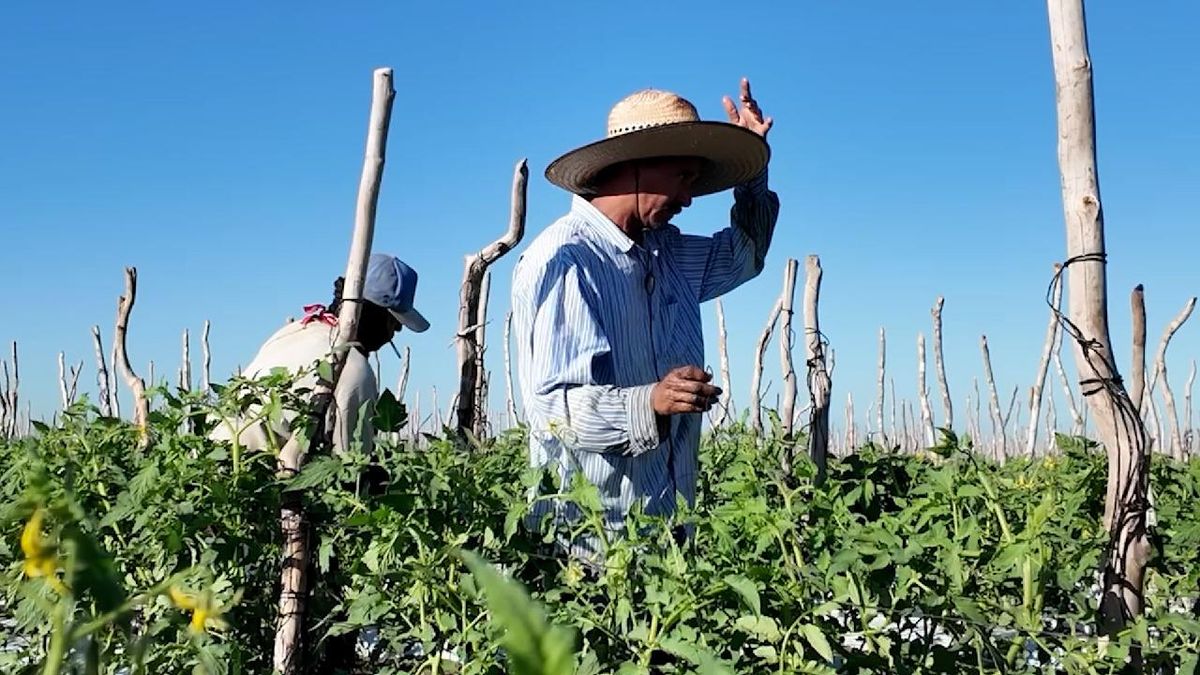
U.S. President Donald Trump recently threatened to "immediately" double tariffs on Mexican goods. The stated rationale for this aggressive economic posture is to compel Mexico to halt the flow of migrant caravans from reaching the U.S. border. In response, Mexican President Claudia Sheinbaum quickly countered, asserting that no migrant caravans have reached the U.S. since Trump’s return to office in 2025, indicating a factual dispute over the premise of the threat. The announcement has already sent ripples through key Mexican agricultural sectors, with farmers in states like Sinaloa reporting distress over the existing and potential future impact of U.S. tariffs.
This tariff threat is a classic demonstration of using economic leverage to achieve non-economic, primarily political, objectives. For the United States, specifically under President Trump, the issue of border security and irregular migration remains a potent domestic political rallying cry. Tariffs, in this context, are not merely trade policy; they are a blunt instrument of foreign policy designed to exert pressure on a sovereign neighbor. The underlying power dynamic is rooted in Mexico's deep economic interdependence with the U.S., its largest trading partner. The U.S. knows that Mexico's economy, particularly its export-oriented sectors, is highly vulnerable to disruptions in cross-border trade.
President Trump's approach reflects a transactional view of international relations, where economic concessions are demanded in exchange for perceived security benefits. This strategy bypasses traditional diplomatic channels and directly targets Mexico's economic stability to influence its internal policies regarding migration. The threat also serves a domestic purpose, signaling to a core political base that the administration is taking decisive action on immigration, regardless of the actual efficacy of tariffs in addressing complex migratory flows. It's a performance of strength, designed to project an image of unwavering resolve on border control.
From Mexico's perspective, the situation is fraught with political and economic peril. President Sheinbaum faces the unenviable task of balancing national sovereignty with the overwhelming economic reality of its northern neighbor. Yielding entirely to U.S. demands could be perceived domestically as weakness and an infringement on national autonomy, potentially undermining her political standing. Conversely, resisting could trigger economic sanctions that would devastate key industries, leading to job losses and a broader economic downturn, which would also be politically damaging. Mexico is not just a source of migrants, but predominantly a transit country for individuals fleeing violence, poverty, and instability in Central and South America. Its capacity to unilaterally "stop" these flows is inherently limited, as it grapples with its own internal security challenges and humanitarian obligations.
The USMCA (United States-Mexico-Canada Agreement), the successor to NAFTA, was designed to foster integrated supply chains and stable trade relations. However, the threat of tariffs undermines the spirit of this agreement, demonstrating that economic pacts can be overridden by political will when deemed expedient. This creates an environment of uncertainty for businesses and investors on both sides of the border, eroding confidence in long-term trade stability. The power imbalance is stark: the U.S. wields the larger economy and market access, allowing it to dictate terms, while Mexico must navigate a narrow path between compliance and resistance, with significant consequences for its populace.
While the headlines focus on presidential threats and international relations, the most immediate and profound impact of these tariff discussions falls squarely on ordinary people and communities. The economic weaponization of trade has direct, tangible consequences for livelihoods, food prices, and social stability.
The most visible victims are the Mexican farmers, particularly those in states like Sinaloa who cultivate produce like tomatoes for the U.S. market. These farmers operate on thin margins, and even existing tariffs, let alone doubled ones, can make their exports uncompetitive. For them, tariffs mean reduced demand, lower prices for their crops, and potentially unsellable harvests. This translates directly into lost income, inability to pay debts, and the difficult decision to lay off farmhands. The agricultural sector is a significant employer in many Mexican regions, and widespread job losses would ripple through local economies, affecting small businesses, schools, and essential services. Many agricultural workers are already vulnerable, and economic instability pushes them closer to desperation, sometimes forcing them to consider migration themselves.
The impact isn't confined to Mexico. U.S. consumers would face higher prices on a wide array of goods. Mexico is a major supplier of fresh produce, auto parts, electronics, and manufactured goods to the United States. Doubled tariffs would mean these products become more expensive for American importers, who would then pass those costs onto retailers and, ultimately, consumers. This could lead to increased grocery bills, higher costs for cars and other durable goods, and contribute to inflationary pressures. For U.S. businesses that rely on Mexican supply chains, tariffs mean increased operational costs, reduced competitiveness, and potential disruptions to their production schedules. Some might be forced to cut jobs or even relocate operations, impacting American workers and local economies.
Ironically, the very population these tariffs are ostensibly meant to deter—migrants—also bears a significant human cost. Economic instability in Mexico, exacerbated by tariffs, could push more Mexicans to seek opportunities elsewhere, potentially increasing migration rather than decreasing it. For migrants from Central and South America, who often transit through Mexico, increased pressure on Mexico to "stop" them could lead to harsher enforcement, more dangerous routes, and greater exploitation by human traffickers. Border communities on both sides of the divide, already strained by migration flows, would face increased humanitarian challenges, resource scarcity, and social tensions as policies fail to address the root causes of displacement.
In the high-stakes rhetoric surrounding tariffs and border security, several critical dimensions are routinely downplayed or entirely omitted by powerful actors, particularly the U.S. administration and its proponents. These omissions distort the public understanding of the issue and obscure the true mechanics of power at play.
The most significant untold story is the fundamental disconnect between economic tariffs and the complex drivers of human migration. Tariffs are a tool of trade policy; they impose costs on goods and services. They do not address the root causes that compel people to leave their homes—factors like extreme poverty, gang violence, political instability, and climate change in their countries of origin. By punishing Mexico's economy, the U.S. risks destabilizing a key partner, which could inadvertently worsen the very conditions that contribute to migration, rather than solving them. Framing tariffs as a direct solution to migration allows powerful actors to avoid engaging with the deeper, more challenging diplomatic and humanitarian solutions required for a sustainable regional migration policy.
The term "migrant caravan" itself, frequently used by the U.S. administration, often serves as a politically charged narrative. While large groups of migrants do travel together for safety, the term often simplifies and sensationalizes complex human movements, portraying them as an organized invasion rather than a desperate collective journey. This narrative downplays the individual stories, the dire circumstances forcing people to flee, and the humanitarian needs of those seeking asylum. It also diverts attention from the fact that many migrants are not Mexican citizens but individuals from other Central and South American countries, meaning Mexico's capacity to "stop" them is inherently limited to its role as a transit country, not an origin country.
While the U.S. is Mexico's largest trading partner, the reverse is also true. Mexico is the U.S.'s second-largest trading partner, and U.S. industries are deeply integrated with Mexican supply chains, particularly in the automotive, electronics, and agricultural sectors. Tariffs are not a one-way street; they impose significant costs on U.S. businesses that rely on Mexican inputs and components, potentially leading to higher production costs, reduced competitiveness, and job losses within the United States. This mutual dependence is often downplayed in rhetoric that frames tariffs as a purely punitive measure against a foreign entity, ignoring the self-inflicted economic wounds.
What is often omitted from the discussion is the broader context of regional instability that drives migration. The issues in countries like Honduras, Guatemala, and El Salvador—which are the primary origin points for many migrants—are complex and require regional cooperation and development aid, not just border enforcement. By focusing solely on Mexico as the gatekeeper, the U.S. sidesteps its own role and responsibility in fostering stability in the wider Central American region. The current approach treats symptoms at the border rather than addressing the underlying diseases of poverty, violence, and lack of opportunity that compel people to undertake perilous journeys.
As the threat of increased tariffs looms, several key areas will indicate the trajectory of U.S.-Mexico relations and the broader impact on the region.
First, observe the nature of any diplomatic engagements between the U.S. and Mexico. Will there be a genuine attempt at negotiation to de-escalate the situation, or will the U.S. proceed unilaterally with tariff hikes? The specific demands and concessions, if any, will reveal the true priorities of both administrations. Second, closely monitor economic indicators in both countries. Look for shifts in trade volumes, particularly in sectors heavily reliant on cross-border commerce such as agriculture and automotive manufacturing. Any significant increases in consumer prices for goods imported from Mexico in the U.S. will signal the direct impact on ordinary citizens.
Third, pay attention to migration flows at the U.S.-Mexico border. Will the tariff threat actually alter the patterns or numbers of migrants, or will it prove to be an ineffective deterrent, pushing migrants towards more dangerous and clandestine routes? The humanitarian response and capacity of border agencies will be critical. Finally, watch Mexican domestic politics and President Sheinbaum's response. Her ability to navigate these pressures while maintaining public support will be a significant test of her leadership. Any retaliatory measures from Mexico, though less likely given the power imbalance, would signal a further deterioration of relations and escalate the economic conflict.
US President Donald Trump is threatening to double tariffs on Mexican goods to pressure Mexico into stopping migrant caravans from reaching the US border. This action is framed as a measure to enhance US border security and control irregular migration flows.
In Mexico, farmers and exporters would face reduced demand and lower profits, potentially leading to job losses and economic instability. In the US, consumers would likely see higher prices on imported Mexican goods, from fresh produce to manufactured components, increasing household costs.
Source referenced: CGTN
This brief was synthesized by our Editorial Engine and reviewed by The Ground Narrative team.


