TRENDING

Monday, 5 October 2026
----------------------
24 Rabi' Al-Thani 1448 AH
The US threatens an 'indefinite' naval blockade on Iran, but reports of dire conditions on its flagship aircraft carrier reveal the human cost of sustained deployments. Meanwhile, Iran maintains control of the vital Strait of Hormuz, challenging Washington's claims and economic pressure.
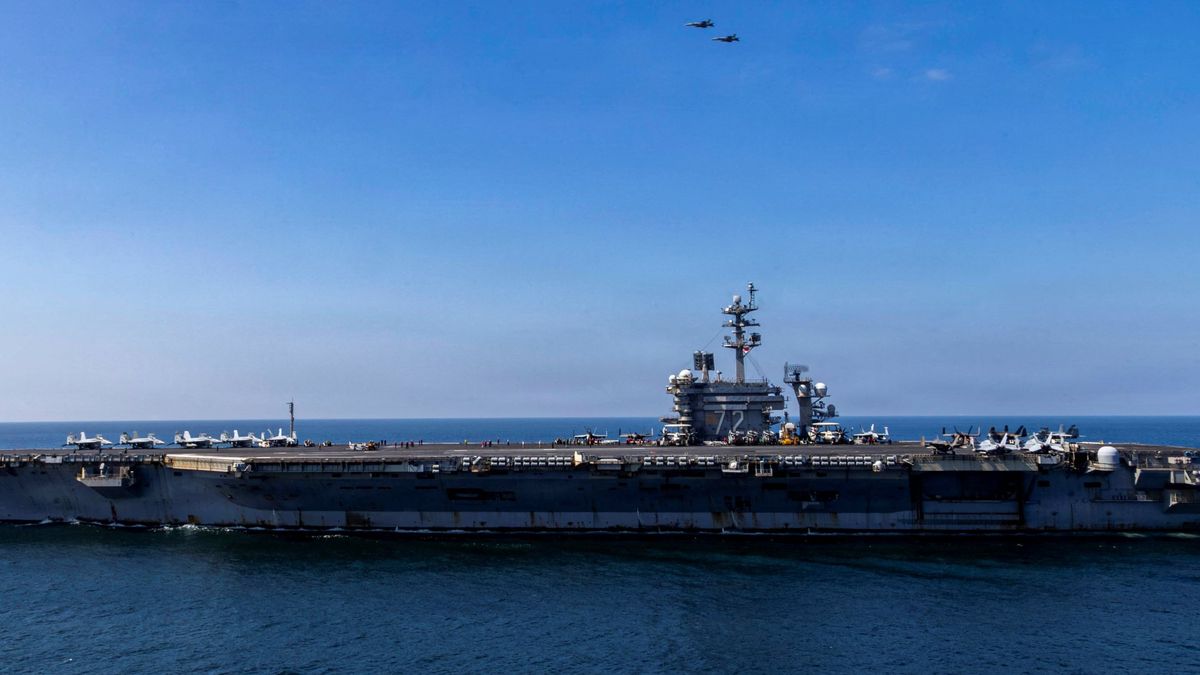
The United States has declared its intent to enforce an "indefinite" naval blockade on Iranian ports, coupled with unprecedented economic isolation measures, amidst a deadlock in ceasefire negotiations. This aggressive posture comes as Iran asserts its continued control over the Strait of Hormuz, a critical global chokepoint, directly contradicting US claims of full passage. Simultaneously, alarming reports have emerged regarding the flagship USS Abraham Lincoln, highlighting severe mental health crises and deteriorating conditions among its crew after a record-breaking continuous deployment.
This confrontation is a test of endurance and resolve, pitting America's global naval projection and economic might against Iran's geographic leverage and historical resilience. The US strategy relies on its formidable naval presence to choke off Iran's economic lifelines, particularly oil exports, hoping to force Tehran to concede. Treasury Secretary Scott Bessent's promise of "never seen before" economic measures underscores a belief that Iran's economy can be crippled. However, this strategy faces significant internal and external pressures. Maintaining an "indefinite" blockade strains the US Navy's operational capacity and personnel, as evidenced by the USS Abraham Lincoln's plight. Iran, on the other hand, leverages its strategic control of the Strait of Hormuz, a waterway through which a fifth of the world's oil supply passes. By keeping the Strait closed, Tehran holds a powerful card, threatening global energy markets and demonstrating its ability to inflict economic pain beyond its own borders. Iran's calculus, informed by past standoffs, suggests it believes Washington will ultimately back down, making this a high-stakes game of chicken where both sides are testing the limits of the other's resolve and capacity to sustain pressure.
The most immediate human cost of this prolonged standoff is borne by the US sailors on the front lines. Reports from the USS Abraham Lincoln detail a harrowing reality: declining mental health, suicidal ideation, severe burnout, and shortages of basic supplies and services. These are not mere operational inconveniences; they are profound human tolls on individuals and their families, pushing the limits of human endurance for a mission whose duration is undefined. For ordinary Iranian citizens, the human cost manifests differently but no less severely. The blockade and escalating economic sanctions directly impact their daily lives, driving up inflation, limiting access to essential goods, and eroding economic stability. While the US aims to pressure the Iranian regime, it is the populace that bears the brunt of the economic squeeze, facing hardship and uncertainty. Beyond these two populations, the global energy market and its consumers also stand to pay a price, as any sustained closure or escalation in the Strait of Hormuz would inevitably lead to higher oil prices, impacting economies worldwide.
Powerful actors on both sides are carefully crafting narratives that omit or downplay critical vulnerabilities. The Trump administration, while projecting an image of unwavering resolve and naval dominance, is downplaying the severe strain on its own forces. Denials of the dire conditions on the USS Abraham Lincoln and the long-term sustainability of such deployments mask a deeper readiness crisis within the Navy. Lawmakers' urgent questions about operational failures and the ability to sustain such an operational tempo highlight a disconnect between political rhetoric and military reality. Similarly, while Iran projects defiance and control over Hormuz, its statements often downplay the significant internal economic pressures and the real impact of lost oil revenues on its capacity to govern, maintain social stability, and fund its regional proxies. Both governments frame their actions as necessary for national interest, but the full human cost – from the mental health of sailors to the economic struggles of ordinary citizens – is consistently sidelined in official discourse, treated as an unfortunate but acceptable byproduct of power politics.
Several key indicators will reveal the trajectory of this standoff. First, watch for the US Navy's ability to truly rotate ships and personnel without further compromising readiness or morale. The arrival of the USS George Washington will be a temporary measure; the long-term sustainability of an "indefinite" blockade without further crew crises is questionable. Second, the impact of the promised "never seen before" economic measures on Iran's internal stability and its ability to fund its operations will be critical. Will these new sanctions break Iran's resolve, or will they further entrench its defiance? Third, observe Iran's response to this escalating pressure. Will it resort to more aggressive actions in the Strait of Hormuz, or through its regional proxies like the Houthis, to raise the stakes and force a US de-escalation? Finally, the political pressure on the Trump administration from US lawmakers regarding naval readiness and crew welfare could become a significant factor, potentially forcing a re-evaluation of the current strategy. The coming weeks will test the limits of both nations' endurance and their willingness to absorb the escalating human and economic costs.
Source referenced: ALJAZEERA
This brief was synthesized by our Editorial Engine and reviewed by The Ground Narrative team.


