TRENDING

Thursday, 22 October 2026
----------------------
11 Jumada Al-Awwal 1448 AH
Chinese Vice Foreign Minister Ma Zhaoxu's recent visit to the United States underscores a mutual commitment to maintaining high-level communication channels, aiming to foster strategic stability despite ongoing geopolitical competition. The diplomatic engagement involved comprehensive discussions with key US officials across the executive and legislative branches.
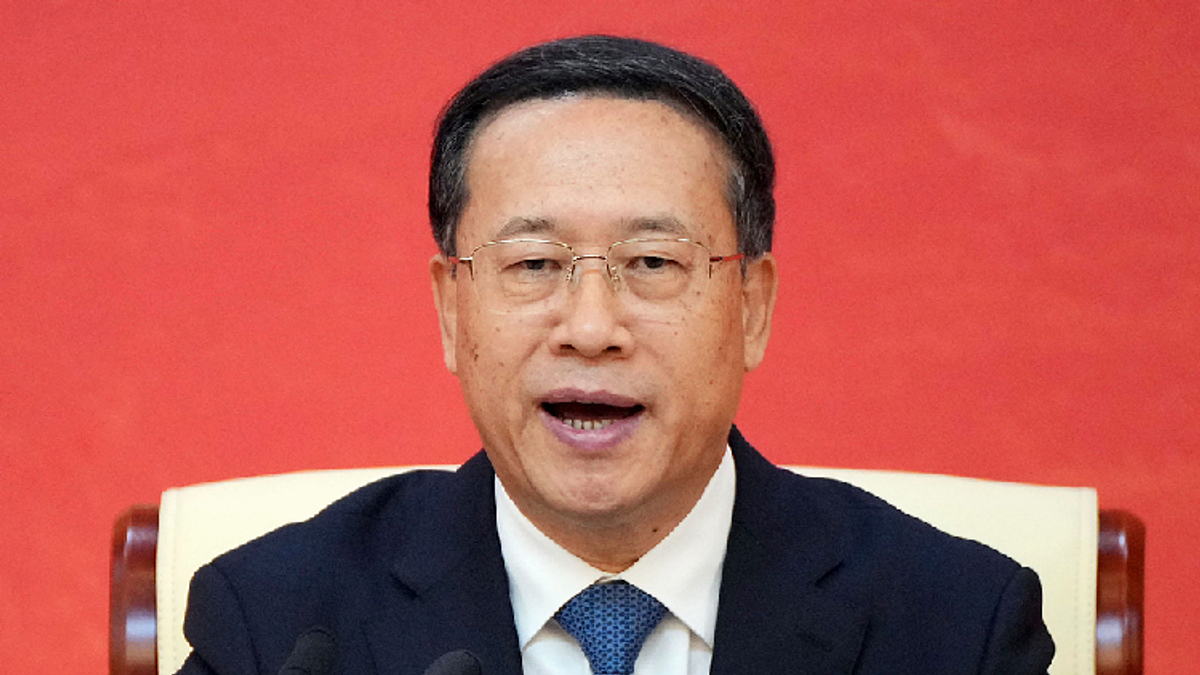
Chinese Vice Foreign Minister Ma Zhaoxu's visit to the United States from July 22 to 23, 2026, marked a significant continuation of high-level diplomatic engagement between Washington and Beijing. Undertaken at the invitation of the US side, this visit underscores a mutual, albeit often strained, commitment to maintaining communication channels amidst a period of intense geopolitical competition. The primary stated objectives were to implement "important common understandings reached by the two heads of state" and to "promote the development of a constructive strategic stability relationship" between the two global powers.
The timing and nature of this visit are particularly noteworthy. Occurring in mid-2026, it reflects an ongoing effort by both nations to manage their complex relationship, which is characterized by deep disagreements across economic, technological, military, and ideological fronts. Despite the pervasive competition, both Washington and Beijing appear to recognize the imperative of dialogue to prevent miscalculation and unintended escalation, especially given their respective global responsibilities and the potential for regional instability.
During his two-day visit, Vice Foreign Minister Ma engaged with a diverse array of senior US officials, indicating a comprehensive approach to the discussions. His itinerary included consultations with US Deputy Secretary of State Christopher Landau, a key figure in the State Department's diplomatic efforts. This meeting likely focused on the broad spectrum of bilateral issues, including regional security, trade, and human rights, serving as a foundational diplomatic exchange.
Crucially, Ma also met with Ivan Kanapathy, Senior Director for Asia at the White House's National Security Council (NSC). Engagement with the NSC signifies a direct line to the White House's strategic policy formulation, suggesting discussions extended to overarching national security concerns and the strategic direction of US-China relations. This interaction is vital for conveying high-level policy intentions and understanding the strategic calculus of the US administration.
Perhaps most indicative of the visit's strategic depth was the meeting with US Under Secretary of War for Policy Elbridge Colby. The Pentagon's policy chief plays a critical role in shaping defense strategy and military posture. This engagement highlights the central role of security issues, including potential flashpoints such as Taiwan, the South China Sea, and broader military competition in the Indo-Pacific, in the bilateral dialogue. Discussions here would likely have centered on risk reduction, military-to-military communication, and the parameters of strategic stability in a contested environment.
Furthermore, Ma Zhaoxu exchanged views with members of both the US Senate and House of Representatives. This outreach to the legislative branch is significant, as Congress often holds a more hawkish stance on China than the executive branch and plays a crucial role in shaping US foreign policy through legislation, appropriations, and oversight. Engaging with lawmakers provides Beijing with insights into congressional sentiment and allows for direct communication regarding China's perspectives on key issues.
The stated goal of promoting a "constructive strategic stability relationship" is a critical phrase in understanding the visit's underlying motivations. In the context of US-China relations, "strategic stability" extends beyond traditional nuclear arms control to encompass a broader framework for managing competition in an era of great power rivalry. It implies a mutual recognition that while competition is inevitable, both sides must establish guardrails to prevent it from spiraling into conflict. This includes discussions on military transparency, crisis communication mechanisms, and understanding each other's red lines in sensitive areas.
For the United States, inviting a senior Chinese diplomat reflects a strategy of "managed competition," where dialogue is seen as essential for de-escalation and risk reduction, even as Washington continues to challenge Beijing on various fronts. For China, participating in such dialogues allows it to articulate its positions, push back against perceived US containment efforts, and project an image of responsible global power. It also provides an opportunity to gauge US intentions and potentially influence policy directions.
This high-level diplomatic exchange carries significant geopolitical implications. Firstly, it signals to regional allies and partners that despite heightened tensions, both the US and China are committed to maintaining a degree of communication, which can help alleviate anxieties about potential conflict. For countries in the Indo-Pacific, the stability of the US-China relationship is paramount to their own security and economic prosperity.
Secondly, the visit underscores the enduring challenge of balancing competition with cooperation. While the immediate focus was on strategic stability, the broader context of global challenges—such as climate change, pandemics, and economic volatility—often necessitates some level of collaboration between the two powers. However, the current geopolitical climate makes such cooperation difficult to achieve beyond rhetorical commitments.
Looking ahead, Vice Foreign Minister Ma's visit is unlikely to herald a dramatic shift in US-China relations. Instead, it represents another incremental step in a long-term process of complex engagement. The "constructive strategic stability relationship" remains an aspirational goal, constantly tested by divergent national interests, ideological differences, and ongoing geopolitical friction points. The value of such visits lies not in resolving fundamental disputes, but in providing a crucial mechanism for managing them, ensuring that competition does not inadvertently lead to confrontation. The continued willingness of both sides to engage at senior levels, even when disagreements persist, is a testament to the profound global significance of their bilateral relationship.
Source referenced: CGTN
This brief was synthesized by our Editorial Engine and reviewed by The Ground Narrative team.


