TRENDING

Wednesday, 21 October 2026
----------------------
10 Jumada Al-Awwal 1448 AH
In an effort to manage their intense rivalry, the United States and China have agreed on a framework of 'strategic stability.' This agreement aims to prevent competition from escalating into confrontation, but its true meaning and effectiveness remain to be seen.
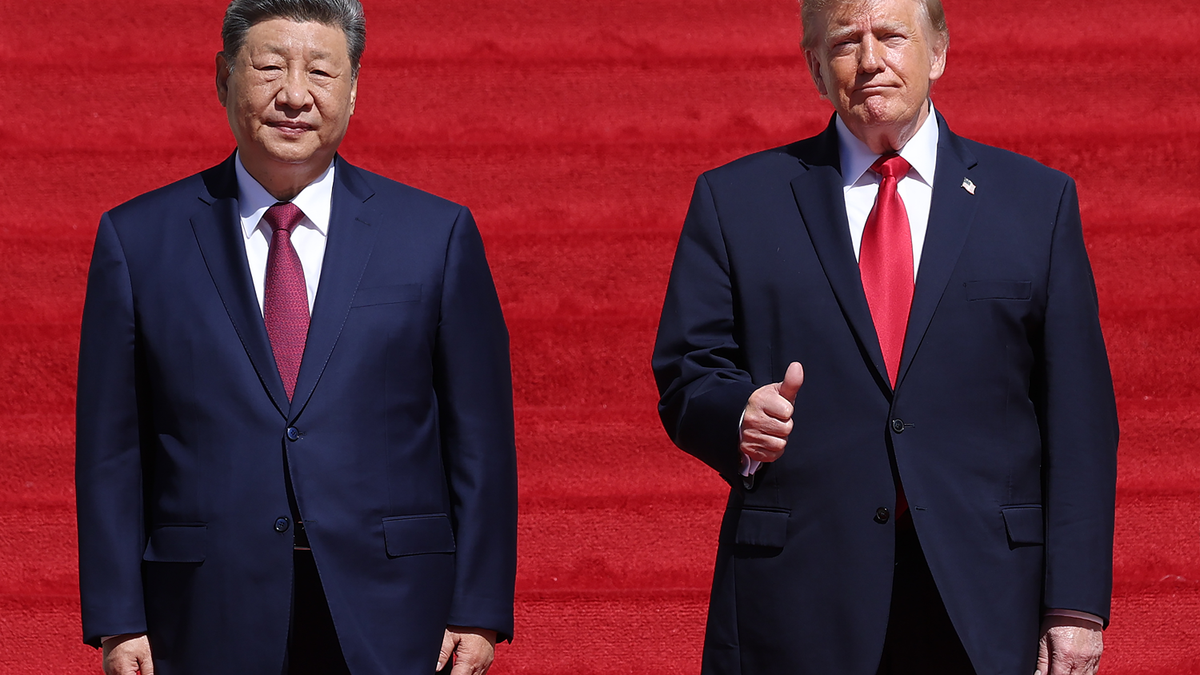
In a series of high-level meetings in May and September 2026, US President Donald Trump and Chinese President Xi Jinping agreed to establish a “constructive relationship of strategic stability.” This framework, first articulated in Beijing and later reaffirmed in Washington, is intended to manage the intense competition between the two global powers, preventing it from spiraling into direct confrontation. The leaders emphasized that this stability should be built on principles of respect, fairness, and reciprocity, acknowledging that while competition is inevitable, it requires defined boundaries and communication channels to avoid accidental escalation.
The agreement on “strategic stability” is not an act of reconciliation but a pragmatic recognition by both Washington and Beijing that their deep-seated rivalry carries immense risks for themselves and the global order. The underlying power mechanics reveal a complex interplay of self-interest, strategic calculation, and a shared, albeit often unstated, fear of uncontrolled conflict.
For China, the pursuit of strategic stability aligns with its long-term objective of a peaceful external environment conducive to continued economic growth and the consolidation of its global influence. President Xi Jinping's administration seeks to project an image of responsible great power leadership, capable of managing complex international relationships while asserting its core interests. A stable, predictable relationship with the United States reduces the likelihood of disruptive trade wars, technological decoupling, or military incidents that could jeopardize China's ascent. It also implicitly demands that the US acknowledge China's status as a peer, thereby legitimizing its global ambitions and domestic political model.
On the US side, particularly under President Trump, the emphasis on stability can be seen as a desire to manage international commitments and focus on domestic priorities. While the US maintains its competitive stance, an uncontrolled rivalry with China would divert vast resources, impose significant economic costs, and potentially lead to a direct military confrontation that no administration truly desires. The concept of
Strategic stability is a framework agreed upon by the US and China to manage their intense competition, aiming to prevent it from escalating into direct confrontation. It emphasizes principles of respect, fairness, and reciprocity, and seeks to establish robust communication channels and 'shock absorbers' to handle disputes.
Both nations seek strategic stability out of self-interest: the US to manage global commitments and focus domestically, and China to ensure a stable environment for its economic growth and global rise. Both aim to mitigate the immense economic and military risks associated with uncontrolled rivalry.
If strategic stability fails, the risks include global economic shocks, severe supply chain disruptions, increased military incidents in flashpoints, and potential regional conflicts. Even managed competition could lead to marginalization of smaller nations and diversion of resources from global challenges like climate change.
Editor's Note: Analysis is based on hypothetical future news reporting from 2026, treated as factual intelligence per user instructions.
Source referenced: FOREIGNPOLICY
This brief was synthesized by our Editorial Engine and reviewed by The Ground Narrative team.


